Living in Plantation: Pros and Cons
Best for families and professionals who want an established, oak-shaded, well-serviced Broward suburb with strong schools and a real sense of place, and who accept the car-based grid and the older-housing renovation reality.
The honest picture
What is it really like to live in Plantation?
Plantation is the veteran western suburb grown around the Plantation Preserve golf course and the historic Plantation House, with some of Broward's most established, oak-shaded neighborhoods and a school system that rates among the county's more reliable. Typical sale prices cluster around $485,000 to $500,000, with the historic east and the golf communities at the two ends of the range. The fine print: a car-dependent layout, school ratings that vary campus to campus, and an aging mid-century inventory that rewards renovation. For the gated-com and grown-up Broward settled feel, this is the template.
This guide keeps the postcard and adds the fine print: real price ranges, the schools buyers actually check, commute reality, walkability scores, and the insurance and heat costs nobody puts in the brochure. If you read one page before you start house hunting in Broward County, make it this one. And when you want the street-level version, that is a free call away.
Want the honest, street-level take on Plantation? Set up a free 15-minute strategy call with Michael Wiz Wisniewski, Certified Real Estate Planning Advisor and Certified A.I. Real Estate Advisor, and he will tell you what the listings do not.
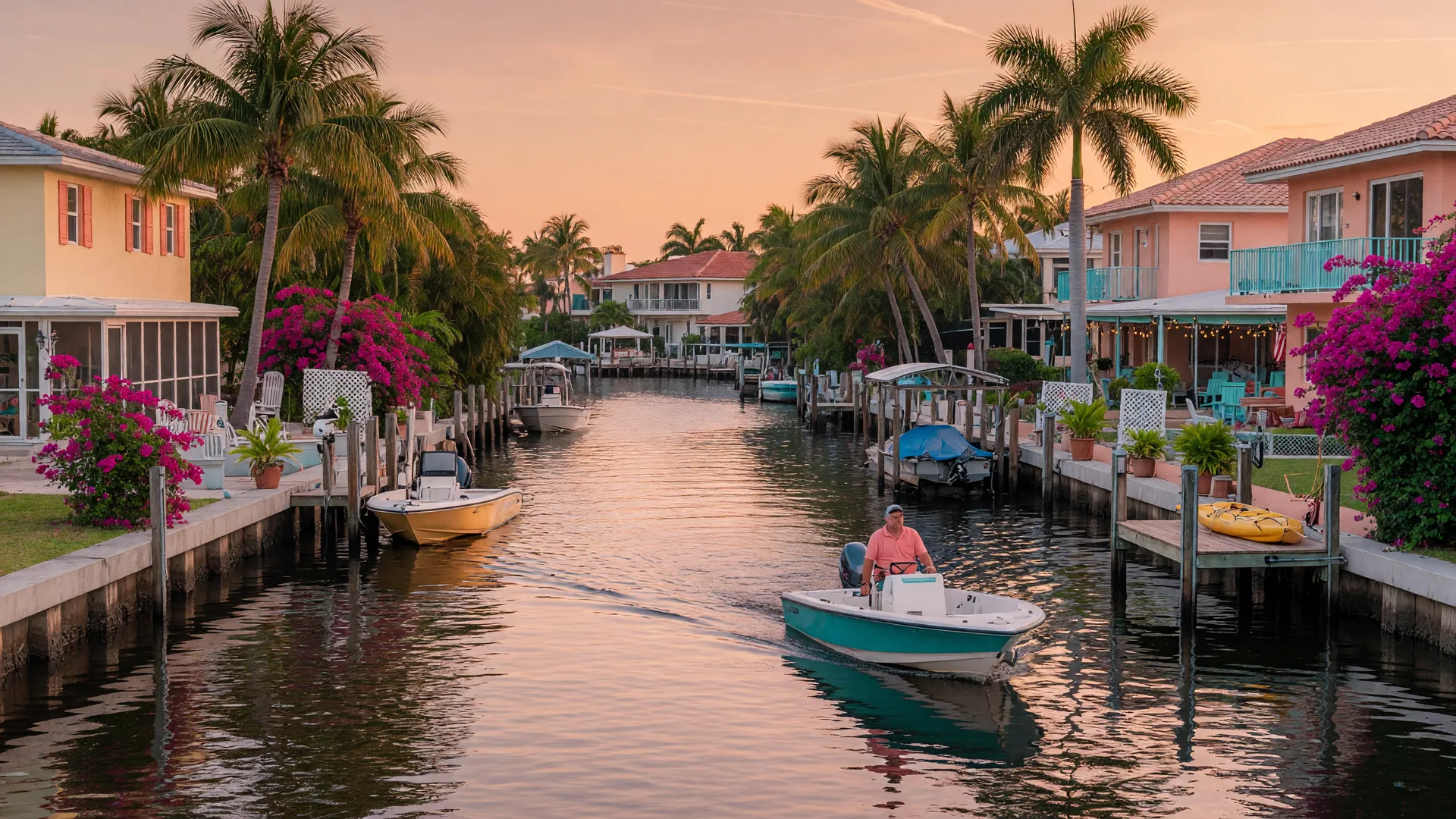
Broward County · Gold Coast
Median sold price
~$485âÂÂ500K; $450âÂÂ600K typical
Walk Score
~29 (car-dependent)
Schools
Broward district plus American Heritage (private)
Flood reality
Drained flatland; newer preserves, check zones
Source: U.S. Census Bureau (population and median age), county Realtor and MLS data (median home prices), Walk Score (walkability), state and Niche school data (school grades), and the Insurance Information Institute (insurance cost averages). Figures draw from public reporting and update often, so Michael pulls live comps, school assignments, and insurance quotes for your exact address in your strategy call.
What works
Pros of living in Plantation
The genuine advantages, with the specifics that matter: neighborhoods, schools, commute math, and the numbers behind the lifestyle.
-
Mature shade and place
Live oaks over decades-old lawns, the Preserve's 700 green acres in the center, and a real town-meet design seeded in the 50s. It reads as settled, rooted, and live-in, which is exactly what settles the house hunt.
-
The golf-course center
Plantation Preserve means the city's green heart is a championship course and lake reserve you can see from the middle of town. Most suburbs put the office at the center; this one put the green.
-
Schools and the local legend
Broward's zoned schools land average-to-strong in the better feeder cells, and American Heritage School's main campus sits inside the city for private families. The city's educational menu is unusually complete.
-
Location as its own amenity
The Turnpike splits the middle, I-95 is ten minutes, Sawgrass Mills 15, downtown Fort Lauderdale about 20, and FLL 25: the whole Broward-Palm map inside a half hour. The address is the shortcut.
-
Stability of inventory
Owner-occupied, long-hold neighborhoods with low turnover keep the feel and the values steady. The list is not a spec-city stock that drops with the builder promotion.
-
The under-$600K whole-house
For a four-bedroom solar, garage, real lot, and the address's grown, the $450,000 to $600,000 band outclasses what the same check gets in west coastal Pis.
The honest trade-offs
Cons of living in Plantation
No town is only a postcard. These are the trade-offs residents actually talk about, stated plainly, because a good advisor tells you the truth before you sign.
-
Car dependence, minus the walkable core
The 29 Walk Score is the truth for most of the grid: schools, shops, and offices need the wheel; even the so-called walkable pockets are plaza art, not daily life.
-
Aging housing stock
The 1970s-through-2000s inventory shows the years: electrical, roof, and kitchen spread. The fix must be in the plan, and the construction season prices the labor.
-
School feeders that vary
Some feeders above the county line, some around or below; the address that unlocks the difference is often 30 blocks apart. The school-match contract is exacting.
-
HOA boom-to-bust patchwork
Associations range from fee-light bodies to fee-heavy communities, and recent renewals in parts of the county have raised monthly baselines. Read the minutes before you bid.
-
Heat and storm season
The standard Florida summer: heat, afternoon storms, and hurricane season from June to November. The preserve's pines love it; some buyers do not.
-
Flood fine print near preserves
Drained south-country flat sits on fill; pond frontage and preserve-adjacent lots carry their own designations and the occasional flood dousing, so the map check is not ceremonial.
The bottom line: families and professionals who want an established, oak-shaded, well-serviced Broward suburb with strong schools and a real sense of place, and who accept the car-based grid and the older-housing renovation reality. If that sounds like you, the next step is a free 15-minute strategy call, no pressure and no obligation, at calendly.com/michaelwisniewski/15-min-strategy-call or (561) 441-8420.
At a glance
Plantation: pros vs. cons, side by side
The fast comparison for the categories buyers weigh most. The full reasoning is above; this table is the one you screenshot.
| Category | What works | What to watch |
|---|---|---|
| Home values | Typical $485âÂÂ500K, real lot buys | Aging mid-tier stock needs renovation |
| Schools | Strong feeders plus American Heritage | Zone the exact street; ratings vary |
| Commute | Turnpike/I-95; 20 min to downtown FT Laud. | Car-native; rush hour on Pine and University |
| Walkability | Preserve scenic trails | Walk Score ~29 systems-wide |
| Water and outdoors | Preserve golf and lakes at the center | No ocean, no Intracoastal; the drive is the plan |
| Insurance and costs | Renovation upside buys polish | Fees and flood slant on some fringes |
Ranges reflect published market data and vary by neighborhood and source. Current as of September 25, 2026.
Match the town to your life
Who is Plantation best for?
Five buyer personas get the straight answer, with the honest caveat attached to each.
Professionals commuting to Fort Lauderdale
The twenty-some-minute commute with a rooted home base: the address works before the office clock. The Sawgrass run and the turnpike are the daily calculus.
Families
The preserve, the parks, and the school menu are real; the assignment game is homework, not luck. Parent-ferry-on-time rosters all end in mild traffic.
Renovators and designers
The mid-column inventory is a palette: bought mid-market and raised to the premium with fixtures and roof. The best old-money yields are in the East.
Retirees
Quiet, green, and well served, with shopping and care centers in the same 15-minute circle. It is one of the county's most natural downsizer landings.
Investors
Settled turnover means steady, quality-built inventory with a slow-cook rhythm. The purchase works when the renovation completes on schedule.
Not sure which persona you are? That is exactly what the free 15-minute strategy call is for. Michael will help you see clearly which towns fit your life, your timeline, and your plan.
Book a Free CallStraight answers
Plantation FAQs
The questions buyers ask Michael most about Plantation, answered directly with the numbers.
01 Is Plantation Florida a good place to live?
It is one of Broward's most grounded suburbs: mature, green, centrally located, with good school options and real house-for-the-money. The honest cons are the car-first layout, aging stock, and the agreement to renovate the inventory the old owners left.
02 What is the cost of living in Plantation?
Typical sale prices cluster around $485,000 to $500,000, with the range running about $450,000 to $600,000. Coastal comparison saves five figures on entry; the renovation spread that follows is the real tax.
03 What schools are in Plantation?
Broward Public Schools serve the city, with a feeder pattern ranging from average to strong, and American Heritage School's main private campus is inside the city. School-planning families match the address to the zone early.
04 How is the commute from Plantation?
Central enough to be the region's hub: I-95 and the Turnpike at the door, Sawgrass Mills and Fort Lauderdale about 15-20 minutes, the airport about 25. The drive to the beach is about 25 minutes east.
Have a question this page did not answer? Ask it directly: (561) 441-8420 or michael@thecompleterealestateteam.com.
Keep exploring
You might also like
Living in Plantation
Neighborhoods, schools, market snapshot, and things to do
Read itDavie Pros and Cons
The western neighbor with a ranch town twist
Read itSchool District Guide
Rankings and community matches across all six counties
Read itCompare the coasts
Your next step
Let's decide if Plantation is the town for you
Michael Wiz Wisniewski is The Life Transition Specialist, a Certified Real Estate Planning Advisor and Certified A.I. Real Estate Advisor with The Complete Real Estate Team, powered by Dalton Wade Real Estate, Florida DRE #3301665. He has built, bought, sold, and managed property from the Treasure Coast to South Florida, and he answers with the truth, not the sales pitch.
- (561) 441-8420
- michael@thecompleterealestateteam.com
- Book the free 15-minute strategy call
- Send a message on the contact page
Talk Soon
No obligation, no pressure
Is Plantation the right fit?
Tell Michael about your move, your timeline, and your questions about Plantation. He will reply personally with honest, local answers.
Message sent. Talk Soon!
Thank you for reaching out. Michael will be in touch shortly to schedule your strategy session.