Living in Fort Lauderdale: Pros and Cons
Best for boaters, urbanists, and remote workers who want the Venice of America: canals, Las Olas, a major airport, and a real city pulse, with honest compromises on school zones and pricing.
The honest picture
What is it really like to live in Fort Lauderdale?
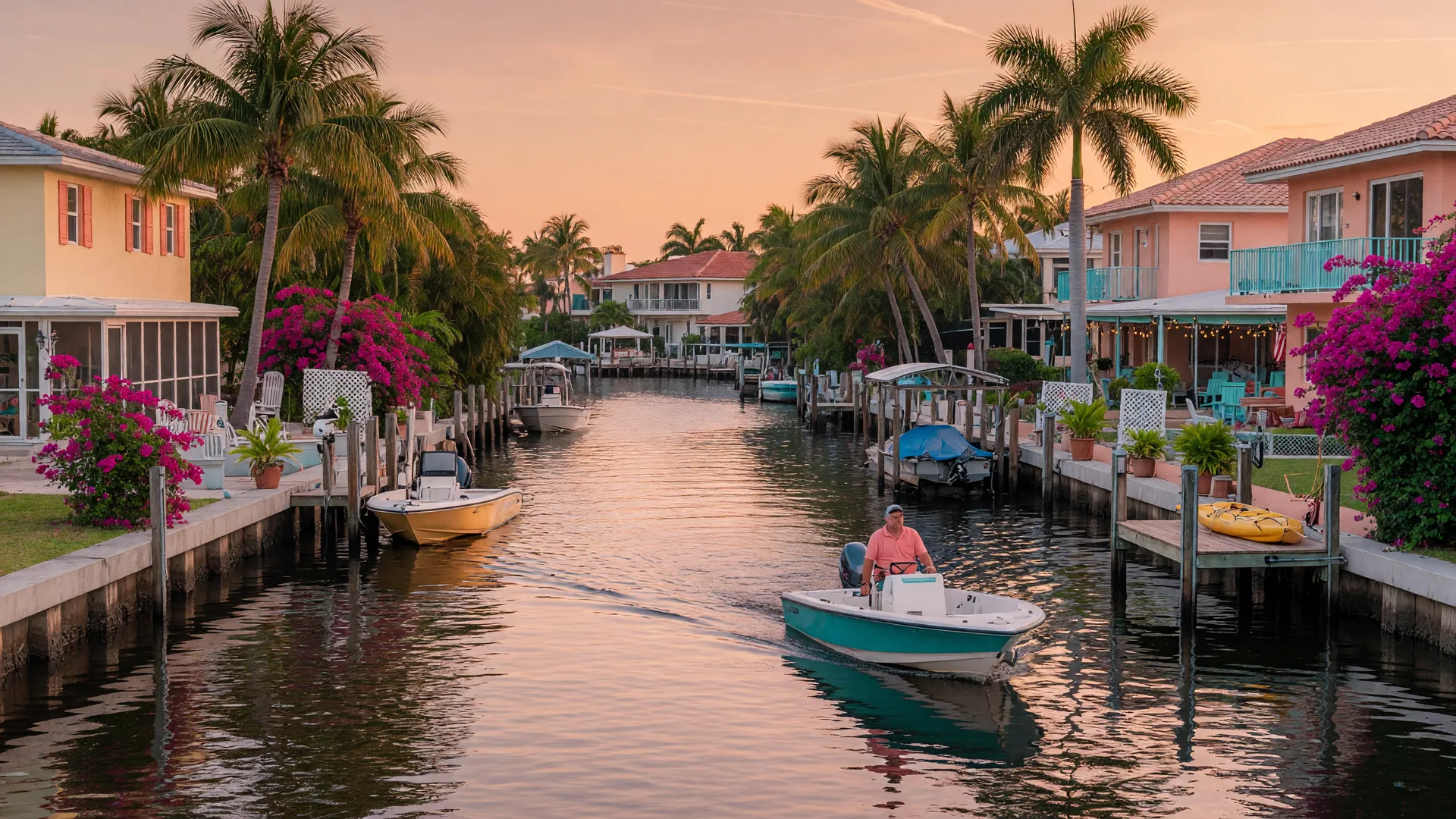
Fort Lauderdale is the urban anchor of Broward: about 185,000 to 190,000 residents, a median age near 43, and a canal-laced waterfront that earns the nickname Venice of America. Median sale prices ran roughly $510,000 to $575,000 through 2025 and 2026, with listings often higher, and the market has tipped toward buyers as inventory climbed. It delivers city energy, an international airport in town, and Brightline rail, but schools vary sharply by address and flood risk is the most literal of the six in this series.
This guide keeps the postcard and adds the fine print: real price ranges, the schools buyers actually check, commute reality, walkability scores, and the insurance and heat costs nobody puts in the brochure. If you read one page before you start house hunting in Broward County, make it this one. And when you want the street-level version, that is a free call away.
Want the honest, street-level take on Fort Lauderdale? Set up a free 15-minute strategy call with Michael Wiz Wisniewski, Certified Real Estate Planning Advisor and Certified A.I. Real Estate Advisor, and he will tell you what the listings do not.
Broward County · Gold Coast
Median home price
$510KâÂÂ$575K
Walk Score
56 (Downtown & Flagler Village ~89)
Population / median age
~185âÂÂ190K / ~43
Schools
Broward County (state A; Niche B+)
Source: U.S. Census Bureau (population and median age), county Realtor and MLS data (median home prices), Walk Score (walkability), state and Niche school data (school grades), and the Insurance Information Institute (insurance cost averages). Figures draw from public reporting and update often, so Michael pulls live comps, school assignments, and insurance quotes for your exact address in your strategy call.
What works
Pros of living in Fort Lauderdale
The genuine advantages, with the specifics that matter: neighborhoods, schools, commute math, and the numbers behind the lifestyle.
-
Lifestyle and community
Las Olas Boulevard, Flagler Village's arts district, downtown's towers and dining, and a beach a mile from the city center: Fort Lauderdale is the only city in this six-county series with a genuine walkable urban core and a year-round nightlife calendar.
-
Waterfront living
The city is famous for its nearly 165 miles of waterways, with homes on canals, deep-water docks, water taxis, and direct ocean access for boats. For anyone whose priorities float, this is the address.
-
Commute and access
Fort Lauderdale-Hollywood International Airport is in the city, Brightline runs downtown to Miami and Orlando, Tri-Rail stretches the county north-south, and downtown Miami is about 28 miles away (33 to 45 minutes light, 60 to 90 at rush).
-
Schools
Broward County Public Schools earned an A from the state for 2024-25 and ranks in the top 20 on Niche, with magnets and charters like Millennium 6-12 Collegiate Academy among the standouts. The honest note: results vary widely, so families shop schools and zones deliberately.
-
Home values
A median near $510,000 to $575,000 buys condos, townhomes, and older single-family homes, with canal and waterfront commanding premiums. Elevated inventory has tipped the market toward buyers, which is welcome news after the pandemic run-up.
-
Amenities
The beach, the arts district, the convention center and cruise port nearby, pro sports across the metro, and a restaurant scene from taco stands to waterfront fine dining keep the calendar full without leaving the county.
The honest trade-offs
Cons of living in Fort Lauderdale
No town is only a postcard. These are the trade-offs residents actually talk about, stated plainly, because a good advisor tells you the truth before you sign.
-
Flood risk is part of the geography
Much of the city sits in FEMA-mapped flood zones, sea-level rise is a live planning issue, and flood insurance plus wind coverage can make insurance a six-figure conversation over a decade.
-
Traffic
I-95, US-1, and the Intracoastal bridges jam in season. The 28-mile run to downtown Miami is 33 minutes at noon and 60 to 90 minutes at rush hour, and snowbird season makes everything slower.
-
School variance by address
The district rates A by the state and B+ on Niche, but a great address can sit a mile from a struggling school. Families must shop zones, magnets, and charters on purpose, not by luck.
-
Heat, humidity, and storms
June through September brings hot, humid afternoons and daily storms, and hurricane season runs June through November. The city has weathered direct hits, and every homeowner knows the drill.
-
Cost and condo realities
HOA and condo fees run high in the tower and waterfront stock, and the buyer's market cuts both ways: more choice, but values soften in some pockets. The published price is never the full monthly number.
-
Density and pace
If quiet small-town Florida is the goal, this is not it: horns, construction, festivals, and year-round crowds are part of the product. Fort Lauderdale is a city, and it behaves like one.
The bottom line: boaters, urbanists, and remote workers who want the Venice of America: canals, Las Olas, a major airport, and a real city pulse, with honest compromises on school zones and pricing. If that sounds like you, the next step is a free 15-minute strategy call, no pressure and no obligation, at calendly.com/michaelwisniewski/15-min-strategy-call or (561) 441-8420.
At a glance
Fort Lauderdale: pros vs. cons, side by side
The fast comparison for the categories buyers weigh most. The full reasoning is above; this table is the one you screenshot.
| Category | What works | What to watch |
|---|---|---|
| Home values | Median $510KâÂÂ$575K; buyer's market with elevated inventory | Canal and waterfront well above; fees stack |
| Schools | District rated A by the state; strong magnets and charters | Wide variance by school and address |
| Commute | FLL, Brightline, and Tri-Rail in town; Miami about 28 miles | I-95 rush hour runs 60âÂÂ90 minutes to Miami |
| Walkability | Walk Score 56; Downtown and Flagler Village about 89 | Most neighborhoods remain car-first |
| Water and outdoors | Canals, ocean access, and a beach a mile from downtown | Flood zones and sea-level-rise planning |
| Insurance and costs | No state income tax; big-city amenities included | Wind and flood premiums near the coast |
Ranges reflect published market data and vary by neighborhood and source. Current as of September 25, 2026.
Match the town to your life
Who is Fort Lauderdale best for?
Five buyer personas get the straight answer, with the honest caveat attached to each.
Families
A real option when parents shop the zones and magnets seriously: district A rating with standouts like Millennium Collegiate, plus parks and beaches. The school plan has to be the first decision, not the last.
Young professionals
The city's core audience: walkable Flagler Village and downtown, Brightline to Miami, nightlife, and a job base in finance, logistics, and tech.
Boaters and waterfront buyers
The Venice of America is for people who want a boat at the dock: deep-water canals, ocean access, and water taxis. Insurance and flood math come with the keys.
Remote workers
Fiber internet, coworking, an array of cafes, and two regional airports make it one of the best-connected remote bases in Florida.
Empty nesters
Downtown condos, Las Olas, and the beach minutes away suit downsizers who want city energy without maintaining a house and lawn.
Not sure which persona you are? That is exactly what the free 15-minute strategy call is for. Michael will help you see clearly which towns fit your life, your timeline, and your plan.
Book a Free CallStraight answers
Fort Lauderdale FAQs
The questions buyers ask Michael most about Fort Lauderdale, answered directly with the numbers.
01 Is Fort Lauderdale expensive to live in?
Relative to the region, it is mid-pack: a median sale price around $510,000 to $575,000 with listings often higher, and no state income tax. The real cost drivers are insurance, HOA or condo fees, and any waterfront premium, so the honest monthly number needs all of them.
02 How long is the commute from Fort Lauderdale to Miami?
About 28 miles and 33 to 45 minutes in light traffic, stretching to 60 to 90 minutes at rush hour. Brightline runs from downtown Fort Lauderdale to downtown Miami in about a half-hour and is the commuter's escape hatch.
03 Are Fort Lauderdale schools good?
The district earned an A from the state for 2024-25 and ranks about 20th in Florida on Niche, with elite magnets and charters. The honest answer is that quality varies sharply by school, so families must confirm the actual assigned school and apply on time for choice programs.
04 How bad is flooding in Fort Lauderdale?
Serious enough to plan for: much of the city sits in FEMA-mapped flood zones, and the region is actively planning for sea-level rise. Flood insurance is typically required, and Michael checks the exact FEMA zone, elevation, and mitigation history for every property.
05 Is Fort Lauderdale good for boaters?
It is the best of the six by a wide margin: roughly 165 miles of waterways, deep-water docks, ocean access, water taxis, and a boating culture that runs year-round. Budget dockage or canal maintenance and marine insurance honestly.
Have a question this page did not answer? Ask it directly: (561) 441-8420 or michael@thecompleterealestateteam.com.
Keep exploring
You might also like
Living in Fort Lauderdale
Neighborhoods, schools, market snapshot, and things to do
Read itLiving in Hollywood
The beach-town neighbor with the famous Broadwalk
Read itCommute & Transportation Guide
Highways, rail, airports, and drive times across South Florida
Read itCompare the coasts
Your next step
Let's decide if Fort Lauderdale is the town for you
Michael Wiz Wisniewski is The Life Transition Specialist, a Certified Real Estate Planning Advisor and Certified A.I. Real Estate Advisor with The Complete Real Estate Team, powered by Dalton Wade Real Estate, Florida DRE #3301665. He has built, bought, sold, and managed property from the Treasure Coast to South Florida, and he answers with the truth, not the sales pitch.
- (561) 441-8420
- michael@thecompleterealestateteam.com
- Book the free 15-minute strategy call
- Send a message on the contact page
Talk Soon
No obligation, no pressure
Is Fort Lauderdale the right fit?
Tell Michael about your move, your timeline, and your questions about Fort Lauderdale. He will reply personally with honest, local answers.
Message sent. Talk Soon!
Thank you for reaching out. Michael will be in touch shortly to schedule your strategy session.