Living in Pinecrest: Pros and Cons
Best for well-funded families who want elite public schools, estate lots under a canopy of live oaks, and a private suburb 15 to 20 minutes from Miami, and who can carry the price tag and the car-dependent daily life.
The honest picture
What is it really like to live in Pinecrest?
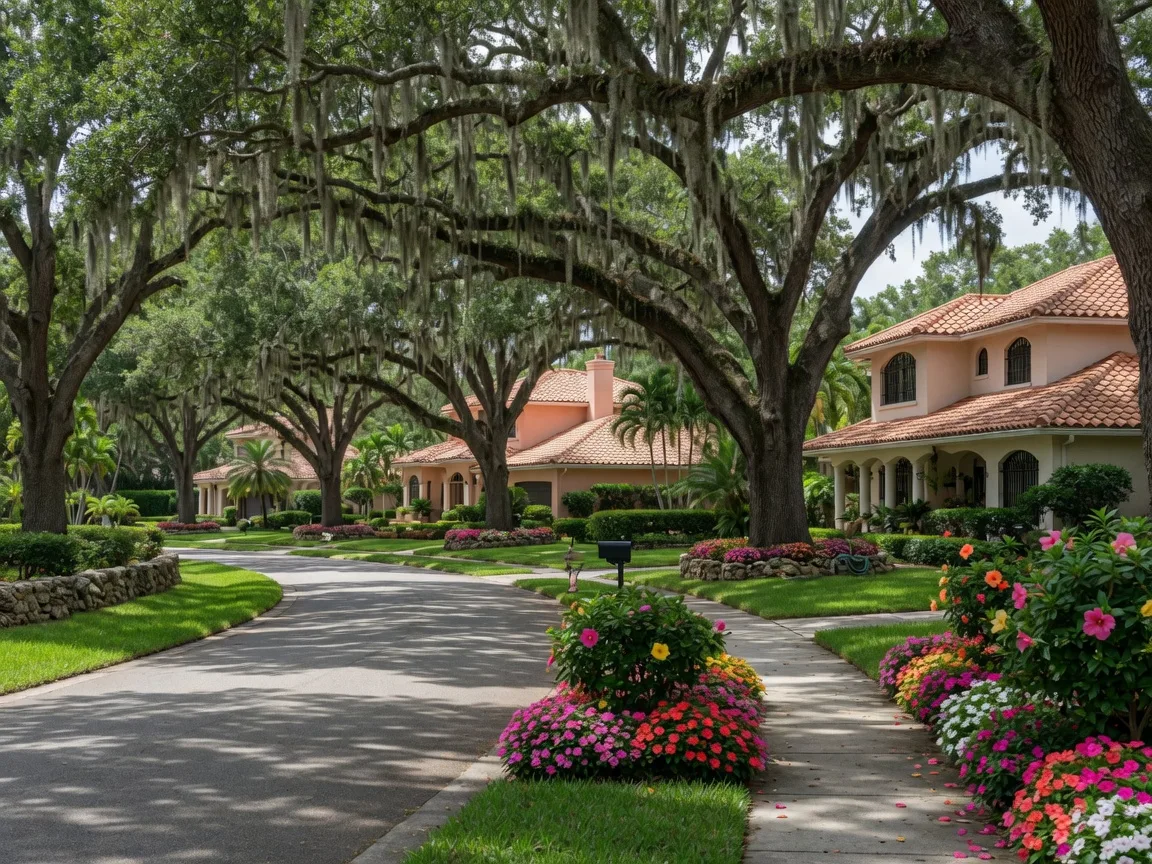
Pinecrest is the affluent village of oak-canopied estate streets between Coral Gables and Palmetto Bay, home to about 18,300 people with a median age near 42. Median sale prices run roughly $2.2 million to $2.6 million, and it is the rare place in South Florida where the trees, not the towers, define the skyline. The public schools are among Florida's best, the lots are measured in fractions of an acre rather than feet, and the honest trade-off is that almost everything requires a car except the walk to school at drop-off.
This guide keeps the postcard and adds the fine print: real price ranges, the schools buyers actually check, commute reality, walkability scores, and the insurance and heat costs nobody puts in the brochure. If you read one page before you start house hunting in Miami-Dade County, make it this one. And when you want the street-level version, that is a free call away.
Want the honest, street-level take on Pinecrest? Set up a free 15-minute strategy call with Michael Wiz Wisniewski, Certified Real Estate Planning Advisor and Certified A.I. Real Estate Advisor, and he will tell you what the listings do not.
Miami-Dade County · Greater Miami
Median home price
$2.2MâÂÂ$2.6M
Walk Score
Car-dependent; ~23 transit
Population / median age
~18,300 / ~42
Schools
Pinecrest & Palmetto elementaries, Palmetto Senior High
Source: U.S. Census Bureau (population and median age), county Realtor and MLS data (median home prices), Walk Score (walkability), state and Niche school data (school grades), and the Insurance Information Institute (insurance cost averages). Figures draw from public reporting and update often, so Michael pulls live comps, school assignments, and insurance quotes for your exact address in your strategy call.
What works
Pros of living in Pinecrest
The genuine advantages, with the specifics that matter: neighborhoods, schools, commute math, and the numbers behind the lifestyle.
-
Elite public schools
Pinecrest Elementary and Palmetto Elementary both rank among Florida's top 25 public elementary schools, and Miami Palmetto Senior High is a consistently top-rated high school. For families, the school stack is the single biggest reason the village commands its premium.
-
Estate lots and oaks
Quarter-acre to full-acre lots tucked under a canopy of mature live oaks is not a Miami-Dade norm; it is Pinecrest's defining feature. The village code protects the trees and the scale, so the canopy is an asset that compounds.
-
Quiet, private suburb close to the city
Downtown Miami is 15 to 20 minutes away, Coral Gables is next door, and Dadeland's shops and Metrorail are minutes south. Privacy at home, city access when you want it, the classic balance.
-
Village services and community
Pinecrest Gardens, the community center, parks, and a responsive village government give residents an unusually high level of civic service. This is a municipally run suburb in the best sense.
-
Strong resale and stability
Supply inside the village is capped by geography and tree ordinances, and demand from wealth-accumulating families stays deep. Pinecrest is one of Miami-Dade's most stable, least volatile addresses.
-
Proximity to private options
Gulliver Preparatory and a cluster of other top private schools sit minutes away, so families who want the village's lifestyle with a different school choice are not forced to leave the neighborhood to get it.
The honest trade-offs
Cons of living in Pinecrest
No town is only a postcard. These are the trade-offs residents actually talk about, stated plainly, because a good advisor tells you the truth before you sign.
-
A very high price of entry
A median in the $2.2 million to $2.6 million range prices out all but the well-funded, and the lower end of the market is smaller older homes on smaller lots. There is no 'starter Pinecrest' in the way smaller towns have.
-
Car-dependent by design
Walk Score is firmly car-dependent, with a low transit score, and the estate lots make walking to anything except the school impractical. Kids ride bikes on quiet streets, but adults drive for nearly every errand.
-
Flood and insurance exposure
Parts of Pinecrest fall in high-risk FEMA flood zones, so flood insurance is required there, and Miami-Dade wind premiums keep homeowners insurance heavy. Elevation varies street by street, which is exactly why Michael checks the address-level data.
-
Maintenance on big lots
An acre of oaks, hedges, and grass is a landscape budget. Landscaping, irrigation, and tree care in South Florida are ongoing costs that catch new-from-the-Northeast owners by surprise.
-
Limited shopping and dining in the village
Pinecrest is residential first; the restaurants and retail sit on its edges along South Dixie Highway and in Coral Gables and Dadeland. The village's charm is the absence of commercial life, which is also its limitation.
-
Heat and storm season
Deep summer is hot, humid, and stormy, and hurricane season is a planning exercise for estate homeowners: generators, shutters, and trees that need pre-storm trimming. The canopy that makes the village beautiful is also its storm risk.
The bottom line: well-funded families who want elite public schools, estate lots under a canopy of live oaks, and a private suburb 15 to 20 minutes from Miami, and who can carry the price tag and the car-dependent daily life. If that sounds like you, the next step is a free 15-minute strategy call, no pressure and no obligation, at calendly.com/michaelwisniewski/15-min-strategy-call or (561) 441-8420.
At a glance
Pinecrest: pros vs. cons, side by side
The fast comparison for the categories buyers weigh most. The full reasoning is above; this table is the one you screenshot.
| Category | What works | What to watch |
|---|---|---|
| Home values | Stable, supply-capped, deeply desired | Median $2.2MâÂÂ$2.6M |
| Schools | Two top-25 Florida elementaries; Palmetto High | Zoning varies by street; verify assignment |
| Commute | Downtown Miami 15âÂÂ20 minutes | Traffic on Dixie Highway and US-1 corridors |
| Walkability | Quiet streets, kids can ride bikes | Car-dependent; low transit and bike scores |
| Water and outdoors | Mature oaks, Pinecrest Gardens, big lots | Mixed FEMA zones; storm-tree risk |
| Insurance and costs | Property values hold through cycles | Wind, flood, and landscaping costs stack |
Ranges reflect published market data and vary by neighborhood and source. Current as of September 25, 2026.
Match the town to your life
Who is Pinecrest best for?
Five buyer personas get the straight answer, with the honest caveat attached to each.
Affluent families
The raison d'etre: schools, space, and safety in a canopy-lined village. The entry price is real, and so is the payoff if the family plan spans school years.
Executives and professionals
A 20-minute commute to Miami with a private, park-like retreat at the end is the selling point. For remote-heavy schedules it is even better, minus the airport traffic on I-95 and US-1.
Empty nesters
Big lots suit those who love gardening and quiet; they burden those who traveled. Downsizers should weigh maintenance honestly or look east to condo corridors.
Investors
Appreciation and stability are excellent, but entry prices crush rental yields, and estate maintenance eats cash flow. Pinecrest is a wealth-holding play more than a cash-flow play.
School-planning families
If the assignment is Pinecrest or Palmetto Elementary into Palmetto Senior High, the premium often pencils out against private school tuitions. Confirm the exact street's zone before you commit.
Not sure which persona you are? That is exactly what the free 15-minute strategy call is for. Michael will help you see clearly which towns fit your life, your timeline, and your plan.
Book a Free CallStraight answers
Pinecrest FAQs
The questions buyers ask Michael most about Pinecrest, answered directly with the numbers.
01 Why is Pinecrest so expensive?
Because it combines what is rare in Miami-Dade: big estate lots, a protected canopy of live oaks, top-10-tier public schools, and a 15 to 20 minute drive to downtown Miami. Supply is capped by geography and tree ordinance, and demand from families keeps the premium permanent.
02 Are Pinecrest schools really that good?
Yes, and it is documented: Pinecrest Elementary and Palmetto Elementary rank among Florida's top 25 public elementary schools, and Miami Palmetto Senior High is a consistently top-rated public high school. Zoning is street-specific, so Michael confirms the exact assignment for an address before you make an offer.
03 Do Pinecrest homes need flood insurance?
Many do. Parts of the village fall in FEMA high-risk zones, where flood insurance is mandatory for federally backed mortgages, and Miami-Dade wind premiums apply everywhere. Because elevation varies dramatically street to street, the flood cost of two similar homes can differ by thousands.
04 Is Pinecrest walkable?
Not in the urban sense: the Walk Score is car-dependent and the estate lots spread everything out, though the quiet streets are excellent for cycling. Daily life in Pinecrest means driving to the grocery, the gym, and most restaurants.
Have a question this page did not answer? Ask it directly: (561) 441-8420 or michael@thecompleterealestateteam.com.
Keep exploring
You might also like
Living in Pinecrest
Neighborhoods, schools, market snapshot, and things to do
Read itLiving in Coral Gables
The Mediterranean city next door
Read itFlorida School District Guide
Zones, magnets, and charters explained
Read itCompare the coasts
Your next step
Let's decide if Pinecrest is the town for you
Michael Wiz Wisniewski is The Life Transition Specialist, a Certified Real Estate Planning Advisor and Certified A.I. Real Estate Advisor with The Complete Real Estate Team, powered by Dalton Wade Real Estate, Florida DRE #3301665. He has built, bought, sold, and managed property from the Treasure Coast to South Florida, and he answers with the truth, not the sales pitch.
- (561) 441-8420
- michael@thecompleterealestateteam.com
- Book the free 15-minute strategy call
- Send a message on the contact page
Talk Soon
No obligation, no pressure
Is Pinecrest the right fit?
Tell Michael about your move, your timeline, and your questions about Pinecrest. He will reply personally with honest, local answers.
Message sent. Talk Soon!
Thank you for reaching out. Michael will be in touch shortly to schedule your strategy session.