Living in Miami: Pros and Cons
Best for urbanists, international buyers, and career-driven professionals who want the real city: skyline condos, Wynwood energy, Little Havana soul, and an airport to everywhere, and who accept top-tier prices and the flood-and-heat fine print.
The honest picture
What is it really like to live in Miami?
Miami is the gateway city of the Americas, and real estate here is the full spectrum: Brickell's glass condos above Biscayne Bay, Wynwood's murals, Coconut Grove's banyans, and Little Havana's street soul. Typical home values cluster around $550,000 to $650,000, with single-family into the mid-to-high $600,000s and condos around the mid-$400,000s, and the county median running near $665,000 to $682,000. It is also one of America's most walkable big cities, with a score near 77. The honest cons: the prices, the flood zones and premiums that rise with the tide line, the summer heat, and the few school-zoned disappointments behind the magnet fence.
This guide keeps the postcard and adds the fine print: real price ranges, the schools buyers actually check, commute reality, walkability scores, and the insurance and heat costs nobody puts in the brochure. If you read one page before you start house hunting in Miami-Dade County, make it this one. And when you want the street-level version, that is a free call away.
Want the honest, street-level take on Miami? Set up a free 15-minute strategy call with Michael Wiz Wisniewski, Certified Real Estate Planning Advisor and Certified A.I. Real Estate Advisor, and he will tell you what the listings do not.
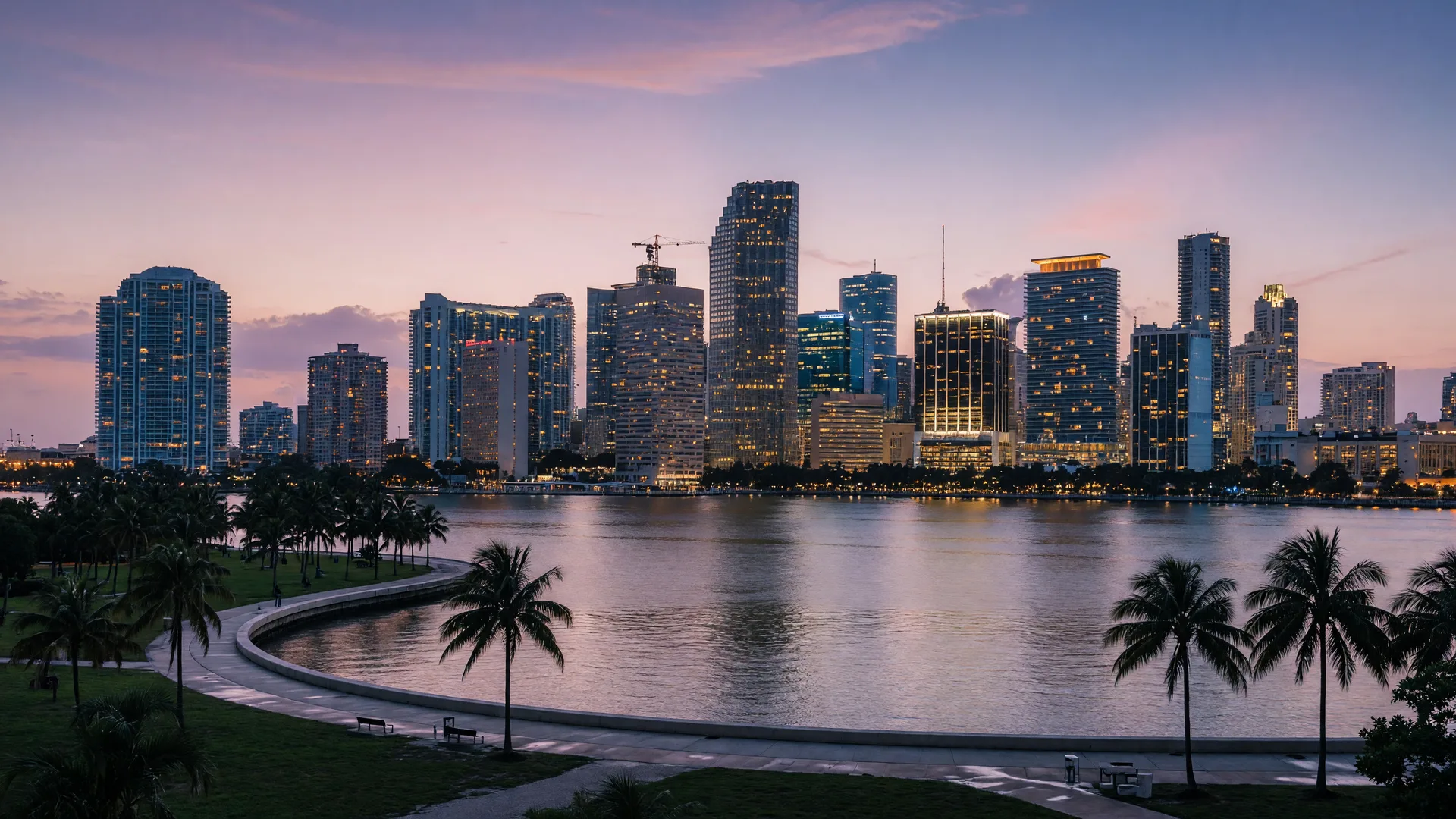
Miami-Dade County · Greater Miami
Typical value
~$550âÂÂ650K; SF into the mid-$600K+
Walk Score
77; downtown 91, Wynwood 87
Schools
Miami-Dade Public Schools; magnets lead
Flood reality
Coastal zones; countywide premiums and rises
Source: U.S. Census Bureau (population and median age), county Realtor and MLS data (median home prices), Walk Score (walkability), state and Niche school data (school grades), and the Insurance Information Institute (insurance cost averages). Figures draw from public reporting and update often, so Michael pulls live comps, school assignments, and insurance quotes for your exact address in your strategy call.
What works
Pros of living in Miami
The genuine advantages, with the specifics that matter: neighborhoods, schools, commute math, and the numbers behind the lifestyle.
-
The real-city pulse
Finance in Brickell, art in Wynwood and the Design District, culture in Little Havana, history in Coconut Grove: this is not a suburb playing at city. It is one of the hemisphere's most consequential places, and it hums every hour.
-
Walkability at city scale
A Walk Score near 77 with downtown at 91 and Wynwood in the 80s: errands, meetings, dinner, and culture on foot in the core. Among big American cities, Miami is in the top tier of walkability.
-
The bay and the beaches
Biscayne Bay runs the whole east side, the ocean is 20 minutes, and the bayfront's parks, marinas, and cruise port sit inside the city limits. The urban life has the water's edge as its horizon.
-
An airport to everywhere
MIA is one of the hemisphere's great hubs, with nonstops across Latin America, Europe, and the US. The international family has the world at a 15-minute door to door.
-
The international market
A global buyer pool, bicultural retail, consular life, and a skyline that trades like an asset class, with all-cash and foreign demand cushioning the cycles. It is the region's most liquid high-end market.
-
Culture without a ticket
Vizcaya, the Perez Art Museum, the Frost, Calle Ocho's cafes, and Wynwood Walls make the city's everyday calendar a museum pass. The standard of living includes the access to the world's art on the bayfront.
The honest trade-offs
Cons of living in Miami
No town is only a postcard. These are the trade-offs residents actually talk about, stated plainly, because a good advisor tells you the truth before you sign.
-
The price of the skyline
Typical values near half a million-plus with prime Brickell and bayfront well into the millions: the city charges a premium for its own name. The low-cost-era Miami is a story in the history books, not the listings.
-
Flood and sea-level reality
Coastal zones, storm surge, and the sea-level conversation are the new table stakes: flood insurance premiums, condo insurance hikes, and resilient-building costs are part of the annual ledger, and the low-lying east holds the most exposure.
-
Heat, humidity, and storm season
The champion summer: heat, humidity, and June-through-September storms, hurricane season from June to November, and traffic that hates the rain. The tropical reality sits inside the postcard.
-
Traffic that never ends
The city's grid locks in both peaks and swells with every event; the same urban energy that makes it exciting makes the commute a sport. Living well here means living close to where you work.
-
School zoning that varies block to block
The district's magnets and specialty schools are famous, and the zoned campuses are a lottery: a strong address can sit next to a struggling school, and the good the zoning often runs against the price curve. School planning is a full project here.
-
The condo and HOA stack
High-rise life means association fees, assessments, and insurance passes that rival a mortgage payment in the newest towers. The skyline's monthly is the buyer's fine print.
The bottom line: urbanists, international buyers, and career-driven professionals who want the real city: skyline condos, Wynwood energy, Little Havana soul, and an airport to everywhere, and who accept top-tier prices and the flood-and-heat fine print. If that sounds like you, the next step is a free 15-minute strategy call, no pressure and no obligation, at calendly.com/michaelwisniewski/15-min-strategy-call or (561) 441-8420.
At a glance
Miami: pros vs. cons, side by side
The fast comparison for the categories buyers weigh most. The full reasoning is above; this table is the one you screenshot.
| Category | What works | What to watch |
|---|---|---|
| Home values | Full spectrum from mid-$400K condos to skyline | Premium prices; the upside is priced in |
| Schools | Famous magnets: MAST, DASH, New World | Zoned campuses vary; plan early |
| Commute | MIA hub; Metrorail; walkable city core | Rush-hour grid is the daily tax |
| Walkability | 77 citywide; 91 downtown | The spread-out west remains car-bound |
| Water and outdoors | Bay, ocean, parks, and marinas at the door | Coastal flood zones and rising premiums |
| Insurance and costs | World-class amenity stack | Condo, HOA, and flood lines are real |
Ranges reflect published market data and vary by neighborhood and source. Current as of September 25, 2026.
Match the town to your life
Who is Miami best for?
Five buyer personas get the straight answer, with the honest caveat attached to each.
Urbanists and professionals
The defining fit: city life, walkable core, financial and tech corridors. Buy close to work and the city rewards you; commute across town and it taxes you.
International buyers
The hemisphere's crossroads: consular, business, and family connectors, and a market that trades like an asset class. Understand the condo-law and insurance layers first.
Investors
The most liquid market in Florida, with rental demand from a global workforce. The yield math works in the secondary market; the newest towers are insurance-sensitive.
Culture lovers
Vizcaya, the museums, the art districts, and Calle Ocho: the city is the amenity. The price of entry is the price of the city.
Waterfront buyers
Bayfront, bay windows, and the breeze, from the county's grandest estates to the mid-market waterfront buildings. Flood insurance is the permanent date on the calendar.
Not sure which persona you are? That is exactly what the free 15-minute strategy call is for. Michael will help you see clearly which towns fit your life, your timeline, and your plan.
Book a Free CallStraight answers
Miami FAQs
The questions buyers ask Michael most about Miami, answered directly with the numbers.
01 How much does it cost to buy a home in Miami?
Typical values cluster around $550,000 to $650,000, single-family homes in the mid-to-high $600,000s, and condos around the mid-$400,000s, with prime Brickell and bayfront property well above. The county median runs near $665,000 to $682,000.
02 Is Miami safe to live in?
Crime concentrates in specific neighborhoods and corridors; the tourist-pressured districts and parts of the west report differently than the safe, gated, and family streets. Block-level reporting and the city's police maps are the honest source, not the headline.
03 What are the flood and insurance realities in Miami?
Coastal, bayfront, and low-lying parcels sit in flood zones with mandatory flood coverage; countywide flood premiums average a few hundred to over a thousand a year, and condo and wind policies have risen steeply. Budget the insurance stack before the ocean view.
04 Is Miami a good place to raise kids?
It works where the school plan is strong: the district's magnet and choice schools are some of the country's best, and the right feeder combination is gold. Without the plan, the zoned variance will disappoint; families do the school homework before the house hunt.
Have a question this page did not answer? Ask it directly: (561) 441-8420 or michael@thecompleterealestateteam.com.
Keep exploring
You might also like
Living in Miami
Neighborhoods, schools, market snapshot, and things to do
Read itCoral Gables Pros and Cons
The Mediterranean-planned city across the way
Read itCommute and Transportation Guide
Metrorail, Tri-Rail, and the drive math
Read itCompare the coasts
Your next step
Let's decide if Miami is the town for you
Michael Wiz Wisniewski is The Life Transition Specialist, a Certified Real Estate Planning Advisor and Certified A.I. Real Estate Advisor with The Complete Real Estate Team, powered by Dalton Wade Real Estate, Florida DRE #3301665. He has built, bought, sold, and managed property from the Treasure Coast to South Florida, and he answers with the truth, not the sales pitch.
- (561) 441-8420
- michael@thecompleterealestateteam.com
- Book the free 15-minute strategy call
- Send a message on the contact page
Talk Soon
No obligation, no pressure
Is Miami the right fit?
Tell Michael about your move, your timeline, and your questions about Miami. He will reply personally with honest, local answers.
Message sent. Talk Soon!
Thank you for reaching out. Michael will be in touch shortly to schedule your strategy session.