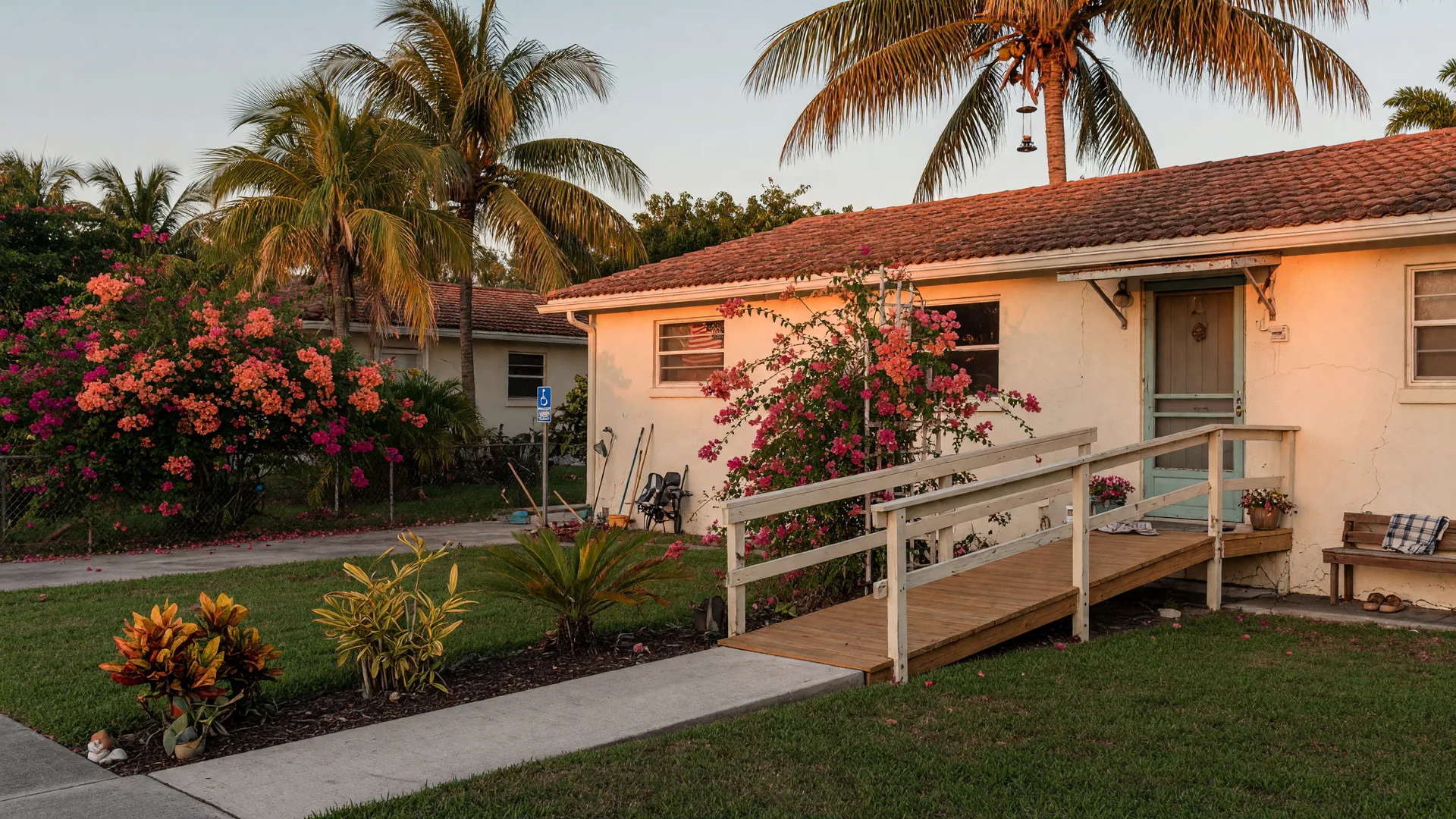
Home care is only one line item on the bill for staying home. Add the mortgage or rent, food, utilities, maintenance, property taxes, and entertainment, and a care community that bundles those costs can actually come in lower.
The honest comparison is total monthly cost, not the price of a caregiver alone.
Carol and her son Tom met me at a kitchen table in Fort Pierce, and they had already made up their minds.
“Mom stays home, and we hire help,” Tom said. “It’s what she wants, and it’s what we want. We just need to find the right caregiver.” Carol nodded. She had raised three kids in that house, buried her husband in the cemetery up the road, and every room held a memory. Staying home felt like the only answer, and for three weeks it was the plan.
Then we put the real numbers on the table. Full-time home care at roughly $30 an hour runs over $5,000 a month, and that was just the caregiver. On top of it sat the mortgage, the property taxes, the utilities, the cable and internet, the groceries, the yard service, the water heater that was eleven years old, and the roof that was past its prime. When we added it all up, the assisted living community two miles away, which bundled housing, meals, care, and activities into one monthly check, came in lower than staying home. Carol looked at the page for a long moment and said, “I never saw that coming.”
That is what this chapter does: it shows the honest, complete picture of staying at home versus moving into a senior community, not the brochure version. Nearly 90% of people over age 65 want to stay home for as long as possible, according to AARP, and that wish deserves to be taken seriously. But it deserves a real plan, too, one that accounts for cost, safety, and the quality of daily life.
01 · The Obvious Choice
Why Staying Home Feels Like the Obvious Choice
Nearly 90% of people over age 65 want to stay home for as long as possible, according to AARP, and that wish is rooted in everything familiar.
Staying home means the neighborhood, the neighbors, the morning light through the kitchen window, and the independence of a lifetime. It is where the memories live, and for most seniors it is the only answer they want to consider. That emotional pull is real, and it should be respected. But the wish to stay home and the plan to stay home safely are two different things, and the gap between them is where families get into trouble. This chapter walks through the cost, the safety risks, and the quality-of-life trade-offs so the decision is made with open eyes.
02 · The Real Bill
The Total Cost of Staying Home
Staying home is rarely as cheap as it looks, because home care is only one line item on a much longer bill.
The true total cost of staying home includes home care plus the mortgage or rent, food, utilities, cable, internet, home and yard maintenance, property taxes, and entertainment. Care communities bundle most of these into one monthly cost, which is why the comparison has to be total to total, not caregiver to rent.
- Home care, at roughly $30 an hour or over $5,000 a month for full-time help
- Mortgage or rent, property taxes, and homeowners insurance
- Food, utilities, cable, and internet
- Home and yard maintenance, plus entertainment and daily living costs
- Accessibility modifications: a wheelchair ramp costs $1,000 to as much as $15,000, and widening a doorway runs $500 to $1,000 when there are no structural issues
- Unexpected ownership costs like HVAC, roof, and hot water heater replacement, which a care community never bills
The honest conclusion: a care community can actually cost less than staying home. When the mortgage is paid off, families assume the house is nearly free, but taxes, insurance, maintenance, and the caregiver’s paycheck rarely are. Run the full list before you assume the cheaper answer.
03 · Daily Life
Quality of Life: A Dynamic Concept
Quality of life is a dynamic concept, and for many seniors it changes the moment the social circle starts to shrink.
A senior living alone can go days without a real conversation, especially when family lives far away. Isolation creeps in quietly, and the house that once felt full can start to feel empty. A community almost always provides greater opportunities for social interaction: meals with neighbors, activities, outings, and people who check in. For many seniors, that daily human contact is the single biggest quality-of-life upgrade of the move, even when they resisted it for years.
04 · The Biggest Risk
Falls: The Risk That Happens at Home
Nearly a third of seniors fall each year, and about half of all falls requiring hospitalization occur at home, according to the CDC.
A single fall can end independence, and the home is where most of them happen. The precautions are simple and inexpensive:
- Clear all walking paths of clutter
- Ensure every room has adequate lighting
- Remove all throw rugs
- Install grab bars and non-slip mats in the bathroom
05 · Fire Prevention
Fire Prevention: The Second Leading Home Injury
An average of over 7,000 people age 65 and older die each year in the U.S. from a home injury, with falls the leading cause and fires second, according to the Home Safety Council.
Fire risk grows with age, and the precautions belong on every family’s checklist:
- Stay in the kitchen while cooking, or disconnect the stove and use only the microwave
- Avoid loose-fitting clothing, which can catch fire near a cooktop
- Keep flammable items away from the cooktop
- Keep space heaters three feet or more from flammable items and turn them off when leaving the room
- Inspect the furnace and fireplace annually
- Never overload outlets or extension cords
- Replace smoke detector batteries at least twice a year, and never have the senior change them; that is a significant fall risk
06 · Medication
Medication: Small Mistakes, Serious Consequences
40% of seniors take five or more prescriptions, and as many as 55% take these medications incorrectly, according to the NIH.
A missed dose, a doubled dose, or a pill taken at the wrong time can land a senior in the hospital, and it is one of the quietest risks of living alone. Pill organizers turn a confusing routine into a visual checklist, and reminder apps on a phone or tablet can prompt each dose. If memory is already a concern, a caregiver or a care community’s medication management removes the risk entirely.
07 · Isolation
Social Isolation: The Health Epidemic No One Sees
The AARP Foundation calls social isolation a growing health epidemic among seniors, and it is linked to roughly a 50% increased risk of dementia and health risks equivalent to smoking 15 cigarettes a day.
Living alone is one of the biggest risk factors. The body and the brain both need regular human contact, and isolation erodes both. If a senior stays home, a daily-contact plan with friends and family is not optional; it is healthcare. A scheduled call every morning, a neighbor who checks in, a weekly visit, any rhythm that guarantees a human voice every single day.
08 · Nutrition
Nutrition: The $51.3 Billion Problem
Senior malnutrition costs the United States $51.3 billion a year, according to the Alliance on Aging Research.
Cooking for one is hard, and many seniors skip meals, eat the same thing every day, or rely on snacks because preparing food feels like too much. The National Institute on Aging publishes Healthy Eating resources designed for older adults, and meal delivery is a practical option that brings balanced meals to the door. A senior who eats well stays stronger, steadier, and healthier, which is why nutrition belongs in the plan, not just on the grocery list.
09 · Fitness
Fitness: Fighting the Sitting Disease
67% of adults aged 60 and older are sedentary for at least 8.5 hours a day, according to the U.S. National Health and Nutrition Examination Survey, a pattern researchers call the “sitting disease.”
The National Institute on Aging recommends at least 150 minutes of moderate-intensity physical activity per week across endurance, strength training, balance, and flexibility. That is about 20 minutes a day of walking, chair exercises, or any movement that raises the heart rate. Communities make this easy with group classes and walking groups; at home, it takes a plan and a partner to stay accountable.
10 · Driving
Driving: The Independence That Needs a Checkup
AAA warns that weaker muscles and limited range of motion can restrict gripping and turning the wheel, pressing pedals, and opening doors and windows, which makes driving a safety question long before it is a license question.
Losing the keys feels like losing freedom, which is exactly why families avoid the conversation. The gentler path is prevention: keep up regular vision and hearing checkups, review medications that can cause drowsiness, and practice driving skills. When the day comes that driving is no longer safe, a community with transportation built in softens the blow, because independence does not have to end, it just changes form.
11 · Spotting Trouble
Spotting Illness from a Distance
Over 11 million seniors live alone, according to the Administration on Aging, and someone in the U.S. develops Alzheimer’s every 65 seconds, with one in 10 people age 65 and older living with it, per the Alzheimer’s Association.
For adult children who live far away, the long-distance visit is a diagnostic tool. Walk the house with this observation checklist in mind:
- Changes in housekeeping and hygiene
- Stains on clothes and unkempt hair
- Changes in attitude or demeanor
- Gait and balance changes
- Refrigerator and pantry contents, and expired medications
- Signs of accidents on carpets or in bathrooms
12 · Emergencies
Emergency Preparedness: A Plan That Works When No One Is There
A senior living alone needs an emergency plan that works even when no one is home to help.
- Poison control and neighbor numbers handy, by the phone and on the fridge
- Two practiced exit routes from the home
- Smoke alarms and carbon monoxide detectors on each floor or near each bedroom, checked twice a year with no ladders for the senior
- Easily accessible fire extinguishers, and a home fire sprinkler system for mobility issues
- A backup generator for oxygen or dialysis equipment
- A personal emergency response system, a wearable call button or in-home voice-activated system, worn at all times
13 · The Community Side
What Care Communities Cover as Standard Practice
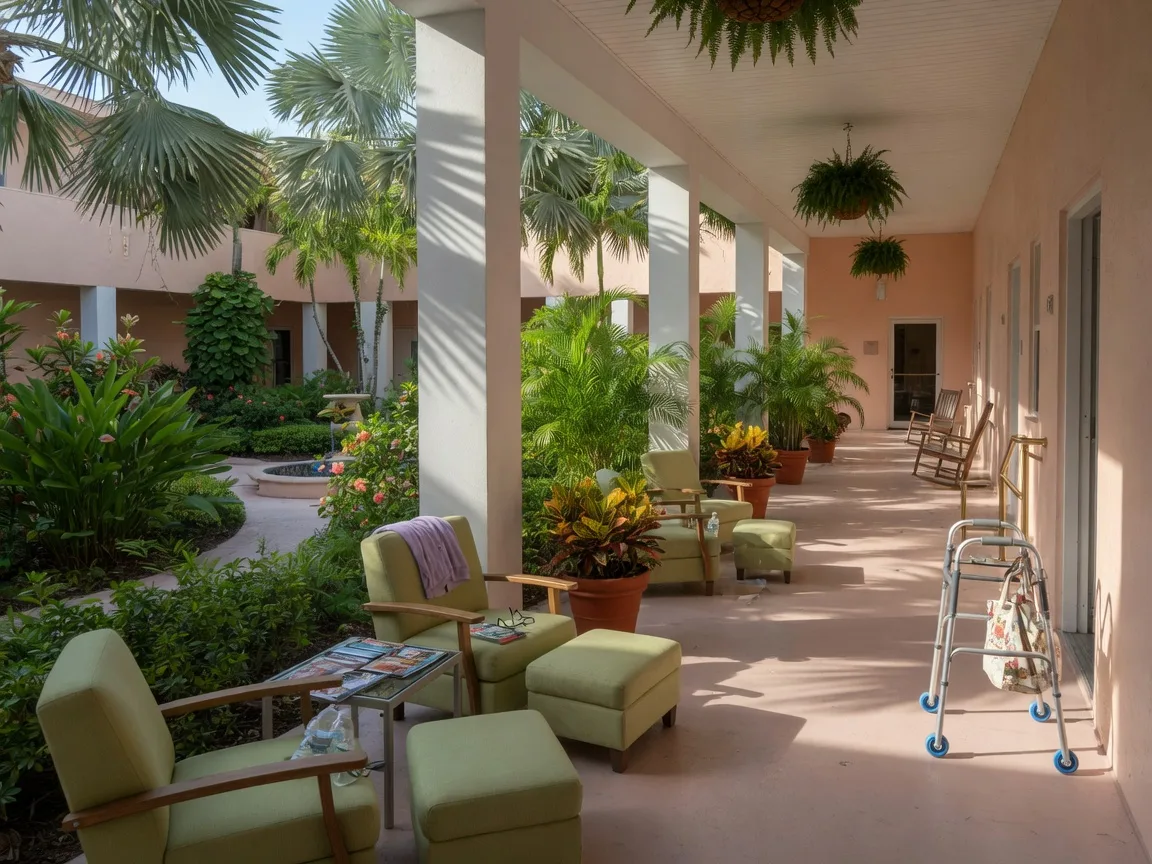
Care communities cover, as standard practice, what staying home leaves to chance: 24/7 care, safety, amenities, social opportunities, bundled costs, and peace of mind.
Staff are there around the clock, meals are prepared and served, activities keep residents engaged, and the building is designed for aging bodies, with grab bars, wide doorways, and emergency response built in. Families pay one monthly bill instead of juggling a dozen vendors. That peace of mind has real value, especially for adult children who live out of state and cannot be there for the day-to-day. Technology can extend safety and companionship even further, which is the subject of a future chapter in this book, Chapter 14, How Technology Can Help with Companionship and Safety.
Keep in Mind
Staying home and moving to a community are not moral choices, they are planning choices. The right answer depends on cost, safety, health, and the senior’s own wishes, and it can change over time. Run the full numbers, walk the house with the safety checklist, and let the senior lead the decision with honest information.
Quick Answers
Questions Families Ask About Staying Home vs. Senior Communities
How much does it really cost to stay home versus moving to a senior community?
Staying home is rarely as cheap as it looks, because home care is only one line item on a much longer bill. Add the mortgage or rent, food, utilities, cable and internet, home and yard maintenance, property taxes, and entertainment, and many families find a care community that bundles all of that into one monthly cost can actually cost less than staying home.
What home modifications should we budget for when aging in place?
Accessibility work adds up fast. A wheelchair ramp costs $1,000 to as much as $15,000, and widening a doorway runs $500 to $1,000 when there are no structural issues. Families should also budget for unexpected ownership costs like HVAC, roof, and hot water heater replacement, which do not exist in a care community.
How common are falls at home for seniors?
Very common, and the numbers are sobering. Nearly a third of seniors fall each year, and about half of all falls requiring hospitalization occur at home, according to the CDC. Clear walking paths of clutter, make sure every room has adequate lighting, remove throw rugs, and install grab bars and non-slip mats in the bathroom.
What are the biggest home safety risks for seniors?
An average of over 7,000 people age 65 and older die each year in the U.S. from a home injury, with falls the leading cause and fires second, according to the Home Safety Council. Fire prevention means staying in the kitchen while cooking, keeping space heaters three feet or more from flammable items, inspecting the furnace and fireplace annually, and replacing smoke detector batteries at least twice a year, never by the senior themselves, since that is a significant fall risk.
How can adult children spot health problems in a parent from a distance?
Over 11 million seniors live alone, according to the Administration on Aging, so a long-distance visit checklist matters. Look for changes in housekeeping and hygiene, stains on clothes, unkempt hair, changes in attitude or demeanor, gait and balance changes, the contents of the refrigerator and pantry, expired medications, and signs of accidents on carpets or in bathrooms.
Is social isolation really a health risk for seniors?
Yes, seriously. The AARP Foundation calls social isolation a growing health epidemic among seniors, and it is linked to roughly a 50% increased risk of dementia and health risks equivalent to smoking 15 cigarettes a day. Living alone is one of the biggest risk factors, which is why a daily-contact plan with friends and family matters.
What should a senior’s emergency plan include?
Poison control and neighbor numbers handy, two practiced exit routes, smoke alarms and carbon monoxide detectors on each floor or near each bedroom checked twice a year with no ladders for seniors, easily accessible fire extinguishers, a home fire sprinkler system for mobility issues, a backup generator for oxygen or dialysis equipment, and a personal emergency response system worn at all times.
What do care communities cover that staying home does not?
As standard practice, care communities cover 24/7 care, safety, amenities, social opportunities, bundled costs, and peace of mind. Staying home leaves each of those to the family to arrange, which is the honest trade-off at the heart of this decision.
Staying home and moving to a community are planning choices, not moral ones, and the right answer changes as needs change. Read Chapter 6 in full on the book hub, or compare it with Chapter 5’s map of senior living options before you decide.

About the Author
Michael "Wiz" Wisniewski
Michael "Wiz" Wisniewski is The Life Transition Specialist with The Complete Real Estate Team, powered by Dalton Wade Real Estate, serving clients from the Treasure Coast to South Florida. A Certified Real Estate Planning Advisor, Certified Life Transition Specialist, and Certified A.I. Real Estate Advisor, he has worked nearly every side of real estate: fix-and-flip investing, land development, home building, and property management, and guides families through life's transitions with care, honesty, and the Golden Rule.
Certified Real Estate Planning Advisor | Certified Life Transition Specialist | Certified A.I. Real Estate Advisor
The honest comparison is what turns a wish into a plan.
Run the Numbers, Not the Guesses
Staying home or a senior community: get the honest total cost
Michael Wisniewski, The Wizard of Real Estate and Life Transition Specialist with The Complete Real Estate Team powered by Dalton Wade Real Estate, helps Florida families compare the true cost of staying home against a senior community. Book your free 15-minute strategy call, or call him directly at (561) 441-8420 .
Prefer to read first? How to Pay for Long-Term Care is free on our website, and Chapter 6 on staying home vs. a senior community lays out the full comparison. Have a specific question? Contact Michael directly.
If your family is weighing staying home against a senior community, you do not have to guess.
Written by
Michael Wisniewski, The Wizard of Real Estate
Certified Real Estate Planning Advisor | Certified Life Transition Specialist | Certified A.I. Real Estate Advisor
Helping Florida families protect what matters most.
Talk Soon