Living in Miami Springs: Pros and Cons
Best for aviation workers, families, and vintage-home buyers who want a leafy 1920s garden suburb beside the airport, with a small-town village street, steady values near the county median, and a commute measured in minutes.
The honest picture
What is it really like to live in Miami Springs?
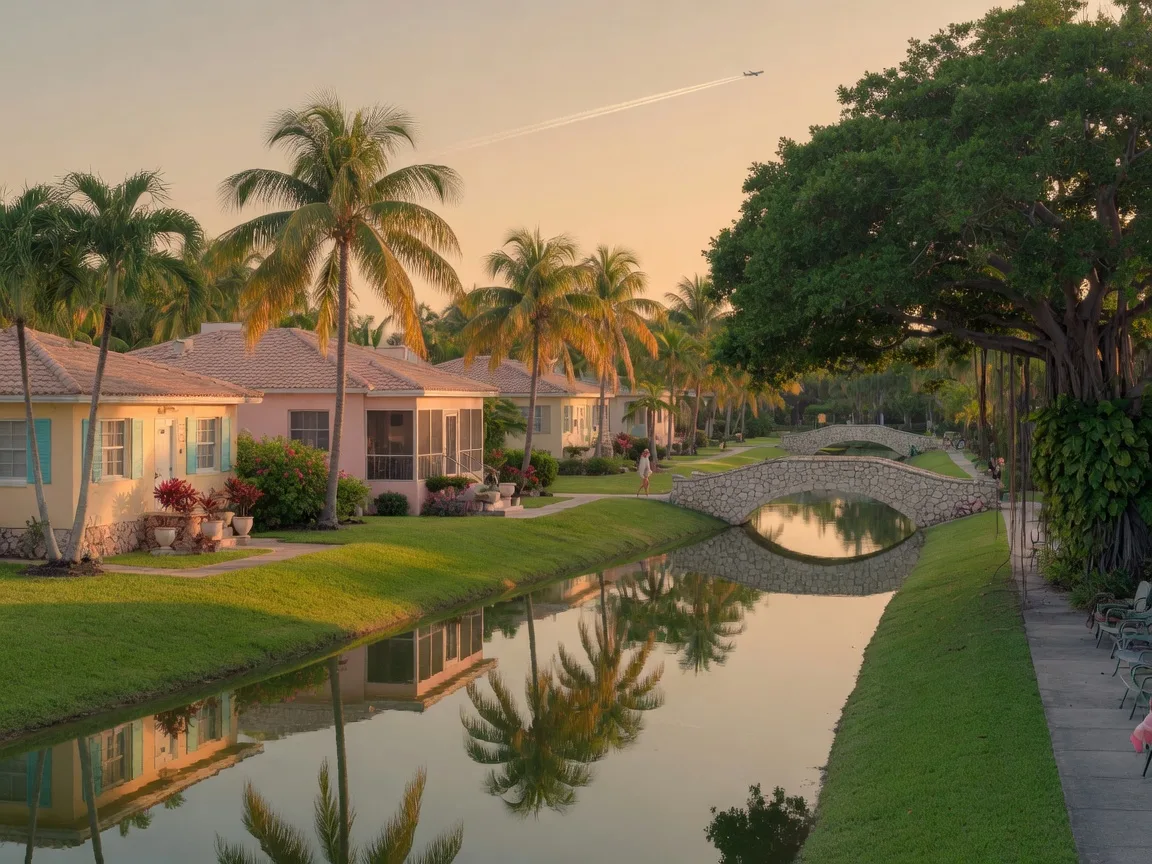
Miami Springs is a leafy 1920s garden suburb built by aviation pioneer Glenn Curtiss for the families of his flying field, and it still feels like a small town: cottages, canals, and a village shopping street a stone's throw from Miami International Airport. Median sale prices are reported around $740,000 by some sources and lower by others, reflecting a steady, coveted market. Pilots love the commute; everyone loves the scale.
This guide keeps the postcard and adds the fine print: real price ranges, the schools buyers actually check, commute reality, walkability scores, and the insurance and heat costs nobody puts in the brochure. If you read one page before you start house hunting in Miami-Dade County, make it this one. And when you want the street-level version, that is a free call away.
Want the honest, street-level take on Miami Springs? Set up a free 15-minute strategy call with Michael Wiz Wisniewski, Certified Real Estate Planning Advisor and Certified A.I. Real Estate Advisor, and he will tell you what the listings do not.
Miami-Dade County · Greater Miami
Median home price
~$552K-$740K by source
Walk Score
~32; village street walkable
Population / median age
~14,000 / ~40
Schools
Miami-Dade; magnets and privates
Source: U.S. Census Bureau (population and median age), county Realtor and MLS data (median home prices), Walk Score (walkability), state and Niche school data (school grades), and the Insurance Information Institute (insurance cost averages). Figures draw from public reporting and update often, so Michael pulls live comps, school assignments, and insurance quotes for your exact address in your strategy call.
What works
Pros of living in Miami Springs
The genuine advantages, with the specifics that matter: neighborhoods, schools, commute math, and the numbers behind the lifestyle.
-
The airport commute
Miami International is minutes away, a genuine advantage for airline crews, pilots, and frequent travelers that keeps the town in permanent demand.
-
1920s garden suburb character
Glenn Curtiss designed it as a planned village: tree-lined streets, canals, and Mediterranean and frame cottages that give it an architectural soul most suburbs lack.
-
A real village street
The Circle and the Westward streets hold small-town shops, restaurants, and a coffee culture that make everyday life feel like a movie set.
-
Canals and green spaces
Graceful canals, parks along the riverwalk, and a surprisingly green canopy for a town beside an airport.
-
Central location
Downtown Miami, Coral Gables, Doral, and both airports are 15 to 25 minutes away: everything is close, and the town itself stays calm.
-
Steady values
Limited land, historic charm, and the airport economy keep demand strong and values stable across cycles.
The honest trade-offs
Cons of living in Miami Springs
No town is only a postcard. These are the trade-offs residents actually talk about, stated plainly, because a good advisor tells you the truth before you sign.
-
Airplane noise
The airport's flight paths are the cost of the commute; some streets are louder than others, and noise is a genuine consideration at open houses.
-
Premium for the character
Prices run near or above the county median, with reported medians around $552,000 to $740,000 depending on the source; the charm is priced in.
-
Older housing stock
Homes are vintage by design: systems, roofs, and layouts need updating, and modern renovated cottages command top dollar.
-
Car dependence outside the village
The village street is walkable, but the town's overall Walk Score sits near 32, and most errands require a car.
-
Flood and drainage realities
The town sits on former wetlands drained by canals: flood zones exist near waterways, and insurance and drainage matter.
-
School planning required
Miami-Dade's public assignments vary by street, so most families add magnet or private schools to the plan.
The bottom line: aviation workers, families, and vintage-home buyers who want a leafy 1920s garden suburb beside the airport, with a small-town village street, steady values near the county median, and a commute measured in minutes. If that sounds like you, the next step is a free 15-minute strategy call, no pressure and no obligation, at calendly.com/michaelwisniewski/15-min-strategy-call or (561) 441-8420.
At a glance
Miami Springs: pros vs. cons, side by side
The fast comparison for the categories buyers weigh most. The full reasoning is above; this table is the one you screenshot.
| Category | What works | What to watch |
|---|---|---|
| Home values | Steady demand from the airport economy | Charm premium; older systems |
| Schools | Magnets and privates within reach | Zoning varies by street |
| Commute | MIA minutes; city cores 15-25 minutes | Flight-path noise on some streets |
| Walkability | Village street and riverwalk | Citywide car dependence |
| Water and outdoors | Canals, parks, and riverwalk | Flood zones near waterways |
| Insurance and costs | Values weather cycles | Flood coverage in mapped areas |
Ranges reflect published market data and vary by neighborhood and source. Current as of September 25, 2026.
Match the town to your life
Who is Miami Springs best for?
Five buyer personas get the straight answer, with the honest caveat attached to each.
Airline workers and pilots
The home run: a five-minute commute to MIA from a leafy town, plus a village social life. Noise on some streets is the honest caveat.
Vintage-home buyers
Architecture lovers who will renovate 1920s and 1930s cottages, canals, and character in exchange for charm and location.
Families
Small-town streets, parks, and community events appeal to families; school planning and car dependence are the trade-offs.
Remote workers
Cafes on the village street, quick airport access for trips, and a calmer pace than the city, all 15 minutes from urban Miami.
Investors
Vintage cottages near the airport rent steadily to airline staff and travelers; the play is renovation upside plus demand depth.
Not sure which persona you are? That is exactly what the free 15-minute strategy call is for. Michael will help you see clearly which towns fit your life, your timeline, and your plan.
Book a Free CallStraight answers
Miami Springs FAQs
The questions buyers ask Michael most about Miami Springs, answered directly with the numbers.
01 How much do homes cost in Miami Springs?
Sources vary: Redfin reports a median near $740,000, while value-based measures run lower, around $552,000 to $710,000. The market is steady and the vintage charm is priced in.
02 Is the airport noise a problem?
It depends on the street. Some blocks sit directly under flight paths and are loud; others are shielded by the canopy. Address-level noise checks are essential before buying.
03 Is Miami Springs walkable?
The village street around The Circle is genuinely walkable with shops and cafes, but the town's overall Walk Score is around 32, so cars do most of the work outside the core.
04 What about flooding?
The town was built on drained wetlands with a canal system, so flood zones exist near waterways and insurance is required in mapped areas. Check each address against flood maps.
Have a question this page did not answer? Ask it directly: (561) 441-8420 or michael@thecompleterealestateteam.com.
Keep exploring
You might also like
Living in Miami Springs
The garden suburb by the airport
Read itLiving in Coral Gables
The planned city next door
Read itCommute Guide
Airports, rails, and roads across South Florida
Read itCompare the coasts
Your next step
Let's decide if Miami Springs is the town for you
Michael Wiz Wisniewski is The Life Transition Specialist, a Certified Real Estate Planning Advisor and Certified A.I. Real Estate Advisor with The Complete Real Estate Team, powered by Dalton Wade Real Estate, Florida DRE #3301665. He has built, bought, sold, and managed property from the Treasure Coast to South Florida, and he answers with the truth, not the sales pitch.
- (561) 441-8420
- michael@thecompleterealestateteam.com
- Book the free 15-minute strategy call
- Send a message on the contact page
Talk Soon
No obligation, no pressure
Is Miami Springs the right fit?
Tell Michael about your move, your timeline, and your questions about Miami Springs. He will reply personally with honest, local answers.
Message sent. Talk Soon!
Thank you for reaching out. Michael will be in touch shortly to schedule your strategy session.