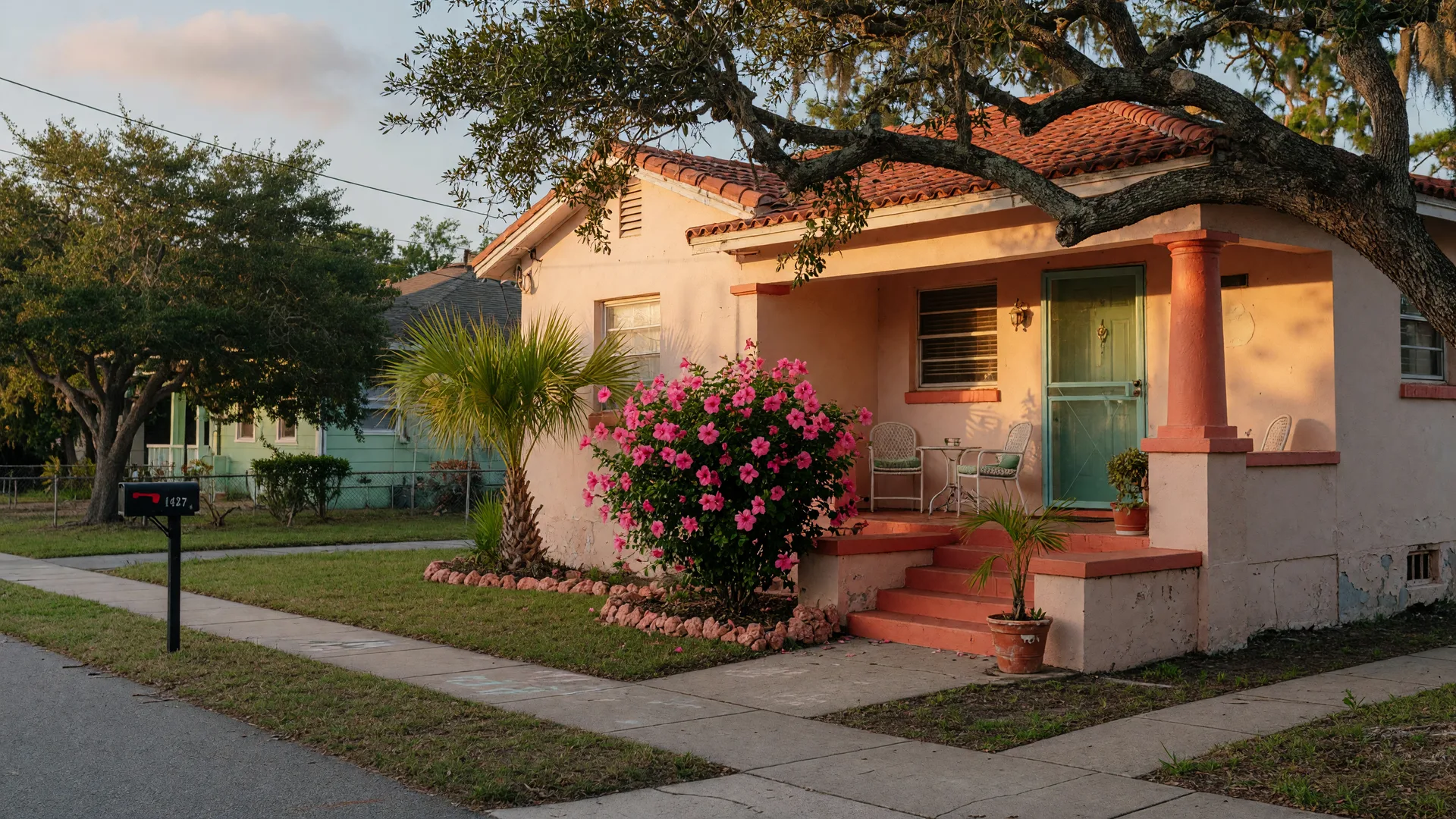
Ed called me on a rainy Tuesday in October, and I could hear the weight of it in his voice.
His mother, Ruth, had lived in the same St. Petersburg bungalow for 38 years. The hibiscus she planted the week her husband died still bloomed by the front door. Ed wanted her to move into assisted living. Ruth wanted to die in that house. They’d been going in circles for months, and every conversation ended with someone crying. “The problem,” Ed said, “is that we’re arguing about feelings when we should be looking at numbers.” He was right. This article is that conversation, the honest one, with the real Florida numbers, so your family can stop circling and start deciding.
Here’s the framework I use with clients, and it starts with one truth: 75% of Americans 50 and older say they want to stay in their current home as they age, according to AARP’s 2024 Home and Community Preferences Survey. Most families don’t have a disagreement about love. They have a disagreement about facts. Let’s fix that.
$5,324
Average cost of assisted living in Florida
One all-in monthly fee that usually covers housing, meals, housekeeping, laundry, activities, and a base level of care and supervision.
$30/hr
Median cost of non-medical home care in Florida
At 40 hours a week of help, that lands near $5,200 to $5,500 a month, before rent or mortgage, utilities, food, and home modifications.
70%
Of people over 65 will need long-term care
The 70% rule from Chapter 1 of How to Pay for Long-Term Care, commonly cited from the U.S. Department of Health and Human Services.
75%
Of Americans 50+ want to stay in their current home
AARP's 2024 Home and Community Preferences Survey. Wanting to stay is not the same as being able to, which is why the decision comes down to care and cost.
01 · The Cost of Staying Put
What Does Aging in Place in Florida Actually Cost?
Aging in place in Florida is not free: full-time home care runs about $30 an hour, which adds up to more than $5,000 a month, before rent or mortgage, utilities, food, and home modifications.
Families often assume staying home is the cheap option, and they’re not wrong, until care needs climb. Florida’s statewide median for non-medical home care is about $30 per hour; 40 hours a week of help lands near $5,200 to $5,500 a month. Add grab bars, a walk-in shower, a stair lift, or a first-floor conversion, and the quiet costs stack up fast. Staying home is usually cheaper at Level 1 care, and often more expensive than assisted living by Level 3. The number that matters is not the hourly rate. It’s the total monthly burn.
02 · The All-In Alternative
What Does Senior Living in Florida Actually Cost?
Florida assisted living averages about $5,324 a month, and that single price usually covers housing, meals, housekeeping, laundry, activities, and a base level of care and supervision.
Compared with aging in place, assisted living is often the surprise value: one monthly number replaces rent or mortgage, utilities, groceries, home maintenance, and most in-home care hours. Memory care runs higher, around $5,495 a month in Florida, and a private nursing home room can approach $146,000 a year. The care level you need, not your feelings about it, should drive the comparison, and the 70% rule from Chapter 1 of How to Pay for Long-Term Care applies here: roughly 7 in 10 people over 65 will need some form of long-term care.
03 · The Framework
The Decision Framework: Three Questions Every Family Should Answer
The cleanest way for a family to decide aging in place versus senior living is to answer three questions in order: What care does Mom or Dad need today, what will it cost this year, and who shows up when a crisis happens?
Question 1: What Level of Care Is Needed Today?
Start with an honest care assessment, not an opinion. Can they manage bathing, dressing, cooking, and medication alone? Falls in the shower are the classic turning point. If the need is companionship and light help, aging in place works. If it’s daily hands-on care, the numbers start favoring community living.
Question 2: What Does It Cost Per Month, Side by Side?
Build the real monthly ledger. Aging in place: mortgage or rent, utilities, food, home maintenance, plus care hours at $30 an hour. Senior living: the all-in monthly fee, typically about $5,324 in Florida. Many families find assisted living competitive with, or cheaper than, staying home once care exceeds 20 hours a week.
Question 3: Who Shows Up When Things Go Wrong?
In a solo house, the answer is usually an adult child an hour or more away, or no one until morning. In senior living, help is minutes away, 24/7. When a parent has already had one fall or one hospital stay, ask yourself who responds at 2 a.m. That answer alone decides more families than any spreadsheet.
04 · Paying for It
How Do Florida Families Pay for Either Choice?
Florida families pay for aging in place and senior living with a mix of savings, Social Security income, long-term care insurance, veterans benefits, and, when eligible, Medicaid.
Medicaid is the payer of last resort, and planning for it is exactly what elder law attorneys do, which is why Chapter 4 of the book series matters: asset protection planning has to happen before the money runs out, not after. Florida’s no-state-income-tax status also frees up retirement income for care costs. If you’re weighing a move from another state, run the same ledger on taxes first, and the relocation guides on this site walk through the Minnesota , New Jersey , and New York comparisons. The Chapter 4 companion post covers elder law planning in a few minutes of reading.
The Rule to Remember
Wanting to stay home is a feeling. Whether staying home is safe and affordable is a number. Write both options on one page, fill in the real monthly costs, and let the ledger speak. That is how Ruth and Ed finally stopped circling.
05 · Quick Answers
Aging in Place vs. Senior Living in Florida: The Answers Families Ask
Is aging in place cheaper than assisted living in Florida?
It depends on care level. Full-time home care at about $30 an hour exceeds $5,000 a month, while Florida assisted living averages about $5,324 a month all-in. Once a senior needs more than roughly 20 hours of care a week, assisted living is often competitive with, or cheaper than, staying home.
What is the cost of home care in Florida in 2026?
Florida's median for non-medical home care is about $30 an hour, roughly $5,200 to $5,500 a month for 40 hours a week of help.
What is the cost of assisted living in Florida?
Florida assisted living averages about $5,324 a month, with memory care around $5,495 a month and private nursing home rooms approaching $146,000 a year.
What percentage of seniors want to age in place?
75% of Americans 50 and older want to stay in their current home as they age, according to AARP's 2024 Home and Community Preferences Survey.
How do families decide between aging in place and senior living?
Answer three questions in order: what level of care is needed today, what each option costs per month with real numbers, and who responds in a crisis. The care level and the monthly ledger decide it, not guilt or nostalgia.
Keep Reading This Series
- How to Pay for Long-Term Care , the free 18-chapter book hub, including Chapter 1: The Facts and Chapter 4: Elder Law Attorneys
- Snowbird Season Is Coming: The 5-Week Florida Transition Plan for Senior Parents
- The Family Decision Guide: How Adult Children and Aging Parents Can Make the Right Move Together
- Is It Time to Move, or Should I Stay? The #1 Question Seniors in Transition Ask
- Downsize Your Florida Home with Ease and a Plan
- Contact Michael for a private conversation about your family’s decision

About the Author
Michael "Wiz" Wisniewski
Michael "Wiz" Wisniewski is The Life Transition Specialist with The Complete Real Estate Team, powered by Dalton Wade Real Estate, serving clients from the Treasure Coast to South Florida. A Certified Real Estate Planning Advisor, Certified Life Transition Specialist, and Certified A.I. Real Estate Advisor, he has worked nearly every side of real estate: fix-and-flip investing, land development, home building, and property management, and guides families through life's transitions with care, honesty, and the Golden Rule.
Certified Real Estate Planning Advisor | Certified Life Transition Specialist | Certified A.I. Real Estate Advisor
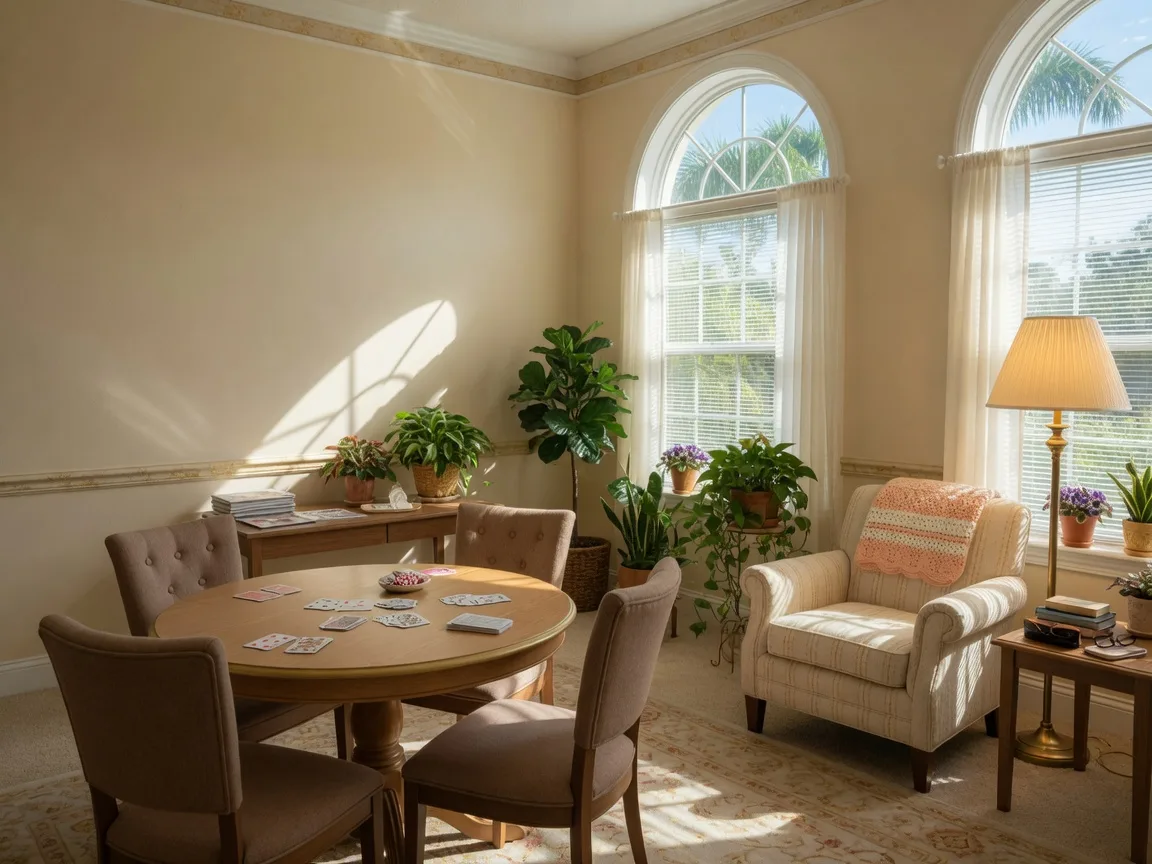
Ed and Ruth finally stopped circling when they put the numbers on the table. Ruth’s care had quietly reached 25 hours a week, and the ledger said what the feelings wouldn’t: assisted living was cheaper than staying home, and closer to help. The bungalow sold to a young family who loves the hibiscus. Ruth tells everyone her new place has people to play cards with. That’s not surrender. That’s arithmetic, and love, finally pointing the same direction.
If your family is circling on this decision, don’t wait for the crisis to make it for you. Book a free 15-minute strategy call and let’s run the real numbers together.
SENIOR TRANSITION SERIES
Run the real numbers with a Certified Real Estate Planning Advisor
Michael Wisniewski, The Wizard of Real Estate and Life Transition Specialist with The Complete Real Estate Team powered by Dalton Wade Real Estate, helps Florida families build the aging in place versus senior living ledger, then find the right plan for care, the home, and the family. Book your free 15-minute strategy call, or call him directly at (561) 441-8420 .
Prefer to read first? How to Pay for Long-Term Care is free on our website, and Chapter 4 on elder law attorneys lays out the asset protection plan.
The number will tell you the truth when the feelings can’t. Let’s find it together.
Written by
Michael Wisniewski, The Wizard of Real Estate
Certified Real Estate Planning Advisor | Certified Life Transition Specialist | Certified A.I. Real Estate Advisor
Helping Florida families protect what matters most.
Talk Soon