
The story: a Sebastian teacher, a box of braces, and a $2,400 bill she never saw coming
This is a composite story, an illustration built from patterns I see in my work every day, and it is not the story of any single client of mine. It is the story Florida seniors need to know before the phone rings. Diane lives in Sebastian, a retired teacher who spent thirty years in a classroom and now spends her mornings on the river and her afternoons with her grandchildren. One afternoon the phone rang, and a friendly voice said it was calling about a Medicare benefit Diane did not know she had: free knee braces, fully covered by Medicare, delivered right to her door. There was just one small step. The caller needed her Medicare number to “verify coverage.”
Diane hesitated, then read the number off her card. The voice thanked her warmly, said the braces would arrive in a few weeks, and hung up. Weeks later a box did arrive, a package of knee braces Diane had never asked for and never needed. She set it aside, puzzled. Then the Medicare Summary Notice came in the mail, and the puzzle turned cold: Medicare had been billed $2,400 for equipment she never ordered, from a supplier she never contacted. She called the number on the notice, and the line was disconnected.
Here is the lesson at the end of Diane’s story, and it is the whole armor: if gear shows up that you never ordered, someone is billing Medicare with your number, and the fix starts with the Medicare Summary Notice. The box was not a mistake. It was the receipt for a crime, and the notice was the evidence. The senior who knows the scam is the one who beats it. Knowledge is your armor, and it never wears out.
The quick answer
An unrequested medical equipment scam is when a criminal bills Medicare for durable medical gear, like braces, back supports, or diabetic supplies, that a senior never ordered, never received, or never needed. The scammer gets the Medicare number through a cold call, a booth, or a stolen record, then files claims with a fake supplier. Real Medicare equipment requires a doctor’s order, and a senior should never share a Medicare number with an unsolicited caller.
Why the unrequested equipment scam works: the numbers behind the script
Medical equipment is a giant, legitimate business, and that is exactly what makes it a target. According to the HHS Office of Inspector General, Medicare payments for durable medical equipment, prosthetics, orthotics, and supplies top more than $7 billion a year in original Medicare alone. That river of money is what the fake suppliers are fishing in, and in 2026 CMS cracked down on a massive $3.4 billion medical equipment supplier fraud scheme where 11 suppliers used improper billing, including claims for beneficiaries who were deceased.
The seniors behind the numbers are the point. The FTC reports that reported losses by adults 60 and older jumped 300% from 2020 to 2024, to $2.4 billion, and the FBI’s IC3 reports adults 60 and older lost $7.748 billion to scams in 2025, up 59% from the year before. Even the impersonation layer is growing: government impersonation scams that ride on Medicare’s name doubled to $413 million in 2025. The defense is simpler than the offense: real Medicare equipment requires a doctor’s order, Medicare never calls to sell gear, and the Medicare Summary Notice shows every claim billed with your number. Check it every month, and the fraud loses its hiding place.
The real numbers behind the unrequested equipment scam
- $7B+
- Medicare payments for durable medical equipment, prosthetics, orthotics, and supplies top more than $7 billion a year in original Medicare alone (HHS Office of Inspector General)
- $3.4B
- CMS cracked down on a massive $3.4 billion medical equipment supplier fraud scheme in 2026, where 11 suppliers used improper billing, including claims for beneficiaries who were deceased
- 300%
- reported losses by adults 60 and older jumped 300% from 2020 to 2024, to $2.4 billion (FTC)
- $7.748B
- adults 60 and older lost $7.748 billion to scams in 2025, up 59% from the year before (FBI IC3)
- $413M
- government impersonation scams that ride on Medicare’s name doubled to $413 million in 2025
How the unrequested medical equipment scam works
The unrequested equipment scam is not one trick; it is a machine with ten moving parts, and each one has a tell. Learn all ten now:
Angle 01
The unsolicited box of equipment that arrives with a bill
The first sign is often the package itself: a box of knee braces, back supports, or diabetic supplies shows up at the door that nobody in the house ordered. Days later a bill or an Explanation of Benefits follows, addressed to the senior, for equipment that was never requested and never needed.
The box is the proof that someone else is using the Medicare number. Real Medicare equipment is ordered by a doctor, delivered through a supplier the patient or their family chose, and never arrives as a surprise. A package that appears out of nowhere is a billing crime in cardboard.
Red flag: a box of medical equipment that arrives that you never ordered.
Angle 02
The Medicare Summary Notice or Explanation of Benefits showing charges for gear never ordered
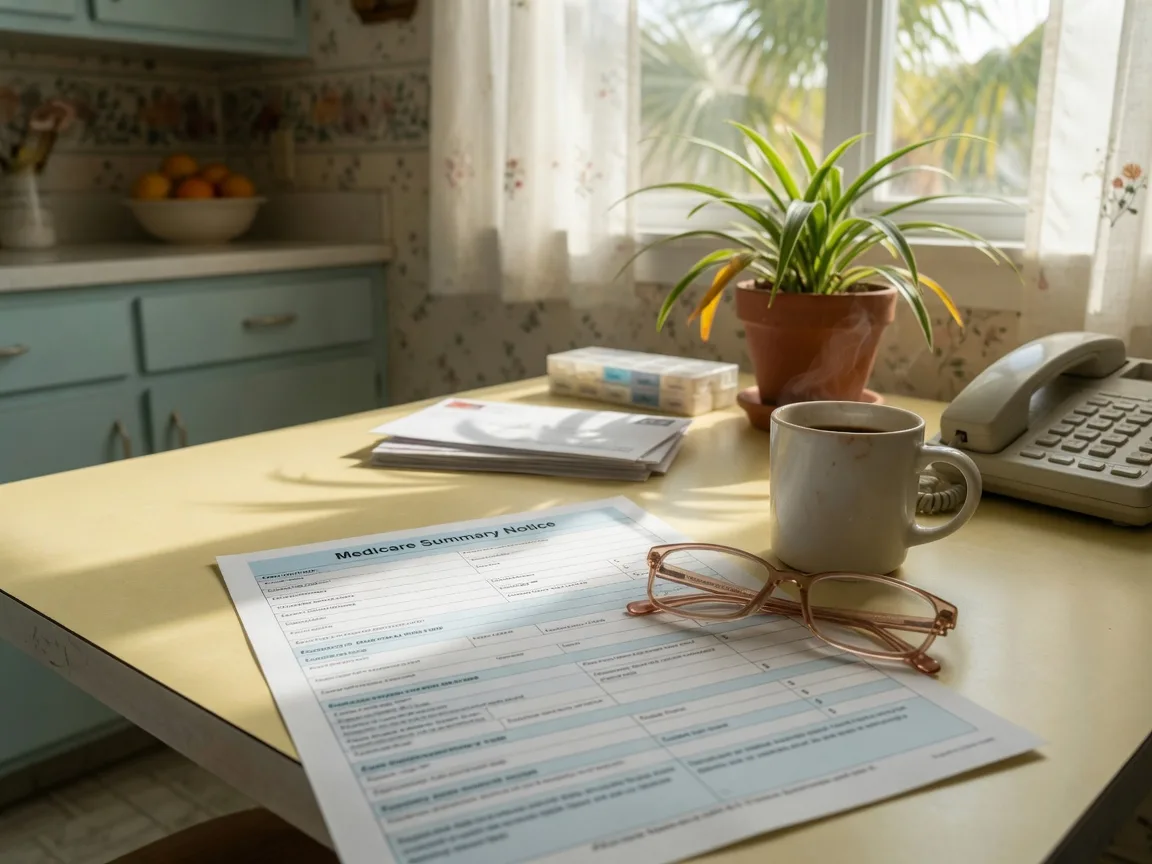
The Medicare Summary Notice, the four-page statement Medicare mails every three months, is where the fraud becomes visible. A line item shows a supplier name the senior has never heard of, a charge for braces or back supports, and a date that matches nothing in the senior’s life.
This is why the notice matters more than any call: it is the paper trail of what was billed with the senior’s number. Checking it every month is the first line of defense, because a fraudulent charge that is caught early can be disputed, while a charge that is never seen can repeat for years.
Red flag: a Medicare Summary Notice showing charges from a supplier you never contacted.
Angle 03
The cold call or booth offering “free” braces, back supports, or diabetic supplies
The scam usually starts with a voice: a cold call offering “free” knee braces, back supports, or diabetic supplies, “fully covered by Medicare.” The same pitch runs at booths, fairs, and community events, where a friendly table offers free gear to anyone with a Medicare card.
Medicare never calls to sell equipment, and no legitimate supplier needs to recruit beneficiaries by phone or at a fair. The “free” gear is the bait, and the real product being collected is the Medicare number that pays for it.
Red flag: a cold call offering “free” braces, back supports, or diabetic supplies “covered by Medicare.”
Angle 04
The scammer who asks for the Medicare number to “verify” coverage
The hook is simple and rehearsed: the caller already knows the senior’s name, and just needs the Medicare number to “verify coverage” or “update the file” before shipping the free gear. The senior reads the number off the card, and the scammer now has everything needed to bill Medicare.
No legitimate caller needs the full Medicare number to verify anything, and Medicare itself never asks for the number over the phone. The moment a stranger asks for the card number, the call is over, because the number is the payment method.
Red flag: a caller who asks for your Medicare number to “verify” or “update” coverage.
Angle 05
The supplier who bills Medicare for equipment the doctor never prescribed
Real Medicare equipment requires a doctor’s order, called a prescription or certificate of medical necessity. The fake supplier skips that step entirely, filing claims for braces, supports, and supplies that no physician ever ordered for the senior.
The missing doctor’s order is the heart of the fraud. Medicare pays for durable medical equipment only when a doctor prescribes it, so a claim with no prescription behind it is a claim built on the senior’s number alone.
Red flag: a bill for equipment your doctor never prescribed.
Angle 06
The fake supplier who resells or reuses equipment and bills twice
Some fake suppliers go further: they resell equipment that was already paid for, or reuse returned and refurbished gear, and bill Medicare again for the same item. The senior’s number gets charged for equipment that was never delivered to them, sometimes more than once.
The double billing is why the Medicare Summary Notice matters so much. A senior who checks the notice can spot the same supplier charging the same item twice, and each duplicate claim is evidence for the fraud report.
Red flag: duplicate charges from the same supplier on your Medicare Summary Notice.
Angle 07
The “free trial” that turns into recurring monthly charges
In this variant, the “free trial” of a brace or support requires the Medicare number, and sometimes a credit card for “shipping,” and quietly renews into recurring monthly charges. The senior never asked for a subscription, but the charges keep coming.
A real medical device is not a subscription, and a “free trial” that needs a Medicare number or a card number is a payment trap. If the trial requires payment details up front, the trial is the product being sold.
Red flag: a “free trial” that requires your Medicare number or credit card.
Angle 08
The family member or caregiver who gets pressured to confirm delivery
When the equipment arrives, the scammer may call back and pressure a family member or caregiver to “confirm delivery” of the package, sometimes asking them to read back tracking numbers or sign off on receipt. The confirmation is used to make the fraudulent claim look legitimate.
Confirming delivery of something you never ordered does not make it yours, and it hands the scammer the documentation they need. The correct reply to any delivery confirmation for unordered gear is the same as for the gear itself: refuse it and report it.
Red flag: pressure to confirm delivery of something you never ordered.
Angle 09
The follow-on identity theft when the Medicare number is used to bill for more
A Medicare number in the wrong hands is a key that keeps turning. After the first fraudulent claims, the same number can be used to bill for more equipment, open fake supplier accounts, and pair with other stolen personal details for full identity theft.
That is why a compromised Medicare number needs a response, not just a shrug: call Medicare, flag the billing, and request a new Medicare number if yours was used fraudulently. Stopping the first claim is how the follow-on theft never starts.
Red flag: new or unfamiliar charges appearing on your Medicare Summary Notice month after month.
Angle 10
The Florida angle: the Medicare Summary Notice is the first line of defense, and reporting lines that work
Here is the truth that ends the whole script: real Medicare equipment requires a doctor’s order, Medicare never calls to sell gear, and the Medicare Summary Notice mailed every three months shows exactly what was billed with your number. Check it every month, and a fraudulent charge loses its hiding place.
When suspicious billing shows up, Florida Medicare beneficiaries can report it to the Senior Medicare Patrol of Florida, the HHS OIG hotline at 1-800-HHS-TIPS, the FTC at reportfraud.ftc.gov, and the Florida Attorney General fraud hotline at 1-866-9-NO-SCAM. Every report feeds the enforcement that stops the next claim.
The move that ends it: check the Medicare Summary Notice every month, and report suspicious billing to the Senior Medicare Patrol of Florida, the HHS OIG hotline, the FTC, and the Florida Attorney General.
Red flags checklist: eleven tells that give the unrequested equipment scam away
Scams do not thrive on cleverness; they thrive on speed and shame. If you see one of these, you already know the script:
-
Red flag 01 A box of medical equipment that arrives that you never ordered.
-
Red flag 02 A cold call offering “free” braces, back supports, or diabetic supplies “covered by Medicare.”
-
Red flag 03 A caller who asks for your Medicare number to “verify” or “update” coverage.
-
Red flag 04 A Medicare Summary Notice showing charges from a supplier you never contacted.
-
Red flag 05 A bill for equipment your doctor never prescribed.
-
Red flag 06 A “free trial” that requires your Medicare number or credit card.
-
Red flag 07 Pressure to confirm delivery of something you never ordered.
-
Red flag 08 A supplier who calls back asking for more information to “reprocess” claims.
-
Red flag 09 Offers of free gear at booths, fairs, or community events that only need your Medicare number.
-
Red flag 10 A threat that your coverage will be cancelled unless you “verify” right away.
-
Red flag 11 Contact information that does not match a real licensed supplier.
The honest truth: what real Medicare equipment looks like
A fake supplier is scary, but it is also beatable, because the real system works the opposite way from the script. Here is what actually happens and what actually protects you:
Real Medicare equipment requires a doctor’s order
Medicare pays for durable medical equipment only when a doctor prescribes it, with a written order or certificate of medical necessity. No prescription, no legitimate claim. A supplier who bills for gear no doctor ordered is billing with your number, not your medical record.
Medicare never calls to sell equipment
Medicare does not cold-call beneficiaries to offer free braces, back supports, or diabetic supplies, and it never needs your Medicare number to “verify coverage” over the phone. A call that offers free gear and asks for the card number is a scam by definition.
The Medicare Summary Notice is the first line of defense
Medicare mails the Medicare Summary Notice every three months, and it lists every claim billed with your number. Checking it each month, line by line, is free, takes minutes, and is the single habit that catches fraudulent billing early, before it repeats.
Real suppliers are licensed and verifiable
A real Medicare supplier has a National Provider Identifier, a real phone number, and a record you can check. A supplier whose number is disconnected, whose address does not exist, or whose name appears on no licensing list is the fake in the script.
Reporting lines that work
Report suspicious Medicare billing to the Senior Medicare Patrol of Florida, the HHS OIG hotline at 1-800-HHS-TIPS, the FTC at reportfraud.ftc.gov, and the Florida Attorney General fraud hotline at 1-866-9-NO-SCAM. Every report feeds the enforcement that stops the next claim.
What to do if it happens
If a box of gear you never ordered shows up, or a charge you never made appears on your Medicare Summary Notice, this is your plan. Ten moves keep you calm, in control, and one step ahead, no matter how official the box or the bill looks:
- 01
Refuse delivery or return any equipment you never ordered
If a box of gear arrives that nobody ordered, do not open it, do not keep it, and do not confirm delivery. Write “refused” on the box and send it back, or call the carrier to return it, because accepting the gear makes the fraudulent claim look legitimate.
- 02
Never share your Medicare number with an unsolicited caller
No legitimate caller needs your Medicare number to verify coverage, and Medicare itself never asks for it over the phone. The moment a stranger asks for the card number, hang up, because the number is the payment method the scam runs on.
- 03
Review your Medicare Summary Notice or Explanation of Benefits every month
The Medicare Summary Notice, mailed every three months, lists every claim billed with your number. Check each line against what you actually received, and flag any supplier, charge, or date that does not match. This one habit is the first line of defense, and it is free.
- 04
Report suspicious billing to the Senior Medicare Patrol of Florida
The Senior Medicare Patrol of Florida helps Medicare beneficiaries spot, prevent, and report fraud, errors, and abuse. Trained counselors review the billing with you and file the report, and the service is free and confidential.
- 05
Report to the HHS OIG hotline at 1-800-HHS-TIPS
The U.S. Department of Health and Human Services Office of Inspector General investigates Medicare fraud. Call 1-800-HHS-TIPS, or file online at oig.hhs.gov, with the supplier name, the charges, and your Medicare Summary Notice in hand.
- 06
Report to the FTC at reportfraud.ftc.gov
File with the Federal Trade Commission at reportfraud.ftc.gov. Every report feeds national enforcement and pattern-spotting that helps shut the supplier down.
- 07
Report to the Florida Attorney General fraud hotline at 1-866-9-NO-SCAM
Call 1-866-9-NO-SCAM to report the fraud to the state and get guidance from trained specialists. Florida takes fraud against seniors seriously, and your report becomes part of the state’s case.
- 08
Call Medicare at 1-800-MEDICARE to flag the billing and request a new number
Call 1-800-MEDICARE, tell them your number was used for equipment you never ordered, and ask them to flag the billing and issue a new Medicare number. A fresh number cuts off the follow-on claims before they start.
- 09
Contact your bank if a card was charged
If a credit or debit card was charged for a “free trial,” shipping, or a recurring fee, call the bank or card company immediately to dispute the charge and stop future ones. Speed matters, because recurring charges renew on a schedule.
- 10
Remember that seniors who get tricked are never at fault
The shame scammers plant is part of the trick, planted on purpose to keep the fraud quiet. You were targeted because your Medicare number has value to a criminal, not because you did anything wrong. Reporting the fraud takes the power back, and it protects the next person too.
Where to report Medicare equipment fraud in Florida
Reporting a scam is protection, not embarrassment. Every report helps stop the next fake supplier:
“The box of braces was not a mistake, and it was not a gift. It was the receipt for a crime, and the Medicare Summary Notice was the evidence. Diane never ordered the gear, never needed it, and never called the supplier, yet $2,400 was billed with her number. Refuse the box, check the notice, and report the charge. That is the whole armor.”
Frequently asked questions about unrequested medical equipment scams
Quick, honest answers to the questions Florida seniors and their families ask me most. Tap a question to open the answer.
01 What is an unrequested medical equipment scam?
An unrequested medical equipment scam is when a criminal bills Medicare for durable medical gear, like braces, back supports, or diabetic supplies, that a senior never ordered, never received, or never needed. The scammer gets the Medicare number through a cold call, a booth, or a stolen record, then files claims with a fake supplier. Real Medicare equipment requires a doctor’s order, and a senior should never share a Medicare number with an unsolicited caller.
02 How do scammers get Medicare to pay for equipment?
Scammers get the Medicare number first, usually through a cold call offering “free” gear, a booth at a fair, or a stolen record, then file claims with a fake supplier for braces, back supports, or diabetic supplies that no doctor ever prescribed. Medicare pays the claim because the number is valid and the claim looks routine. The Medicare Summary Notice is where the fraud shows up, which is why checking it every month is the first line of defense.
03 What should I do if equipment I never ordered arrives?
Refuse delivery or return the box without opening it, and do not confirm delivery to anyone. Then review your Medicare Summary Notice for charges from the supplier, and report the billing to the Senior Medicare Patrol of Florida, the HHS OIG hotline at 1-800-HHS-TIPS, the FTC at reportfraud.ftc.gov, and the Florida Attorney General at 1-866-9-NO-SCAM. Call Medicare at 1-800-MEDICARE to flag the billing and request a new number if yours was used.
04 How do I check if Medicare was billed for something I did not get?
Read your Medicare Summary Notice, the statement Medicare mails every three months, and check every line against what you actually received: the supplier name, the item, the date, and the amount. If you use a Medicare Advantage plan, check the Explanation of Benefits your plan sends instead. Any charge from a supplier you never contacted, or for gear your doctor never prescribed, is a fraudulent claim to report.
05 Can someone steal my Medicare number this way?
Yes. A Medicare number shared with an unsolicited caller, a booth, or a fake supplier can be used to bill Medicare for equipment you never ordered, and it can be paired with other stolen details for full identity theft. That is why a compromised number needs a response: call Medicare at 1-800-MEDICARE, flag the billing, and request a new Medicare number so the follow-on claims stop.
06 What should I do if I already gave out my Medicare number?
Act fast and without shame, because scammers are professionals who rehearse every line. Call Medicare at 1-800-MEDICARE to flag your account and request a new number, review your Medicare Summary Notice for fraudulent charges, and report the incident to the Senior Medicare Patrol of Florida, the HHS OIG hotline at 1-800-HHS-TIPS, the FTC at reportfraud.ftc.gov, and the Florida Attorney General at 1-866-9-NO-SCAM. If a card was charged, contact your bank right away.
07 Who do I report Medicare equipment fraud to in Florida?
Report to the Senior Medicare Patrol of Florida, the HHS OIG hotline at 1-800-HHS-TIPS, the FTC at reportfraud.ftc.gov, and the Florida Attorney General fraud hotline at 1-866-9-NO-SCAM. Call Medicare at 1-800-MEDICARE to flag the billing and request a new number if yours was compromised, and contact your bank if a card was charged. You can also file with your local sheriff’s non-emergency line, and if you are in immediate danger, call 911 first.
Follow the full Senior Scams series
This is Story 14 of the Senior Scams series: a new, real-world scam warning for Florida seniors and the families who love them. Every story names the trick, shows how it plays out, and ends with the move that stops it. The fraud scripts stack on each other, so the more you read, the harder every scammer has to work.
Bookmark the hub and check it daily. Story 1 covered Medicare open enrollment, Story 10 covered fake prescription discount cards, and this unrequested medical equipment story is Story 14. Each new story adds a new layer of armor.
Medicare’s name is the costume for more than one scam. Story 1 of the series broke down how scammers use open enrollment season to push fake plans and harvest numbers, and it pairs perfectly with this story for a complete Medicare defense.
From the Treasure Coast to South Florida, Michael “Wiz” Wisniewski helps families build, protect, and transfer generational wealth through real estate. Start at the home page and see the whole picture.
Buying, selling, senior transitions, and life changes across the Treasure Coast to South Florida, all written like a conversation with someone who has been there.
The shareable, quick-read version of this story lives on the blog, with the red flags, the honest truth, and where to report, ready for the family group chat.
Before the box ever arrives
Arm your family with one free call
Michael “Wiz” Wisniewski is a Certified Real Estate Planning Advisor who works with Florida seniors and their families every day. Bring any call, letter, box, or bill that felt off, and leave with a clear next step for your family. Free 15-minute strategy call, no pressure, no obligation.

About the Author
Michael "Wiz" Wisniewski
Michael "Wiz" Wisniewski is The Life Transition Specialist with The Complete Real Estate Team, powered by Dalton Wade Real Estate, serving clients from the Treasure Coast to South Florida. A Certified Real Estate Planning Advisor, Certified Life Transition Specialist, and Certified A.I. Real Estate Advisor, he has worked nearly every side of real estate: fix-and-flip investing, land development, home building, and property management, and guides families through life's transitions with care, honesty, and the Golden Rule.
Certified Real Estate Planning Advisor | Certified Life Transition Specialist | Certified A.I. Real Estate Advisor
Written by
Michael Wisniewski, The Wizard of Real Estate
Certified Real Estate Planning Advisor | Certified Life Transition Specialist | Certified A.I. Real Estate Advisor
Helping Florida families protect what matters most.
Talk Soon