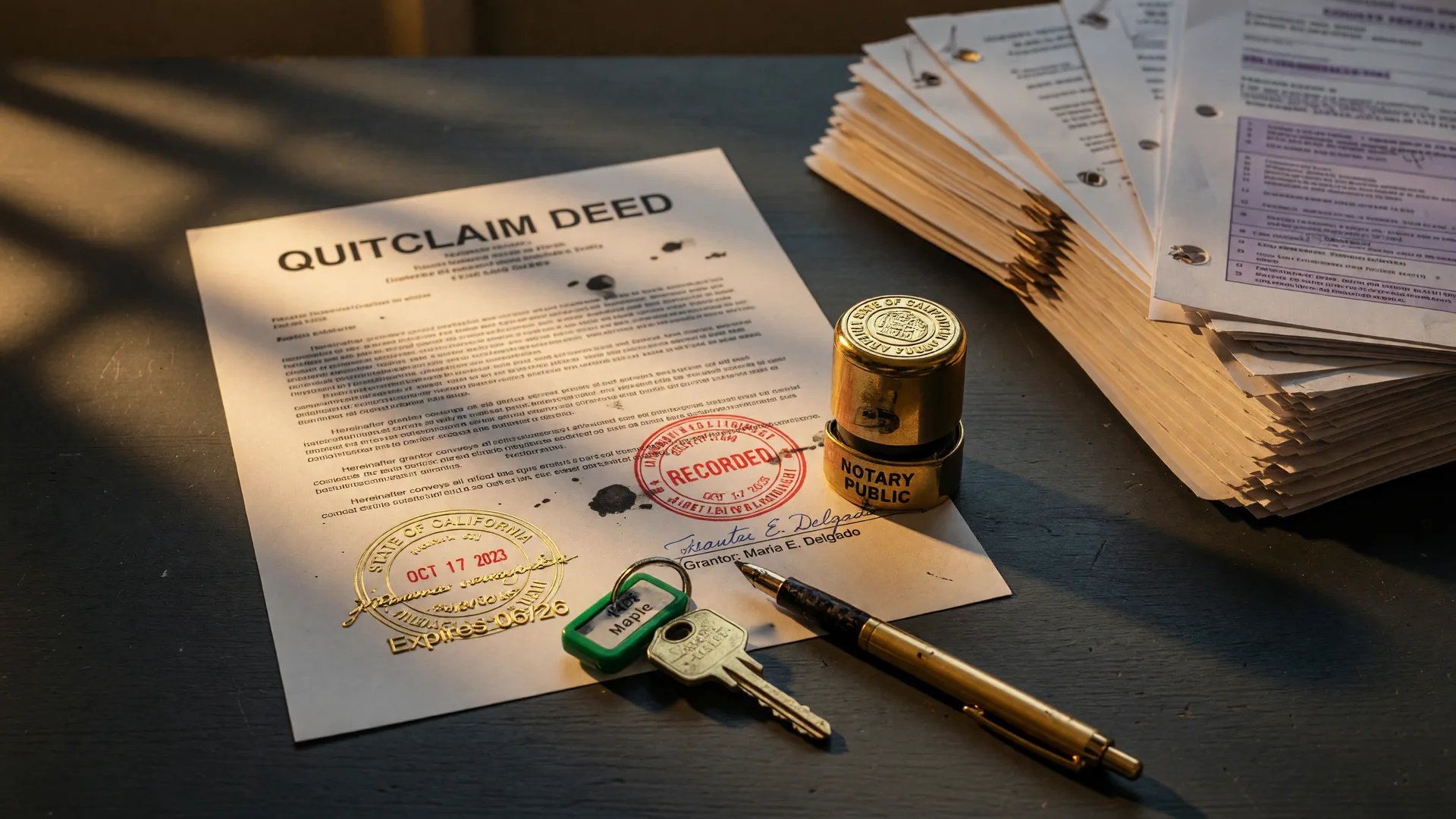
The story: a Stuart widow, a forged deed, and a title stolen in silence
This is a composite story, an illustration built from patterns I see in my work every day, and it is not the story of any single client of mine. It is the story Florida seniors need to know before the deed is filed. Diane lives in Stuart, in the house she and her late husband shared for decades. The home is paid off, the mortgage is long gone, and the title is still in her husband’s name, the way it was when he passed two years ago. One afternoon the phone rang and a polite voice said it was calling from the county clerk’s office. There was a $149 “recording fee” to “update her deed,” payable by wire transfer, and if she did not pay it her paperwork could be flagged. Diane knew the Golden Rule she was raised on, and she also knew she did not ask for this call. She hung up.
Months later, Diane needed a new roof and applied for a home equity loan. The title search came back with something that made the loan officer go quiet: a quitclaim deed, recorded against her home, transferring the property to a stranger for $10. The deed was dated after her husband’s death, carried a signature she had never made, and was notarized with a stamp from a notary who had retired years earlier. The county had accepted it and recorded it without a question, because county recorders do not verify signatures on the documents they file.
Diane did not lose the house, because a forged deed does not actually transfer a valid title, but she lost thousands in legal fees and months of stress untangling a cloud she never created. The hardest part is the one that should make every Florida homeowner act today: her county offered a free property fraud alert, and that one free service would have flagged the fraudulent recording the very day it was filed. Here is the truth at the end of every story in this series: the senior who knows the scam is the one who beats it. Knowledge is your armor, and it never wears out.
The quick answer
A real estate or deed scam is when a criminal forges a signature on a quitclaim deed or other transfer document, files it with the county recorder to steal or cloud the title to a home, or files a bogus lien against a property to pressure a payoff. Florida homeowners can fight back by checking the county’s public records for free, signing up for the county’s property fraud alert, and keeping title insurance in force.
Why the forged deed works: the numbers behind the script
Deed and title fraud is a growing, heavily worked script, and paid-off senior homes are its favorite target. The FBI’s IC3 logged 12,368 real estate fraud complaints in 2025 with about $275.1 million in reported losses. In 2024, seniors made up 44% of real estate fraud losses while filing only 19% of complaints, which means the people most hurt by this fraud are the least likely to report it.
The reason the script targets seniors is sitting in the data: about 18.8 million homes owned by Americans 65 and older are owned free and clear with no mortgage, about 63.7% of all homes owned by that age group. A home with no lender watching it is a title with no one watching it, and real estate fraud losses reported by people 60 and older rose 62% in a year to about $123.7 million in 2025.
None of these numbers are a reason for fear, because the defense is simpler than the offense: check the free public record, sign up for the free fraud alert, and keep title insurance in force. The senior who knows those three things renders the whole script powerless before its first page is ever drafted.
The real numbers behind the forged deed
- 12,368
- real estate fraud complaints the FBI’s IC3 logged in 2025, with about $275.1 million in reported losses
- 44%
- of real estate fraud losses in 2024 came from seniors, who filed only 19% of complaints
- 18.8M
- homes owned free and clear by Americans 65 and older, about 63.7% of all homes owned by that age group
- 62%
- rise in real estate fraud losses reported by people 60 and older in 2025, to about $123.7 million
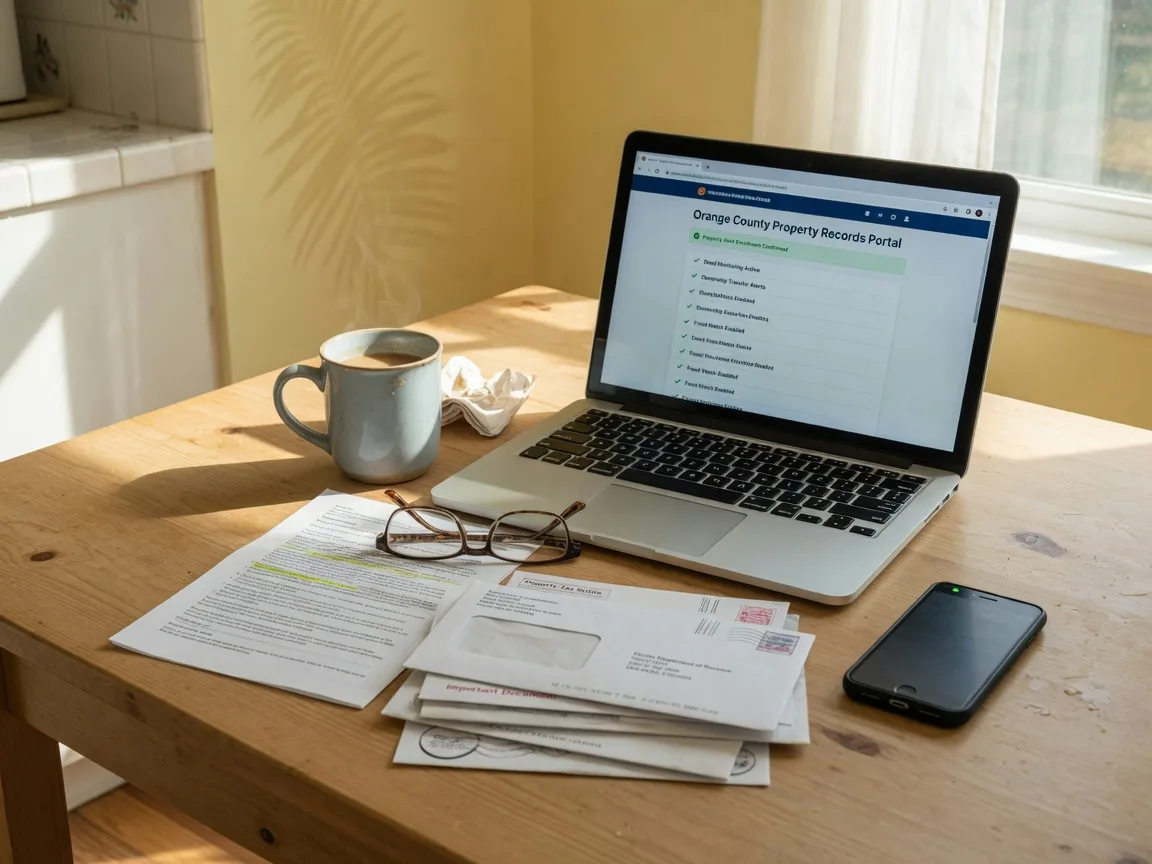
How the fraudulent lien and fake title transfer scam works
The forged deed is not one trick; it is a machine with ten moving parts, and each one has a tell. Learn all ten now:
Angle 01
The fraudulent deed or quitclaim recorded at the county recorder to transfer title without the owner’s knowledge
The core of the scam is a forged quitclaim deed, a one-page document that transfers ownership of a home without a sale, recorded at the county recorder or clerk of court. Because county recorders accept documents at face value and rarely verify signatures, a forged deed can be recorded against a paid-off home with no one checking a thing.
The deed names a stranger as the new owner, and once it is on the public record it clouds the title. The homeowner still lives there and still believes she owns it, but a title search now shows a competing claim, and that single cloud can freeze a home equity loan, a refinance, or a sale for months.
Red flag: a quitclaim deed or transfer document you never signed, recorded in the public records.
Angle 02
The forged or “ghost” signature on a transfer document
The forged signature is the engine of the fraud. Scammers copy a homeowner’s signature from an old recorded document, a property tax receipt, or a document photographed and shared, and sign it onto a new quitclaim deed. The signature can be a “ghost” signature, drawn by someone who has never met the owner.
County recorders are not handwriting experts and typically do not verify signatures on recorded documents. That is why a forged signature can pass onto the record and stand for months, until a title company, an attorney, or the owner herself catches it during a real transaction.
Red flag: a signature on a recorded document that is not yours, even when it looks close.
Angle 03
The bogus lien filed against a home to pressure a payoff
Instead of stealing the deed, some scammers file a bogus lien or a false mortgage against the home, claiming the homeowner owes money to a company that has no real claim. The lien shows up in a title search like a dark cloud, blocking sales and loans until it is cleared.
The goal is pressure. Once the lien is on the record, a victim may be contacted by a “settlement company” that offers to make it disappear for a fee. The lien is fake, the settlement company is the scammer, and the fee is the entire point of the exercise.
Red flag: a lien or mortgage on your home that you did not take out or sign.
Angle 04
The “we can help you avoid foreclosure” or “we’ll buy your house fast” equity-stripping pitch
Equity stripping comes dressed as help. A stranger offers to “help you avoid foreclosure” or to “buy your house fast” for cash, with no inspections, no title company, and no attorney. The pitch is engineered for a homeowner under financial pressure who owns real equity.
The deed the “helpful buyer” asks the owner to sign is a quitclaim or a deed transferring the property for a fraction of its value, often without the owner realizing she signed away her home. By the time she understands what happened, the deed is recorded and the equity is gone.
Red flag: a stranger offering to “buy your house fast” or “help you avoid foreclosure” out of the blue.
Angle 05
The fake notary or “witness” who validates the forged document
A recorded deed needs a notary block, so the forgery carries a fake notary stamp, sometimes a real notary’s name and commission number lifted from public records. In the Stuart story the forged deed carried a notary stamp from a notary who had retired years earlier, which is exactly how the forgery was finally exposed.
Real notaries verify identity and witness signatures in person, and they keep journals of what they notarize. A notary stamp that cannot be traced to an actual appearance, or that belongs to someone who no longer commissions, is a forged document with a costume on it.
Red flag: a “notary” or “witness” you have never met, or a stamp from a notary who retired long ago.
Angle 06
The mail theft that grabs mortgage statements and tax bills to learn a homeowner’s details
To forge a believable deed, scammers need details: the legal description of the property, the owner’s full name, and a signature. Mail theft is how many of those details arrive. A stolen mortgage statement, tax bill, or property tax receipt gives a scammer the exact language and signatures they need.
Senior homeowners who receive paper statements are the most exposed, which is why mail that stops arriving, goes missing, or arrives torn is not a small nuisance. Missing mail can mean a stranger is collecting your documents one envelope at a time.
Red flag: mail that stops arriving or goes missing, especially mortgage statements and tax bills.
Angle 07
The scammer who poses as a title company or county office and asks for a “recording fee” by wire or gift card
Before or alongside the forged deed, scammers run a “recording fee” con: a caller or letter poses as the county clerk’s office or a title company and says your deed needs to be “updated” or “re-recorded,” for a fee paid by wire transfer or gift card. Real recording fees are modest and paid to the county, never demanded by phone.
In the Stuart story the widow’s first encounter was exactly this: a caller posing as the county clerk’s office asking for a $149 “recording fee” by wire transfer to “update her deed.” She hung up, and the scammer simply switched tactics, months later recording a forged quitclaim deed against her home.
Red flag: an unsolicited call or letter about a “recording fee” or “deed update,” paid by wire, gift card, or crypto.
Angle 08
The vacant, inherited, or out-of-state-owned home targeted because no one is watching it
Scammers target homes nobody is watching: vacant properties, inherited homes still in a deceased owner’s name, homes owned by out-of-state residents, and paid-off homes whose owners rarely check the public record. A title that sits idle for years is a title that can be stolen quietly.
A widow whose home is still titled in her late husband’s name is a perfect target, because the legal owner shown on the record is someone who no longer responds to mail. The longer a title goes unexamined, the longer a forged deed can sit on the record unnoticed.
Red flag: a home that is paid off, vacant, inherited, or owned out of state, with nobody checking the public record.
Angle 09
The follow-on recovery scam that appears after a victim reports a loss
The cruelty does not end with the forged deed. After a victim discovers the fraud and reports it, a second scammer often appears posing as a recovery agent, a fraud investigator, or a title “fixer,” offering to clear the title or recover the money for a fee.
No legitimate agency charges a fee to fix a fraudulent recording, and no real investigator needs your bank details to help. Anyone who asks you to pay to recover from a deed scam is running the second act of the same fraud, and the correct reply is the same: hang up and report.
Red flag: anyone who promises to clear a forged deed or recover your losses for an upfront fee.
Angle 10
The Florida angle: homestead protection, free public records, and the fraud alert that catches it all
Florida law gives homeowners real protection. Homestead property is protected from forced sale for most debts, the county property appraiser and clerk of court records are public and free to check, title insurance catches forged deeds when you buy or refinance, and many Florida counties offer a free property fraud alert that emails you when a document is recorded against your property.
That free alert is the single most powerful habit in this story. In the Stuart case, the county’s property fraud alert would have flagged the fraudulent recording the day it was filed, months before the home equity loan title search found it. Report what you find to the Florida Attorney General fraud hotline at 1-866-9-NO-SCAM, to the FTC at reportfraud.ftc.gov, and to the FBI IC3 at ic3.gov.
The move that ends it: check your county’s free public records, sign up for the free property fraud alert, keep title insurance in force, and report to 1-866-9-NO-SCAM, reportfraud.ftc.gov, and ic3.gov.
Red flags checklist: ten tells that give the forged deed away
Scams do not thrive on cleverness; they thrive on speed and shame. If you see one of these, you already know the script:
-
Red flag 01 An unsolicited call or letter about a “recording fee” or “deed update” for your home.
-
Red flag 02 A demand for payment by wire transfer, gift card, or cryptocurrency.
-
Red flag 03 A stranger offering to “buy your house fast” or “help you avoid foreclosure” out of the blue.
-
Red flag 04 A “notary” or “witness” you have never met.
-
Red flag 05 A quitclaim deed or transfer document you never signed.
-
Red flag 06 Mail that stops arriving or goes missing.
-
Red flag 07 A notice about a lien or mortgage on your home that you did not take out.
-
Red flag 08 A caller who already knows your address, mortgage details, or tax bill amounts.
-
Red flag 09 Pressure to sign anything quickly.
-
Red flag 10 Any request for your Social Security number or bank account to “verify” your ownership.
The honest truth: what a forged deed can and cannot do
A forged deed is scary, but it is also beatable, because Florida law and the public record give you real protection. A forged quitclaim deed does not actually transfer valid title, which is why Diane kept her house. Here is what actually happens and what actually protects you:
A forged deed clouds title, it does not steal valid ownership
For a transfer to be valid, the true owner has to sign it. A forged signature cannot pass ownership to a stranger, but the fraudulent recording still clouds the title, which is what blocks loans and sales. That is why clearing the record, through a quiet title action or a fraudulent filing lawsuit, is the fix.
Florida protects homestead property
Florida law shields homestead property from forced sale for most debts, and it gives surviving spouses strong protections over the family home. A forged deed filed against homestead property is a crime the courts take seriously, and an attorney can move quickly to clear it.
County records are public and free to check
The county property appraiser and clerk of court records are open to anyone, online and at no cost. A five-minute search of your name and your property every few months is the cheapest title protection there is, and it is how most homeowners catch a forged filing before it becomes a crisis.
Title insurance catches forged deeds
Owner\u2019s title insurance covers the cost of defending your title and the loss if a forged deed or lien is upheld, and it stays in force as long as you own the home. When you buy or refinance, the title company searches the record and catches forged filings before closing.
Free property fraud alerts exist in many Florida counties
Many Florida counties email you the day a document is recorded against your property, for free. The alert is the difference between catching a forged deed in 24 hours and finding it months later in a title search, which is why it is the one habit this whole story rests on.
Reporting lines that work
Report deed fraud to the Florida Attorney General fraud hotline at 1-866-9-NO-SCAM, to the FTC at reportfraud.ftc.gov, and to the FBI Internet Crime Complaint Center at ic3.gov. Every report feeds the enforcement that stops the next forged deed.
What to do if it happens
If a forged deed or bogus lien touches your home, this is your plan. Ten moves keep you calm, in control, and one step ahead, no matter how official the letter or the voice sounds:
- 01
Do not pay any “recording fee” or lien payoff to an unsolicited caller
Real recording fees are paid to the county through official channels, and real liens are never settled by paying a stranger who calls you. The moment money is demanded by wire, gift card, or crypto, the demand is the crime.
- 02
Check your county clerk or comptroller official records online for any deed, mortgage, or lien you do not recognize
The search is free and open to anyone. Look up your name and your property’s legal description, and read every document listed, because a forged deed or bogus lien can sit quietly on the record until someone looks.
- 03
Sign up for the free property fraud alert offered by many Florida counties
The alert emails you whenever a document is recorded against your property. The Stuart widow would have been warned the very day the forged deed was filed, instead of months later at a title search, which is why the alert is the single best habit in this story.
- 04
Call your county clerk’s office directly using the published number if you find something suspicious
Look up the number yourself on the county’s official website, and never call a number from a letter or caller you do not trust. A real clerk will confirm what is on the record and explain how to dispute a fraudulent filing.
- 05
Keep your title insurance in force and contact your title company if a claim arises
Owner’s title insurance defends your title and covers losses from forged deeds, and it stays in force for as long as you own the home. If a fraudulent document is recorded against your home, your title company is the first professional to call.
- 06
Report to the Florida Attorney General fraud hotline at 1-866-9-NO-SCAM
Call 1-866-9-NO-SCAM to report the fraud to the state and get guidance from trained specialists. Florida takes real estate fraud against seniors seriously, and your report becomes part of the state’s case.
- 07
Report to the FTC at reportfraud.ftc.gov
File with the Federal Trade Commission at reportfraud.ftc.gov. Every report feeds national enforcement and pattern-spotting that helps shut the script down.
- 08
Report to the FBI IC3 at ic3.gov
File a report with the FBI Internet Crime Complaint Center at ic3.gov with the caller’s number, the forged document details, and everything you were asked to do. IC3 feeds federal investigations into exactly these networks.
- 09
Contact a Florida real estate attorney if a fraudulent document was recorded
A quiet title action or a fraudulent filing lawsuit can clear a forged deed or bogus lien from the record. A Florida real estate attorney knows the county process and can get the cloud removed from your title.
- 10
Remember that the shame is part of the trick, and victims are never at fault
The embarrassment scammers plant is planted on purpose, to keep you quiet and keep you compliant. A forged deed is a crime committed against you, not a mistake you made, and reporting it takes the power back.
Where to report deed fraud in Florida
Reporting a scam is protection, not embarrassment. Every report helps stop the next forged deed:
“The $149 recording fee was the warm-up act. The real trick was the quitclaim deed, filed months later while nobody was watching. Diane never signed it, never saw it, and still had to pay lawyers to prove the truth that was hers all along. A free fraud alert would have ended the whole story the day it started. Check the record, sign up for the alert, and keep your title insurance in force. That is the whole armor.”
Frequently asked questions about real estate and deed scams
Quick, honest answers to the questions Florida seniors and their families ask me most. Tap a question to open the answer.
01 What is a real estate or deed scam?
A real estate or deed scam is when a criminal forges a signature on a quitclaim deed or other transfer document and files it with the county recorder to steal or cloud the title to a home, or files a bogus lien against a property to pressure a payoff. Florida homeowners can fight back by checking the county’s public records for free, signing up for the county’s property fraud alert, and keeping title insurance in force.
02 How does someone steal a home title without the owner knowing?
Because county recorders accept documents at face value and rarely verify signatures, a forged quitclaim deed can be recorded against a home with no one checking. The homeowner never signs anything and keeps living in the house, but the public record now shows a competing claim, which can freeze loans and sales until the forged deed is cleared. The theft is quiet by design: it only becomes visible when someone runs a title search.
03 What is a quitclaim deed and why do scammers use it?
A quitclaim deed is a one-page document that transfers whatever ownership interest a person has in a property, without the promises and title review that come with a full sale. Scammers use it because it is short, needs no lender, no survey, and no closing, and can be recorded at the county recorder with just a signature and a notary block, which makes it the easiest document to forge and file.
04 How do I check if a fraudulent deed or lien was filed on my home?
Go to your county clerk or comptroller’s official records search online, which is free, and search your name and your property’s legal description for any deed, mortgage, or lien you do not recognize. Do the same search on the county property appraiser’s site. If anything looks wrong, call your county clerk’s office directly using the published number, and contact a Florida real estate attorney if a fraudulent document was recorded.
05 What is a property fraud alert and how do I sign up?
A property fraud alert is a free service offered by many Florida counties that emails you whenever a document is recorded in your name or against your property. You sign up on your county clerk’s website, enter your name and property information, and the county notifies you the day a document is filed, which lets you catch a forged deed or bogus lien within days instead of months.
06 Does title insurance protect me from deed fraud?
Owner’s title insurance is the strongest single protection against deed fraud. It covers the cost of defending your title and, depending on your policy, the loss if a forged deed or lien is upheld, and it stays in force for as long as you own the home after paying once at closing. Title insurance catches forged deeds during a sale or refinance, which is why keeping it in force matters.
07 Who do I report deed fraud to in Florida?
Report to the Florida Attorney General fraud hotline at 1-866-9-NO-SCAM, to the Federal Trade Commission at reportfraud.ftc.gov, and to the FBI Internet Crime Complaint Center at ic3.gov. You can also file with your local sheriff’s non-emergency line, and if you are in immediate danger, call 911 first.
Follow the full Senior Scams series
This is Story 12 of the Senior Scams series: a new, real-world scam warning for Florida seniors and the families who love them. Every story names the trick, shows how it plays out, and ends with the move that stops it. The fraud scripts stack on each other, so the more you read, the harder every scammer has to work.
Bookmark the hub and check it daily. Story 3 covered Social Security impostors, Story 4 covered IRS and tax agency threats, and this forged deed story is Story 12. Each new story adds a new layer of armor.
A home still in a late owner\u2019s name is exactly the title deed fraud targets. Read the inherited home guide to understand how heirs take title, clear the record, and protect the family home.
Whether you are relocating from up north or helping a parent land in Florida, the relocation hub covers the taxes, the schools, the timing, and the honest tradeoffs of the move, so your new chapter starts on solid ground.
The shareable, quick-read version of this story lives on the blog, with the red flags, the honest truth, and where to report, ready for the family group chat.
Before the deed is ever filed
Arm your family with one free call
Michael “Wiz” Wisniewski is a Certified Real Estate Planning Advisor who works with Florida seniors and their families every day. Bring any call, letter, or document that felt off, and leave with a clear next step for your family. Free 15-minute strategy call, no pressure, no obligation.

About the Author
Michael "Wiz" Wisniewski
Michael "Wiz" Wisniewski is The Life Transition Specialist with The Complete Real Estate Team, powered by Dalton Wade Real Estate, serving clients from the Treasure Coast to South Florida. A Certified Real Estate Planning Advisor, Certified Life Transition Specialist, and Certified A.I. Real Estate Advisor, he has worked nearly every side of real estate: fix-and-flip investing, land development, home building, and property management, and guides families through life's transitions with care, honesty, and the Golden Rule.
Certified Real Estate Planning Advisor | Certified Life Transition Specialist | Certified A.I. Real Estate Advisor
Written by
Michael Wisniewski, The Wizard of Real Estate
Certified Real Estate Planning Advisor | Certified Life Transition Specialist | Certified A.I. Real Estate Advisor
Helping Florida families protect what matters most.
Talk Soon