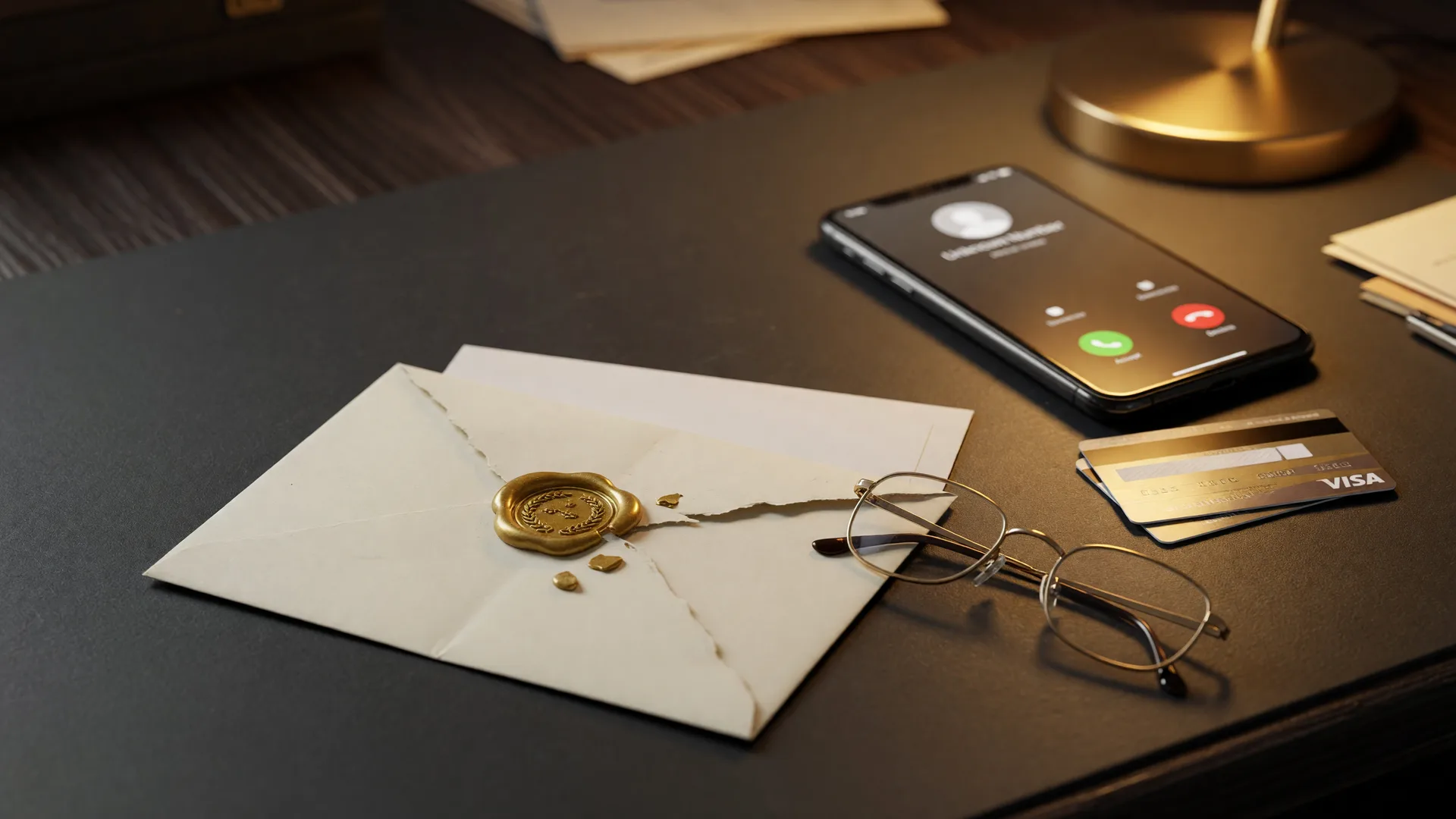
The story: a Fort Pierce widower, a $2.5 million win, and fees that never stopped
This is a composite story, an illustration built from patterns I see in my work every day, and it is not the story of any single client of mine. It is the story Florida seniors need to know before the phone rings. Frank lives in Fort Pierce, a retired widower who keeps a tidy house, a faithful routine, and a phone number he answers without thinking. One Tuesday afternoon the phone rang, and a polished voice said it was calling from the “Federal Lottery Board.” Frank, the caller said, had won $2.5 million in a sweepstakes he had never entered. There was just one small step: a $1,500 “tax” had to be paid before the prize could be released, and it had to be paid today, by gift card.
Frank wanted to believe it, and the caller knew exactly how to make that easy. His name, his address, the town he had lived in for thirty years, all of it was already on the line, and the voice made the tax sound like a formality, the last box to check before the money landed. So Frank drove to the store, bought the gift cards, and read the numbers over the phone. The next day a “claims agent” called, warm and official, and explained that a $2,000 “customs fee” was still required to move the winnings through the final step. Each fee was the last one, each one was urgent, and each one was paid the same way, in gift cards that can never be recovered.
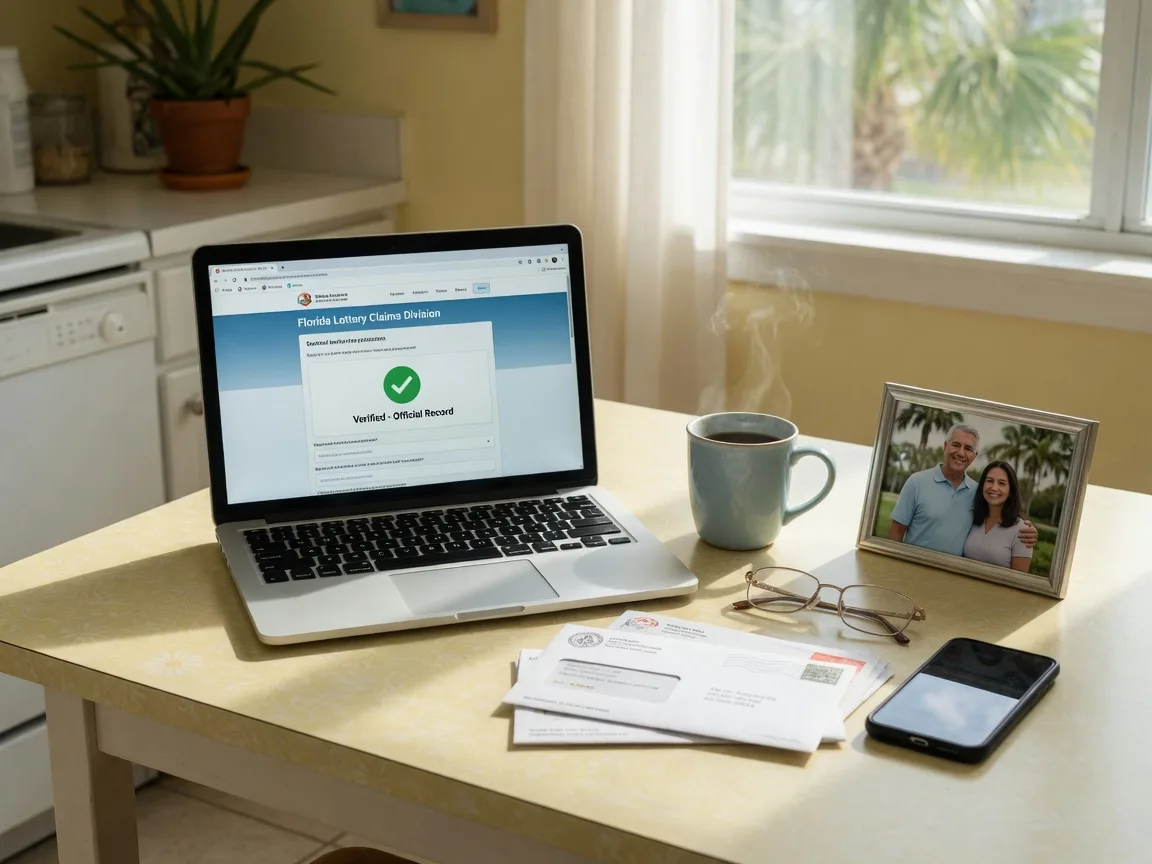
Frank was out $3,500 before he finally told his daughter, and his daughter did the one thing that should have come first: she searched for the “Federal Lottery Board.” There is no such agency. There never has been. There is no federal lottery in the United States, no $2.5 million win, and no prize that collects taxes or customs fees in gift cards. Here is the truth at the end of every story in this series: the senior who knows the scam is the one who beats it. You cannot win a lottery you never entered, and no real prize ever requires an upfront fee. Knowledge is your armor, and it never wears out.
The quick answer
What is a lottery or sweepstakes scam? A lottery or sweepstakes scam is when a criminal tells a senior they won a prize they never entered, then demands an upfront “tax,” “customs fee,” or “processing fee” to release it. Real lotteries never charge fees, and you cannot win a lottery you did not enter. If a prize requires money before it can be paid, it is a scam, full stop.
Why the fake win works: the numbers behind the script
Prize fraud is a growth industry, and the FBI sees it clearly. According to the FBI Internet Crime Complaint Center, older adults lost $136 million to lottery, sweepstakes, and inheritance scams in 2025, up 57% from the year before. The Federal Trade Commission reports that older adults were nearly three times more likely to report a loss on a prize, sweepstakes, or lottery scam than younger adults, and that prize, sweepstakes, and lottery scams made up 15% of older adults’ reported dollar losses when the contact was by phone.
The wider picture is just as sobering: older adults reported $2.4 billion in fraud losses in 2024, up 300% from 2020, and more than 201,000 victims age 60 and older reported over $7.7 billion in losses to the IC3 in 2025. The prize script works because it manufactures hope, and hope is the most human thing there is.
None of these numbers are a reason for fear, because the defense is simpler than the offense: one reminder that you cannot win a lottery you never entered, and one call to the official lottery using its published number. The senior who knows those two things renders the fake win powerless before the first fee is ever demanded.
The real numbers behind the upfront fee prize scam
- $136M
- older adults lost $136 million to lottery, sweepstakes, and inheritance scams in 2025, up 57% from the year before (FBI IC3)
- 3x
- older adults were nearly three times more likely to report a loss on a prize, sweepstakes, or lottery scam than younger adults (FTC)
- 15%
- of older adults’ reported dollar losses when the contact was by phone came from prize, sweepstakes, and lottery scams (FTC)
- $2.4B
- older adults reported $2.4 billion in fraud losses in 2024, up 300% from 2020 (FBI IC3)
- 201K+
- victims age 60 and older reported over $7.7 billion in losses to the FBI IC3 in 2025
How the upfront fee prize scam works
The fake win is not one trick; it is a machine with ten moving parts, and each one has a tell. Learn all ten now:
Angle 01
The call, letter, or email saying you won a lottery or sweepstakes you never entered
The script starts with good news out of nowhere: a call, a letter, or an email announcing that you won a lottery or sweepstakes you never entered, often a foreign lottery or a prize drawing you have no memory of. The win is always large, the congratulations are always warm, and the next line is always the same: a fee must be paid before the prize can be released.
The first sentence is the whole tell. Real lotteries only pay people who bought a ticket or entered a drawing, and you cannot win a lottery you did not enter. If you never played, the congratulations are the bait.
Red flag: a prize win announced for a lottery or sweepstakes you never entered.
Angle 02
The upfront “tax” or “customs fee” demanded before the prize is released
This is the fee that does the damage: a “tax,” a “customs fee,” or a “processing fee” that must be paid before the winnings can be released. Frank paid a $1,500 “tax” on his $2.5 million win, then a “claims agent” demanded another $2,000 in “customs fees.” Each fee is framed as a formality, and each one is the actual crime.
Real prizes never collect taxes or fees from the winner before release. Taxes on real winnings are withheld by the lottery and paid to the government directly, never collected by a stranger in gift cards. If a prize requires money before it can be paid, it is a scam, full stop.
Red flag: any upfront “tax,” “customs fee,” or “processing fee” to release a prize.
Angle 03
The “Federal Lottery Board” or fake agency that does not exist
The caller in Frank’s story claimed to work for the “Federal Lottery Board,” an official-sounding name with a polished voice and a case number. The agency does not exist, and no amount of searching will find it, because the United States has no federal lottery and no Federal Lottery Board. The name is invented to make the call feel official.
The same costume appears in every variant: a “National Sweepstakes Commission,” a “Prize Release Department,” a “Claims Processing Bureau.” Real lotteries are run by states, and none of them call winners to collect fees. When the agency does not exist, the prize does not either.
Red flag: a caller from a “Federal Lottery Board” or agency that does not exist.
Angle 04
The check for part of the winnings that bounces after you send the fee back
In this variant, a check arrives in the mail for part of the winnings, say $4,900 of a “$50,000 prize,” with instructions to deposit it and wire back the “tax” or “processing fee” of $500. The check is counterfeit, and by the time the bank returns it as fake, the senior has already sent the real $500.
The check is the trap, not the prize. Banks must make deposited funds available quickly, but a counterfeit check can take weeks to bounce, long after the fee is gone. If a prize check arrives with a demand to send money back, the check is the scam.
Red flag: a check for part of the winnings that arrives with a demand to send a fee back.
Angle 05
The request to pay by wire, gift card, or cryptocurrency
Every fee in the script is payable in a way that cannot be reversed: gift cards read over the phone, wire transfers, or cryptocurrency. These payment methods leave no paper trail the victim can claw back, which is exactly why scammers demand them. No real lottery, government agency, or prize company collects anything by gift card.
The payment method is the fingerprint of the fraud. If the fee must be paid in gift cards, by wire, or in crypto, the prize is not real, because no legitimate organization on earth collects taxes or fees that way.
Red flag: payment demanded by gift card, wire, or cryptocurrency.
Angle 06
The “lawyer” or “claims agent” who charges a fee to process the winnings
After the first fee is paid, a second character appears: a “lawyer,” a “claims agent,” or a “prize coordinator” who says the winnings are ready but a processing fee is required to finish the paperwork. Frank met this character as the caller demanding $2,000 in “customs fees,” and the fee was the last thing he ever heard from them.
The second caller is the same criminal wearing a new costume. Real prize processing is free, real lawyers are paid by the winner after the fact, not before, and no claims agent ever needs a gift card to release money that is supposedly already won.
Red flag: a “lawyer” or “claims agent” who charges a fee to process winnings.
Angle 07
The pressure to keep the win secret until the fee is paid
The script insists the win must stay secret: do not tell your family, do not tell your bank, the prize could be “confiscated” or the paperwork “compromised” if anyone else knows. The secrecy is not a rule of the prize, it is the engine of the scam, because the one person most likely to spot the fraud is a daughter, a son, or a banker who loves the senior.
Frank’s daughter was the one who checked the “Federal Lottery Board” and found it did not exist, and she only got the chance because Frank finally told her. Real lotteries announce winners publicly, and no real prize ever depends on silence. When a prize needs your secrecy, it needs your money, and both are the scam.
Red flag: pressure to keep the win secret until the fee is paid.
Angle 08
The fake prize notification that uses a real lottery name like Powerball or Mega Millions
Some notices borrow the name of a real lottery, Powerball, Mega Millions, or the Florida Lottery itself, with a logo copied from the official website and a claim that your ticket “matched the winning numbers.” The name is real, the contact is not, and the phone number or email on the notice belongs to the scammer, not the lottery.
Real lotteries never contact winners out of the blue to announce a win and collect a fee. Winners check tickets themselves, and claims are processed through official channels. If a prize notice uses a real lottery name but a contact that is not the official lottery, the notice is a costume.
Red flag: a prize notice using a real lottery name like Powerball or Mega Millions with a contact that is not the official lottery.
Angle 09
The follow-on recovery scam that promises to get the money back for another fee
After the loss is discovered and reported, a second scammer often appears posing as a recovery agent, a “fraud investigator,” or a “government restitution officer,” offering to recover the lost fees for an upfront payment or a percentage of the money. No legitimate agency charges a fee to investigate a crime, and no real investigator needs a gift card to help.
The recovery pitch is the second act of the same fraud, and it preys on the very hope the first act created. Anyone who asks you to pay to recover from a scam is running the scam again, and the correct reply is the same as the first time: hang up and report.
Red flag: a “recovery” company that promises to get your money back for another fee.
Angle 10
The Florida angle: real lotteries never charge fees, and official channels handle every win
Here is the truth that ends the whole script: real lotteries never charge fees, you cannot win a lottery you did not enter, and Florida Lottery winnings are paid through official channels, never by a stranger with a gift card. The Florida Lottery pays prizes at authorized retailers and its official offices, and it never asks winners to pay taxes or fees in advance.
When a prize scam finds you, report it to the FTC at reportfraud.ftc.gov, to the FBI Internet Crime Complaint Center at ic3.gov, to the Florida Attorney General fraud hotline at 1-866-9-NO-SCAM, and to the Florida Lottery at floridalottery.com if the scam uses its name. Every report feeds the enforcement that stops the next call.
The move that ends it: remember you cannot win a lottery you did not enter, verify with the official lottery, and report to reportfraud.ftc.gov, ic3.gov, 1-866-9-NO-SCAM, and the Florida Lottery.
Red flags checklist: eleven tells that give the fake win away
Scams do not thrive on cleverness; they thrive on speed and shame. If you see one of these, you already know the script:
-
Red flag 01 A notice that you won a lottery or sweepstakes you never entered.
-
Red flag 02 Any upfront “tax,” “customs fee,” or “processing fee” to release a prize.
-
Red flag 03 A caller from a “Federal Lottery Board” or agency that does not exist.
-
Red flag 04 A check for part of the winnings that arrives with a demand to send a fee back.
-
Red flag 05 Payment demanded by gift card, wire, or cryptocurrency.
-
Red flag 06 A “lawyer” or “claims agent” who charges to process winnings.
-
Red flag 07 Pressure to keep the win secret until the fee is paid.
-
Red flag 08 A prize notice using a real lottery name like Powerball or Mega Millions with a contact that is not the official lottery.
-
Red flag 09 A “recovery” company that promises to get your money back for another fee.
-
Red flag 10 A caller who already knows your name and address.
-
Red flag 11 A deadline that expires today.
The honest truth: what a real prize looks like
A fake win is scary, but it is also beatable, because the real system works the opposite way from the script. Here is what actually happens and what actually protects you:
Real lotteries never charge fees
No legitimate lottery or sweepstakes collects taxes, customs fees, or processing fees from the winner before release. The fee is the scam, full stop. If money is demanded to release money, the prize does not exist.
You cannot win a lottery you did not enter
Real prizes only go to people who bought a ticket or entered a drawing, and winners are never contacted out of the blue to collect a fee. If you never played, the win is invented, and the congratulations are the bait.
Florida Lottery winnings are paid through official channels
The Florida Lottery pays prizes at authorized retailers and its official offices, never by a stranger with a gift card, a wire, or a cryptocurrency wallet. Taxes on real winnings are withheld by the Lottery and paid to the government directly.
Real prize notices never demand secrecy or gift cards
Real lotteries announce winners publicly, and no legitimate prize depends on silence or on payment methods that cannot be reversed. When a prize needs your secrecy and your gift cards, it needs your money, and both are the scam.
The official lottery’s published number is the referee
One call to the official lottery or sweepstakes company, using the number on its own website, settles whether a prize exists. Frank’s daughter is the model: one search for the “Federal Lottery Board,” and the whole script collapsed.
Reporting lines that work
Report lottery and sweepstakes scams to the FTC at reportfraud.ftc.gov, to the FBI Internet Crime Complaint Center at ic3.gov, to the Florida Attorney General fraud hotline at 1-866-9-NO-SCAM, and to the Florida Lottery at floridalottery.com if the scam uses its name. Every report feeds the enforcement that stops the next call.
What to do if it happens
If a fake win call finds you, this is your plan. Eleven moves keep you calm, in control, and one step ahead, no matter how official the letter or the voice sounds:
- 01
Never pay any fee to claim a prize
Real lotteries and sweepstakes never charge taxes, customs fees, or processing fees before a prize is released. The moment a fee is demanded, the prize is the bait and the fee is the crime.
- 02
Remember you cannot win a lottery you did not enter
The single sentence that ends the whole script: if you never bought a ticket or entered the drawing, the win is invented. Real prizes only go to people who actually played.
- 03
Hang up and do not call back
You do not owe a stranger a conversation, an explanation, or a goodbye. Ending the call is always allowed, and you never need to call the number back to “confirm” anything.
- 04
Do not deposit a suspicious check, and never send the difference back
A check for part of the winnings is counterfeit by design. Do not deposit it, do not wire the difference, and tell your bank if one arrives, because the overpayment is the trick.
- 05
Verify any prize claim with the official lottery or sweepstakes company using the published number
Look up the official lottery or sweepstakes company on its own website, never the number on the caller ID or the letter, and ask whether the prize exists. Frank’s daughter did exactly this, and the “Federal Lottery Board” vanished in one search.
- 06
Report to the FTC at reportfraud.ftc.gov
File with the Federal Trade Commission at reportfraud.ftc.gov. Every report feeds national enforcement and pattern-spotting that helps shut the script down.
- 07
Report to the FBI IC3 at ic3.gov
File a report with the FBI Internet Crime Complaint Center at ic3.gov with the caller’s number, the prize details, and everything you were asked to pay. IC3 feeds federal investigations into exactly these networks.
- 08
Report to the Florida Attorney General fraud hotline at 1-866-9-NO-SCAM
Call 1-866-9-NO-SCAM to report the fraud to the state and get guidance from trained specialists. Florida takes fraud against seniors seriously, and your report becomes part of the state’s case.
- 09
Report to the Florida Lottery if the scam uses its name
If the notice or caller claims to be the Florida Lottery, report it to the Lottery’s Division of Security at floridalottery.com so the agency can warn players and pursue the impersonation.
- 10
Contact the bank if money was paid
Call your bank or card company immediately to try to stop or reverse the payment, and if you used gift cards, call the card issuer with the receipt numbers right away. Speed matters, because scammers move the money in minutes.
- 11
Remember that falling for a prize scam does not make anyone foolish
The scammers are professionals at manufacturing hope, and hope is not a weakness. You were targeted because the news sounded wonderful, and that is nothing to be ashamed of. Reporting the scam takes the power back.
Where to report lottery and sweepstakes scams in Florida
Reporting a scam is protection, not embarrassment. Every report helps stop the next fake win:
“The $1,500 tax was the first door, and every door behind it opened onto another fee. Frank never saw the $2.5 million, because the $2.5 million never existed, and no real prize ever collects taxes in gift cards. One search by his daughter ended the whole script. Remember you cannot win a lottery you never entered, verify any prize with the official lottery, and never pay a fee to claim a win. That is the whole armor.”
Frequently asked questions about lottery and sweepstakes scams
Quick, honest answers to the questions Florida seniors and their families ask me most. Tap a question to open the answer.
01 What is a lottery or sweepstakes scam?
A lottery or sweepstakes scam is when a criminal tells a senior they won a prize they never entered, then demands an upfront “tax,” “customs fee,” or “processing fee” to release it. Real lotteries never charge fees, and you cannot win a lottery you did not enter. If a prize requires money before it can be paid, it is a scam, full stop.
02 Can I win a lottery I never entered?
No. Real lotteries and sweepstakes only pay people who bought a ticket or entered a drawing, and winners are never contacted out of the blue to collect a fee. If you never played, the win is invented, and the congratulations are the bait.
03 Do real lotteries ever charge a fee to release a prize?
No. Real lotteries never charge taxes, customs fees, or processing fees before a prize is released. Taxes on real winnings are withheld by the lottery and paid to the government directly, and Florida Lottery winnings are paid through official channels. Any prize that needs a fee before release is a scam by definition.
04 What should I do if I get a prize notice in the mail?
Do not pay anything, do not call the number on the notice, and do not deposit any check that came with it. Verify the claim with the official lottery or sweepstakes company using the number on its own website, and remember you cannot win a lottery you did not enter. If the notice demands a fee or secrecy, report it to the FTC at reportfraud.ftc.gov and the Florida Attorney General fraud hotline at 1-866-9-NO-SCAM.
05 What if I already sent money for a “tax” or “fee”?
Act fast and without shame, because scammers are professionals who rehearse every line. Contact your bank or card company immediately to try to stop or reverse the payment, and if you used gift cards, call the card issuer with the receipt numbers right away. Then report to the FTC at reportfraud.ftc.gov, the FBI IC3 at ic3.gov, the Florida Attorney General fraud hotline at 1-866-9-NO-SCAM, and the Florida Lottery if the scam used its name.
06 Can a check from a sweepstakes be fake?
Yes. Scammers send counterfeit checks for part of the winnings and ask the winner to deposit the check and send back a “fee” or the “difference.” Banks must make deposited funds available quickly, but a counterfeit check can take weeks to bounce, long after the fee is gone. If a prize check arrives with a demand to send money back, the check is the scam.
07 Who do I report lottery and sweepstakes scams to in Florida?
Report to the Federal Trade Commission at reportfraud.ftc.gov, to the FBI Internet Crime Complaint Center at ic3.gov, to the Florida Attorney General fraud hotline at 1-866-9-NO-SCAM, and to the Florida Lottery at floridalottery.com if the scam uses its name. You can also file with your local sheriff’s non-emergency line, and if you are in immediate danger, call 911 first.
Follow the full Senior Scams series
This is Story 15 of the Senior Scams series: a new, real-world scam warning for Florida seniors and the families who love them. Every story names the trick, shows how it plays out, and ends with the move that stops it. The fraud scripts stack on each other, so the more you read, the harder every scammer has to work.
Bookmark the hub and check it daily. Story 3 covered Social Security impostors, Story 4 covered IRS and tax agency threats, and this upfront fee prize scam story is Story 15. Each new story adds a new layer of armor.
The shareable, quick-read version of this story lives on the blog, with the red flags, the honest truth, and where to report, ready for the family group chat.
From the Treasure Coast to South Florida, Michael “Wiz” Wisniewski helps families build, protect, and transfer generational wealth through real estate. Start at the home page and see the whole picture.
Buying, selling, senior transitions, and life changes across the Treasure Coast to South Florida, all written like a conversation with someone who has been there.
Before the prize call ever comes
Arm your family with one free call
Michael “Wiz” Wisniewski is a Certified Real Estate Planning Advisor who works with Florida seniors and their families every day. Bring any call, letter, or email that felt off, and leave with a clear next step for your family. Free 15-minute strategy call, no pressure, no obligation.

About the Author
Michael "Wiz" Wisniewski
Michael "Wiz" Wisniewski is The Life Transition Specialist with The Complete Real Estate Team, powered by Dalton Wade Real Estate, serving clients from the Treasure Coast to South Florida. A Certified Real Estate Planning Advisor, Certified Life Transition Specialist, and Certified A.I. Real Estate Advisor, he has worked nearly every side of real estate: fix-and-flip investing, land development, home building, and property management, and guides families through life's transitions with care, honesty, and the Golden Rule.
Certified Real Estate Planning Advisor | Certified Life Transition Specialist | Certified A.I. Real Estate Advisor
Written by
Michael Wisniewski, The Wizard of Real Estate
Certified Real Estate Planning Advisor | Certified Life Transition Specialist | Certified A.I. Real Estate Advisor
Helping Florida families protect what matters most.
Talk Soon