
The story: the phone rang with her grandson’s name on it
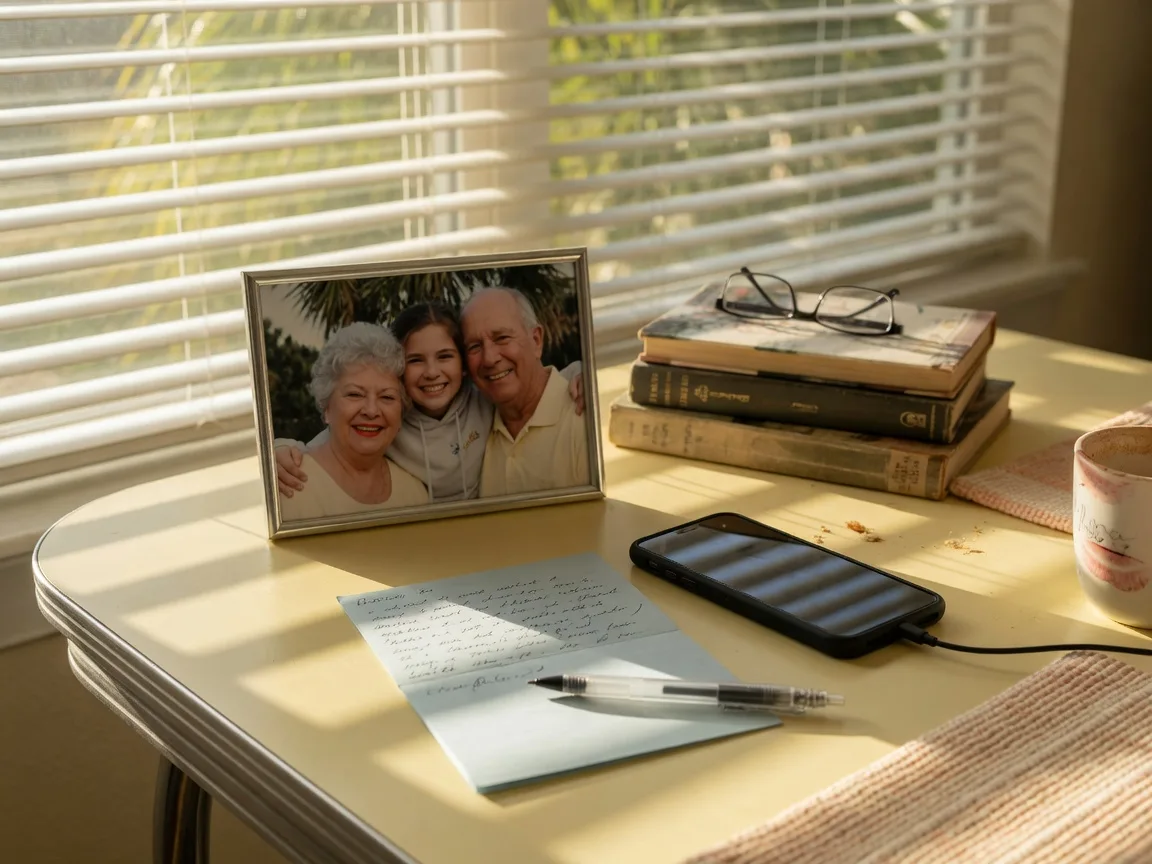
It was a quiet Thursday morning in Vero Beach, and Dorothy was just pouring her coffee when the phone rang. The screen showed a name she knew by heart: Charlie, her grandson, the one away at school in Gainesville. When she picked up, the voice on the other end was his, unmistakably his, that boyish panic she had heard a hundred times as he grew up. Grandma, please don’t hang up. I was in a car accident on the interstate. It’s my fault, and they’re talking about jail unless I post bail right now. I need the money today. Please don’t tell Mom and Dad, they would be so disappointed.
The voice was perfect, and the fear sounded real, and every instinct Dorothy had said move, wire the money, fix this right now. But a quieter voice knew better, the lesson from the senior safety workshop, the one about calls you did not place arriving for money you did not owe. So Dorothy caught herself, took a breath, and did the two hardest things in the entire script: she said no thank you, and she hung up.
Then she called Charlie, not the number on the screen, but the number saved in her phone for years. He answered on the second ring, yawning, on his way to an eight o’clock class. Safe. Healthy. He had not called, he had not been in an accident, and he had certainly not asked for bail money. Dorothy laughed, blinked back the tears, and told him the whole story, proud of the catch and prouder of the instinct that made it.
Here is the truth at the end of every story in this series: the grandparent who knows the scam is the one who beats it. Dorothy is a composite of the Florida grandparents I work with every day, and her story is the one I want every family to rehearse, because it is exactly how this ends when you already know the script. The voice on the line is a tool, and the person who recognizes the tool renders it useless.
“The voice on the line sounded exactly like Charlie. It was not Charlie. It was an echo built from a few seconds of a birthday video, and it lost the moment Dorothy chose a saved number over a screen name. Every cloned call loses the same way.”
Why this scam feels so real: the numbers behind the cloned call
In its latest annual report, the FBI’s Internet Crime Complaint Center counted $352 million in AI-related fraud losses reported by Americans 60 and older in a single year, a figure that shows how fast voice cloning moved from science fiction to crime scene. The same report logged more than $5 million in losses reported to grandparent scams alone that year, and the demand amounts follow a pattern, typically running from $2,500 to $15,000 per call.
This is not abstract. In August 2025, the U.S. Department of Justice charged 13 people in a multi-state grandparent scam ring accused of stealing more than $5 million from more than 400 victims, whose average age was 84. And the technology keeps sharpening: researchers find that scammers need only 3 to 5 seconds of a voice, from a social media clip, a voicemail greeting, or a birthday video, to clone it, and a UC Berkeley study published in Scientific Reports found listeners could not reliably tell a cloned voice from the real one, judging the AI voice to be the same person roughly 8 times out of 10.
How current is it? In October 2026, a woman in Orlando was targeted with a fake jailhouse emergency that started with a phone call and moved to a courier at her front door. She caught it before the handoff, and that is the ending worth copying. None of these numbers are a reason for fear, because the defense is simpler than the offense: a hang-up, a saved number, and a family safe word end this scam before it starts.
Every variant of the cloned call, and every red flag
I have seen this scam run in many shapes, and they all share one skeleton: a family voice, an urgent emergency, a secret, and irreversible money. Learn all eight variants now, and each one has its tell built in:
Variant 01
The cloned grandchild voice, calling in panic
A voice that sounds exactly like a grandchild calls out of nowhere, distressed and in a hurry. The clone is built from audio the family already shared, a birthday video, a voicemail greeting, a classroom clip, and the panic is rehearsed to move you fast.
If you have ever heard this call secondhand, you know how flawless the voice can be. Flawless is not the tell. The tell is a family voice on a call you did not expect, asking you to do something before you can verify anything.
Red flag: a family voice on a call you did not expect, with a request you cannot verify.
Variant 02
The bail money and car accident emergency
The most common script: the grandchild was in a car accident, they are at fault, and they are being held until bail is paid. A wire transfer, a stack of gift cards, or cash for a courier will fix it right now. The details shift with the caller, but the destination is always the same: irreversible money.
No real bail process happens by gift card, and no real accident victim negotiates their release through a frantic phone call to grandma. The emergency is the costume; the money is the script.
Red flag: bail or emergency money demanded over the phone before you can call anyone.
Variant 03
The fake kidnapping or ransom call
The scariest variant. The cloned voice screams that they have been taken, that a ransom must be paid, that someone is listening. It is still a recording wearing a family voice, and the demand is still the tell: secrecy, speed, and money that cannot be traced.
Families who receive these calls and slow down almost always find the grandchild safe within minutes. The scream is designed to skip your reasoning and go straight to your heart. Hang up and verify; that is the whole countermove.
Red flag: a ransom demand with no proof of life you can verify on your own.
Variant 04
The jailhouse emergency
In October 2026, a woman in Orlando was targeted with exactly this play: a fake jailhouse emergency that started with a phone call and moved to a courier at her front door. A cloned voice claimed to be a loved one in custody, and the caller added a supposed lawyer to keep the pressure on.
Real jails do not post bail by gift card, and real lawyers do not call grandma to collect it. When the story jumps from a phone call to a stranger at the door, you are watching a script escalate, not an emergency unfold.
Red flag: a supposed lawyer or officer who appears mid-call to confirm the urgency.
Variant 05
The payment plays
Whatever the emergency, the payment always comes in one of five shapes: a wire transfer, gift cards, cryptocurrency, cash, or a courier sent to the door. Every single one of them is irreversible, and that is the point. Once the money moves, it is gone in minutes and untraceable.
The strongest move is also the simplest: no legitimate emergency is ever paid by gift card or crypto, and no real family rescue involves handing cash to a stranger at the door. If the payment method looks like a scam, the whole call is a scam.
Red flag: an emergency that is paid by gift card, wire, crypto, cash, or a courier at the door.
Variant 06
The 'don't tell anyone' pressure
Every script in this family runs on one engine: secrecy. The caller begs you not to tell the grandchild's parents, not to call anyone, not to ask questions, because the shame of the emergency would be worse than the money.
Secrecy is not a side effect of the scam. Secrecy is the scam. The moment a caller asks you to hide the call from family, you are holding the script in your hands, and the right response is to do the exact opposite: tell someone.
Red flag: an instruction to keep the call secret from family and friends.
Variant 07
Caller ID spoofing
The call can arrive showing the grandchild’s real name and real number, pulled from the same social accounts that supplied the voice. Caller ID is a costume, and in this scam it is tailored to the exact person you love.
This is why the screen name proves nothing. The only number that matters is the one you have saved and dialed yourself, not the one that appears on your phone when it rings.
Red flag: caller ID that matches a family number for a call you did not place.
Variant 08
AI video and photo "proof" in advanced versions
In more advanced versions, the caller sends a photo, a voice message, or even a short video that seems to show the grandchild in distress. These artifacts can be fabricated in minutes from the same public audio and images the family posts online.
Treat every piece of media in a suspicious call as a prop until you verify the person with your own phone and a known number. Proof you cannot inspect, or that falls apart the moment you call, is the strongest proof that it was never real.
Red flag: "proof" you cannot inspect, or that collapses the moment you call a real number.
Red flags that give every cloned call away
Scams do not thrive on cleverness; they thrive on speed and shame. If you hear one of these, you already know the script:
-
Red flag 01 Panic and urgency: the caller demands action this minute, with no time to think or check.
-
Red flag 02 Secrecy: you are told not to tell anyone, especially the grandchild's parents.
-
Red flag 03 Bail, ransom, or emergency money demanded by wire transfer, gift card, cryptocurrency, cash, or courier.
-
Red flag 04 Caller ID that shows a real family name and number on a call you did not place.
-
Red flag 05 A lawyer, police officer, or bail bondsman who joins the call to confirm the emergency.
-
Red flag 06 A courier who will come to your door to collect cash in person.
-
Red flag 07 The story keeps changing, and the details never survive a direct question.
-
Red flag 08 The caller refuses to let you call anyone, including the grandchild themselves.
The winning playbook: six habits that end the cloned call cold
Defense is a set of habits, and these six turn a perfect-sounding voice into a dead lead:
01
Set up the family safe word
The FBI’s official advice for this exact scam: agree on a secret word or phrase that only your family knows. Any urgent call that cannot produce it, on the spot, is a scam. Pick it now, before the phone rings, and make it something nobody would guess.
02
The callback rule
Hang up and call the grandchild on the number you have saved, never the number on the screen. The callback rule ends more of these scams than any other single habit, because the real grandchild answers, or does not, and either answer tells you the truth.
03
Don't trust the voice
The FTC’s guidance is blunt: the voice is not proof. Voices can be cloned in seconds, so verify the person, not the sound. Ask a question only the real grandchild could answer, or just call back on a known number and let reality do the work.
04
Verify through another family member
Call a parent, a sibling, or the grandchild’s roommate and ask where they actually are. One text to the right person settles a "life-or-death" call in under a minute, and scammers know exactly why you are checking, which is why they tell you not to.
05
Be careful what audio you post online
Scammers need only 3 to 5 seconds of a voice, and social media clips and voicemail greetings hand it to them for free. Limit public video and voice clips, tighten your family’s privacy settings, and remind younger family members that their online voice is also a key.
06
Practice the safe word with family
A safe word only works if everyone remembers to use it. Practice it at holidays, on group calls, whenever the family gathers, so that in a real crisis the word is automatic. Families who rehearse the playbook are the families who never lose a dollar to this scam.
What to do if it happens to you
If the call does find you, you already have a plan. These seven moves keep you calm, in control, and one step ahead, no matter how perfect the voice:
- 1
Stop
Name what is really happening: a stranger is asking for urgent, secret money. Naming it breaks the spell of panic.
- 2
Hang up
You never owe a stranger a conversation, an explanation, or a goodbye. Ending the call is always allowed.
- 3
Call the grandchild on a known number
Use the number you have saved, not the one on the screen. The real grandchild answers, or the call was never real.
- 4
Tell a trusted person
A spouse, a child, a neighbor, or a banker sees the script from the outside. Sharing the story is the fastest way to see the truth.
- 5
Do not send money and do not meet a courier
No wire, no gift cards, no crypto, no cash, and no handoff to a stranger at the door. Not today, not tomorrow, not ever under pressure.
- 6
Report it
File with the FBI's IC3 at ic3.gov and the FTC at reportfraud.ftc.gov, and let the Florida Attorney General's hotline and your local sheriff know. Every report helps stop the next call.
- 7
Never pay under pressure
No payment made with a racing heart is a good payment. If the call will not survive a pause, it does not deserve your money.
Where to report a grandparent AI voice scam
Reporting a scam is not about embarrassment; it is about protection. Every report helps the agencies see the pattern and stop the next attempt. These are the verified places to go:
Frequently asked questions about grandparent AI voice scams
Quick, honest answers to the questions Florida grandparents and their families ask me most. Tap a question to open the answer.
01 How do scammers clone my grandchild's voice?
Scammers need only 3 to 5 seconds of a voice to clone it, and they collect it from the public places families already share: social media clips, voicemail greetings, and birthday videos. AI tools then rebuild that voice well enough that researchers find most listeners cannot reliably tell it from the real person. That is why the voice proves nothing, and why calling back on a number you have saved is the real test.
02 What should I do if I get a frantic call from someone who sounds like my grandchild?
Slow down, hang up, and call the grandchild on the number you have saved, never the number on the screen. If the real grandchild answers, the call was a scam, and you have already won. If they do not answer, call a parent or sibling and check in, and never send money over the phone. The callback rule plus a trusted second voice settles every one of these calls.
03 How does a family safe word stop this scam?
A safe word is a secret word or phrase only your family knows, and the FBI recommends it as the single best defense against voice cloning scams. Any urgent call that cannot produce the word, on the spot, is a scam, no matter how perfect the voice sounds. Practice the word with family so it is automatic, and scammers move on to households that have not set one up yet.
04 What if I already sent money to an AI voice scammer?
Act fast and without shame, because scammers are professionals who rehearse every line. Contact your bank or card company immediately to try to stop or reverse the payment, and if you used gift cards, call the card issuer with the receipt numbers right away. Then report it to the FBI's IC3 at ic3.gov, the FTC at reportfraud.ftc.gov, and your local sheriff's office, and tell a trusted family member so the loss gets eyes on it today.
05 Where do I report a grandparent AI voice scam?
Report to the FBI's Internet Crime Complaint Center at ic3.gov and the FTC at reportfraud.ftc.gov, call the Florida Attorney General's fraud hotline at 1-866-9-NO-SCAM, and file with your local sheriff's office, including the Palm Beach County Sheriff's Office at pbso.org or the Indian River County Sheriff's Office at ircsheriff.org. Florida seniors can also call the Elder Affairs SHINE Elder Helpline at 1-800-963-5337.
Follow the full Senior Scams series
This is Story 2 of the Senior Scams series: a new, real-world scam warning published daily for Florida seniors and the families who love them. Every story names the trick, shows how it plays out, and ends with the move that stops it.
Bookmark the hub and check it daily. Each new story adds a new layer of armor, from the eight classic scam types to the red flags that give every script away.
Buying, selling, senior transitions, and life changes across the Treasure Coast to South Florida, all written like a conversation with someone who has been there.
Before the next call comes
Teach your family the playbook in one free call
Michael “Wiz” Wisniewski is a Certified Real Estate Planning Advisor who works with Florida seniors and their families every day. Bring any call, text, or visit that felt off, and leave with a clear next step for your family. Free 15-minute strategy call, no pressure, no obligation.

About the Author
Michael "Wiz" Wisniewski
Michael "Wiz" Wisniewski is The Life Transition Specialist with The Complete Real Estate Team, powered by Dalton Wade Real Estate, serving clients from the Treasure Coast to South Florida. A Certified Real Estate Planning Advisor, Certified Life Transition Specialist, and Certified A.I. Real Estate Advisor, he has worked nearly every side of real estate: fix-and-flip investing, land development, home building, and property management, and guides families through life's transitions with care, honesty, and the Golden Rule.
Certified Real Estate Planning Advisor | Certified Life Transition Specialist | Certified A.I. Real Estate Advisor
Written by
Michael Wisniewski, The Wizard of Real Estate
Certified Real Estate Planning Advisor | Certified Life Transition Specialist | Certified A.I. Real Estate Advisor
Helping Florida families protect what matters most.
Talk Soon