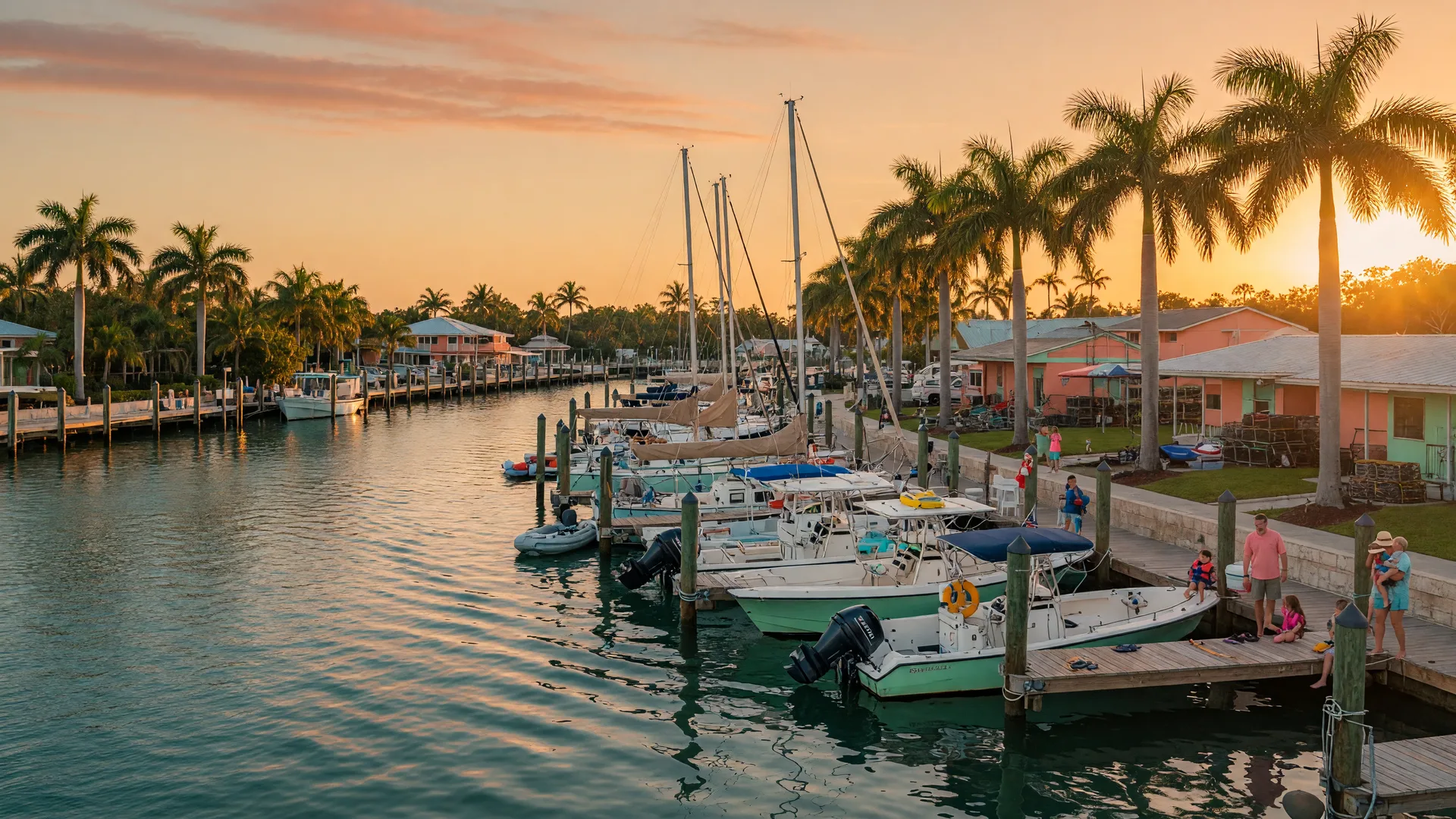
Here is the honest headline: Hawaii is the only state in this series where Florida is the financially easier life. An income tax that reaches 11% becomes zero, a median single-family home price of $950,000 becomes a fraction of that, and a cost of living that ranks among the highest in America drops to something a middle-class family can actually plan around. The same honesty that starts every guide here applies: the flight is ten hours, household goods move by ship, and Florida has its own surprises, insurance and heat included. Know all of it before you go.
Why Hawaii families keep landing in Florida
The first call I take from Hawaii usually starts with a story about a relative who just left, or a family gathering where the topic turned to the mortgage, and then it gets serious fast. The most common reason is not the weather, which is glorious in both places. It is money. Surveys of Hawaii residents consistently put cost of living first among the reasons people consider leaving, with housing prices and job opportunities right behind it, and Florida is one of the top mainland destinations for the families who actually go.
The Grassroot Institute of Hawaii documents the same story in its "Why We Left Hawaii" series: residents leave for taxes, cost of living, and opportunity, and the destinations that receive them are mainland states where an income goes further. Florida shows up on those lists again and again, and South Florida specifically, because the lifestyle is the closest mainland cousin to island living: water on three sides, outdoor life all year, and a relaxed pace.
Hawaii is a special place, and I have clients who love it and stay. This guide is for the families who have already decided, or are close to deciding, and want the real numbers and the real trade-offs, not a brochure. Here they are.
Climate and lifestyle: the honest contrast
Both places are warm and water-centered, so the climate shift is gentler than any other state in this series. Hawaii's trade-wind climate gives it famously mild, comfortable temperatures and dramatic microclimates, from rainforest on one side of an island to desert on the other. Florida is warm too, but it is genuinely hot and humid from about May through October, with an afternoon thunderstorm that becomes a daily rhythm most of that stretch and a hurricane season, June 1 to November 30, that demands a plan.
The lifestyle overlap is real: boating, paddleboarding, snorkeling, beaches, and an outdoor life that never closes are the same pleasures in both places. What changes is scale and access. Florida is a mainland state, so the same coastal life sits next to four-lane highways, major airports with nonstops to the whole country, and a much larger job market. Families from Hawaii tell me the water life feels familiar from day one, and the mainland access feels like a luxury they forgot existed.
The distance, and the logistics of getting here
This is the longest move in the continental United States, and it deserves respect. Honolulu to Miami is about 4,860 miles straight-line, and a nonstop flight runs roughly 9 hours 40 minutes to 10 hours 15 minutes (TravelMath and air-mile calculators). You cannot drive it, which matters for planning: household goods travel by sea freight, cars either ship by sea or are sold and replaced, and pets require an airline-approved plan. None of it is a deal-breaker. All of it needs a timeline.
~10 hrs
Nonstop flight
Honolulu to Miami, year-round service across the Pacific
~4,860 mi
Straight-line distance
Honolulu to Miami or West Palm Beach, as the crow flies
No road
By road
You cannot drive to Florida from Hawaii; household goods move by sea freight
~45-55 min
PBI to Treasure Coast
Palm Beach International to Stuart and Port St. Lucie
Because the distance is so long, the planning list matters more than almost anywhere else. Florida driver's license and vehicle registration, insurance rewrites, utilities, school enrollment, mail forwarding, and the address changes at your bank, payroll, and investments all need a deadline, and the Moving to Florida Checklist gives them one. Sea freight for a household takes weeks, so families who book it early tell me the move runs on rails, and families who wing it run into registration lines in two states.
If you still work for a Hawaii employer, ask HR and your CPA about residency and withholding before you move, since Hawaii taxes income earned by residents and, in some cases, workdays performed in Hawaii. Remote workers are common along the Florida coast, and the no-income-tax math makes a remote salary stretch further the moment your residency officially changes.
The money: taxes and cost of living, side by side
Hawaii's tax code is genuinely unusual: it has the lowest property tax rate in the nation and no conventional sales tax, replaced by the general excise tax, but it pairs those with an income tax that reaches 11% and with home prices that lead the country. Florida is the mirror image: no income tax at all, a more ordinary property and sales picture, and home prices that cost a fraction of Hawaii's. Every figure below carries a named source and an as-of date.
11%
Hawaii top marginal income tax rate
Twelve brackets run from 1.40% to 11.00%, among the highest state rates in the nation, and every one of them disappears in Florida.
Tax Foundation · 2026 rankings
$950,000
Hawaii median single-family home price, 2024
Up 6% from 2023, keeping Hawaii the priciest housing market in the country.
UHERO Hawaii Housing Factbook · 2025 edition
~10 hrs
Nonstop flight, Honolulu to Miami
About 4,860 miles straight-line, with a 9h40m to 10h15m flight across the Pacific.
TravelMath and air-mile calculators · 2026
0.27%
Hawaii effective property tax rate
The lowest in the nation; the median bill is about $2,239 a year, and Florida’s effective rate is roughly three times higher.
U.S. Census ACS · 2024 data
4.5%
Hawaii combined general excise tax
The 4% state GET plus a 0.5% county surcharge. Florida’s combined sales tax runs about 6.5% to 7%.
Hawaii Department of Taxation · 2026
47%
Share of Hawaii residents naming cost of living as a top reason to consider leaving
Housing prices and job opportunities trail behind it as the other main drivers.
Hawaii resident relocation surveys · 2025
| Category | Hawaii | Florida | The difference |
|---|---|---|---|
| State income tax | 1.40% to 11% across 12 brackets | 0% (no state income tax) | Full elimination |
| Property tax | 0.27% effective; ~$2,239 median bill | ~0.76% effective; ~$2,730 median bill | Rate rises, but on a home that costs far less |
| Median home price | $950,000 median single-family, 2024 | ~$367K-$682K by county | A fraction of the price for more space |
| Sales / excise tax | 4% GET + 0.5% surcharge (~4.5%) | 6% state plus county surtax (~6.5%-7%) | Higher in FL, but you keep the income |
Sources: Hawaii income tax brackets and rankings, Tax Foundation, 2026; Hawaii median single-family home price, UHERO Hawaii Housing Factbook 2025; Honolulu to Miami flight time and distance, TravelMath and air-mile calculators, 2026; Hawaii effective property tax rate and median bill, U.S. Census ACS 2024; Hawaii general excise tax, Hawaii Department of Taxation, 2026. Florida figures reflect state law and county medians for the 2026 market as reported in the Relocation Hub's county data.
What the tax math actually looks like
For a household earning into Hawaii's higher brackets, the income tax genuinely bites: the top rate of 11% (Tax Foundation, 2026) sits among the highest in the nation, and there is no state income tax in Florida at any income level. On the consumption side, Hawaii's combined general excise tax of about 4.5% (state 4% plus a 0.5% county surcharge) is actually lower than Florida's combined sales tax, which runs roughly 6.5% to 7% in most counties. But Florida's 6% state sales tax applies to everyday purchases much the way the GET does, and the Homestead Exemption shields up to $50,000 of assessed value with the Save Our Homes cap holding assessment growth near 3% a year.
The honest footnote is the property side, where Hawaii holds the lowest effective rate in America at 0.27% with a median bill of about $2,239 a year (U.S. Census ACS 2024), while Florida's effective rate runs about 0.76% with a median bill near $2,730. Florida's rate is higher, but it applies to a home that costs a fraction of a Hawaii home, so the property-tax dollars tend to come out comparable while the income-tax savings are pure gain. Line it all up and the cost of living drops measurably, which is why the complete breakdown belongs in the Florida Tax Guide for New Residents.
What your home-buying dollar buys here
Hawaii's 2024 median single-family home price was $950,000 (UHERO Hawaii Housing Factbook), with the overall median sale price near $852,000. Our Florida county medians run from about $367,000 in Indian River County to about $682,000 for single-family homes in Miami-Dade. The practical translation:
- At $500,000 to $650,000: the money that buys a modest condo or a fixer on Oahu buys a three- or four-bedroom single-family home with a pool in Port St. Lucie or Fort Pierce, or a waterfront townhome on the Treasure Coast.
- At $700,000 to $950,000: the range that buys a starter home in Hawaii buys newer construction in St. Lucie and Martin Counties, a gated-community home in Palm Beach County, or waterfront with a dock on the Treasure Coast.
The buying process for Hawaii buyers is well-worn: pre-approval from a lender who writes Florida loans, video tours and live walkthroughs, a local inspection, and remote closings when the calendar needs them. The Buying from Out of State guide walks through each step, and the calculators below build the true monthly number before you book a flight.
Affordability Calculator
Find the top of your price range from your income, debts, down payment, rate, taxes, and insurance.
Open the calculatorMortgage Payment Calculator
Estimate the full monthly payment: principal, interest, taxes, insurance, and HOA for a South Florida home.
Open the calculatorRent vs Buy Calculator
Compare renting versus owning over time and find your break-even year, not your gut.
Open the calculatorDown Payment Calculator
See how much you need to save and how long it takes to hit your goal without emptying your reserves.
Open the calculatorThe honest Florida surprises
Hawaii families arrive with ocean habits already wired in, which puts them ahead of most movers. The Florida surprises are the costs and rhythms that do not exist on the islands, and they are all planable if you know them in advance.
- Insurance is a budget line, not a footnote. Florida's average annual homeowners premium runs about $3,800 to $3,900 including wind (Florida OIR / Insurance Information Institute, 2025-2026 data). Flood insurance is separate where the map requires it. We pull the flood map and get real quotes for the exact home before any offer, full stop.
- The hot season is longer and stickier. Hawaii's trade winds keep things mild; Florida's May through October runs hot and humid, with afternoon storms and higher summer electric bills. Hurricane season, June 1 to November 30, is a real planning habit here, and it is manageable, but it is not optional. Families from Hawaii already know how to prepare for weather, which is exactly their strength.
- The mainland economy is bigger and faster. Hawaii's island economy is smaller and more expensive, with much shipped in. Florida is a major state with a large job market, but it also runs on a faster commercial clock. Families who arrive expecting a smaller version of island life are usually surprised by the sheer scale, and most find it liberating.
- HOA dues, CDD assessments, and sales tax on clothes. Many Florida communities add HOA fees and Community Development District assessments on top of the mortgage, and Florida charges sales tax on clothing at about 6.5% to 7% in most counties. None of it is a deal-breaker. All of it belongs in the monthly number, and all of it goes into ours.
Every one of these is planable, and every Hawaii family I have guided through them says the same thing a year in: the surprises were the part I could plan for, and the life is the part I could not have imagined.
“Hawaii families already know how to live well on the water. Florida gives them that same life with the income tax gone and a home price they can actually carry. That is the whole honest case.”
Michael “Wiz” Wisniewski
The questions Hawaii families ask me most
Honest, specific answers to the questions I hear on every strategy call with Hawaii families. Same facts, same plain talk, no sales script.
01 How much can I save on taxes moving from Hawaii to Florida?
Hawaii's income tax runs from 1.40% to 11% across 12 brackets (Tax Foundation, 2026), and Florida has no state income tax at any income level, so the entire state income bill disappears. The honest trade is on the consumption side: Hawaii's combined general excise tax is about 4.5%, while Florida's combined sales tax runs roughly 6.5% to 7%, and Hawaii's property tax rate is the lowest in the nation at 0.27% against Florida's 0.76% effective rate. The difference is that a Florida home costs a fraction of a Hawaii home, so the property-tax dollars tend to be comparable while the income-tax savings are pure gain. For a household earning into Hawaii's higher brackets, that is often five figures a year.
02 Is the cost of living really lower in Florida than Hawaii?
Yes, and it is one of the biggest single financial changes of the move. Honolulu runs roughly 10% to 25% higher than Miami depending on the index (Numbeo, 2026), and the purchase price per square foot in Honolulu is about 21% to 22% higher than Miami. Almost everything shipped to the islands carries an ocean-freight premium, from groceries to building materials, and Florida simply does not have that markup. Housing is the largest driver, but it is not the only one.
03 What does my budget buy in Florida vs Hawaii?
Hawaii's 2024 median single-family price was $950,000 (UHERO), while our Florida county medians run from about $367,000 in Indian River County to about $682,000 for single-family homes in Miami-Dade. The same budget that buys a modest condo or a fixer on the islands typically buys a three- or four-bedroom single-family home with a pool in Port St. Lucie or Fort Pierce, a waterfront home or townhome on the Treasure Coast, or a newer home in a gated Palm Beach County community.
04 How big is the lifestyle change from Hawaii?
In some ways it is smaller than any other move in this series, because both places are warm, water-centered, outdoor cultures with a relaxed pace. In other ways it is bigger than people expect: Florida is a mainland state with a much larger economy, more jobs, four-lane highways, and direct access to the rest of the country by road and rail, while Hawaii is an island chain where everything arrives by ship or plane. The weather is similarly warm, with Florida's summers hotter and more humid and its hurricane season, June 1 to November 30, a real planning habit. Families from Hawaii usually tell me the adjustment is not the climate, it is the scale.