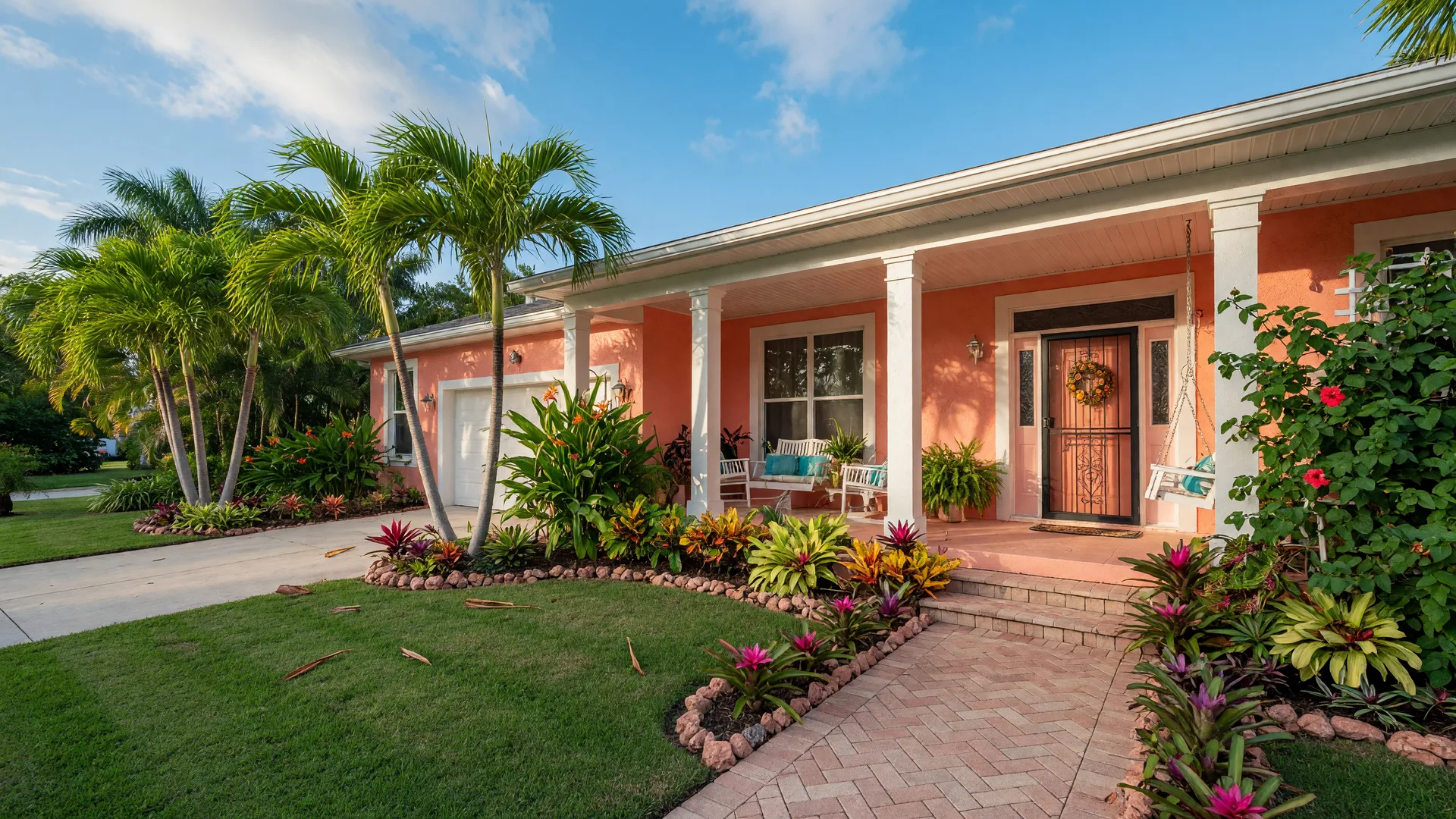
Here is the honest headline: Georgia sends more people to Florida than any other state, about 34,388 in the 2024 Census migration data, making Florida Georgia's top outbound destination. The draw is not escaping the cold, Georgia already has mild winters. It is the flat 4.99% income tax that disappears, the Atlantic coast, and the year-round outdoor life, with home prices so close that this move is lifestyle-first. This guide gives the honest numbers on both sides, including the insurance and hurricane realities Georgia families should plan for before they go.
Why Georgia families keep landing in Florida
The Georgia conversation starts with a map, not a tax bill. Most Georgia clients I talk with already know Florida well, from beach trips to Disney weekends, and the question is never whether they like it. It is whether the move makes sense for the family, the job, and the money. The answer, honestly, is different for every family, which is why this guide runs the numbers instead of selling the dream.
The flow is the biggest in the country. The U.S. Census Bureau's 2024 State-to-State Migration Flows, analyzed by the Ledger-Enquirer, put the Georgia-to-Florida count at roughly 34,388, the most of any origin state, and Florida has been Georgia's top outbound destination for years. The drivers are consistent: no state income tax in Florida, the coast, year-round warmth, and the fact that the drive is short enough to keep family ties in Atlanta, Savannah, and everywhere between.
This is not a knock on Georgia. Georgia has thriving cities, a growing economy, and its own beautiful coast. The point of this guide is practical: if you are moving, the financial questions deserve real, sourced numbers, and the lifestyle questions deserve honesty. Here they are.
Climate and lifestyle: the honest contrast
Georgia and Florida share the same hot, humid summers, so the heat is not the shock it is for a family from the upper Midwest. The honest differences are the winter and the water: Georgia still gets its share of freezing nights, while Florida's mild dry season runs November through April, and the Atlantic and the intracoastal are a daily presence here in a way they only are on Georgia's coast.
The lifestyle change is where Georgia families really feel the move. The commute shrinks from an hour to ten minutes or disappears entirely for remote workers. The weekend trip to Tybee or St. Simons becomes an after-work paddleboard session. The beach is not an event you plan for August, it is a place you go on a Tuesday in February. And the pace is slower, which most families say takes a year to truly appreciate. If you want a pulse on the Gold Coast, Boca Raton and Fort Lauderdale have it; if you want old-Florida quiet, Stuart and Jupiter are right there too.
The distance, and the logistics of getting here
Atlanta to Miami is about 662 miles by road, roughly 9.5 to 10 hours of driving nonstop (Trippy), with West Palm Beach about an hour closer. That is a long day but a very doable one, which is why so many Georgia families drive, and the nonstop flight from Hartsfield-Jackson to Palm Beach, Fort Lauderdale, or Miami runs about 1.5 to 2 hours for the trips that need to be quick.
~1.5-2 hrs
Nonstop flight
Atlanta (ATL) to Palm Beach, Fort Lauderdale, or Miami, year-round service
~662 miles
Road, Atlanta to Miami
About 9.5 to 10 hours of driving, nonstop (Trippy)
~600 miles
Road, Atlanta to West Palm
Roughly an hour less than the full Miami run, about 9 hours of driving
~45-55 min
PBI to Treasure Coast
Palm Beach International to Stuart and Port St. Lucie
The logistics list is identical for every origin state: Florida driver's license and vehicle registration, insurance rewrites, utilities, school enrollment, mail forwarding, and the address changes at your bank, payroll, and investments. It is the single most forgettable part of any move and the single most consequential, which is why the Moving to Florida Checklist exists. Print it, put it on the refrigerator, and check it weekly.
If you still work for a Georgia employer, talk to HR and your CPA before you go. Georgia taxes workdays performed in Georgia even for Florida residents, so get the withholding plan in place on the front end. And when you are ready to look, the entire process, video tours, inspections, and even remote closings, is in the Buying from Out of State guide.
The money: taxes and cost of living, side by side
Georgia's income tax is a flat 4.99% for 2026, down from 5.19% in 2025 and scheduled to keep falling toward 3.99% if revenue conditions hold (Georgia Department of Revenue). That is a real number, and Florida's is zero. Property taxes and home prices, honestly, are close. Every figure below is sourced and dated; your personal number comes from your income, your home, and your county.
~34,388
Georgians who moved to Florida in 2024
The most of any state, making Florida Georgia’s top outbound destination in the Census migration data.
U.S. Census 2024 State-to-State Migration Flows via Ledger-Enquirer · Released January 2026
4.99%
Georgia flat income tax rate for 2026
Down from 5.19% in 2025, with scheduled cuts toward 3.99% tied to revenue conditions. Florida charges zero at every level.
Georgia Department of Revenue · Tax year 2026
~0.74-1.00%
Georgia effective property tax rate
SmartAsset puts it near 0.74% with a median bill around $2,554; Ownwell sees about 1.00% with a median near $2,476. Florida runs roughly 0.71% to 0.96%.
SmartAsset / Ownwell · 2025-2026 data
$358,500
Georgia median sale price
Redfin for August 2026, with Zillow’s typical home value near $330,800 in mid-2026.
Redfin / Zillow · August 2026 / mid-2026
~662 miles
Atlanta to Miami by road
About 9.5 to 10 hours of driving nonstop, with West Palm Beach roughly an hour closer.
Trippy / TravelMath · 2026 estimates
~1.5-2 hrs
Nonstop flight, Atlanta to South Florida
Year-round service from Hartsfield-Jackson to Palm Beach, Fort Lauderdale, and Miami, which keeps family ties easy.
Airline schedules · 2026
| Category | Georgia | Florida | The difference |
|---|---|---|---|
| State income tax | 4.99% flat (2026, scheduled cuts toward 3.99%) | 0% (no state income tax) | Full elimination |
| Property tax | ~0.74%-1.00% effective; median bill ~$2,500 | ~$3,500-$5,500 on a typical home; ~0.71%-0.96% effective | Roughly a wash |
| Median home price | ~$358K median sale (Aug 2026) | ~$367K-$682K by county | Comparable on the Treasure Coast |
| Sales tax | 4% state plus local, often 6%-8% total | 6% state; about 6.5%-7% typical with county surcharges | Similar on most purchases |
Sources: Georgia flat income tax rate, Georgia Department of Revenue, tax year 2026; Georgia effective property tax rates and median bills, SmartAsset and Ownwell, 2025-2026; Georgia median sale price, Redfin, August 2026, and typical home value, Zillow, mid-2026; Georgia to Florida mover volume, U.S. Census 2024 State-to-State Migration Flows via Ledger-Enquirer. Florida figures reflect state law and county medians for the 2026 market as reported in the Relocation Hub's county data.
What the tax math actually looks like
Take a family in Cobb County earning $150,000. Georgia's flat 4.99% takes about $7,500 a year off the top of their taxable income, and the rate is scheduled to keep falling. Move to Florida and that number is zero, no matter how much they earn, which is worth real money to a working family. A typical home here carries roughly $3,500 to $5,500 a year in property tax, with the Homestead Exemption shielding up to $50,000 of assessed value and the Save Our Homes cap holding assessment growth near 3% a year, so the bill stays predictable.
The honest caveat: Georgia's property tax and Florida's are close, and Georgia's sales tax in many counties already runs 6% to 8%, so the everyday shopping difference is small. The complete picture, including estates and retirement income, is in the Florida Tax Guide for New Residents.
What your home-buying dollar buys here
Georgia's median sale price was about $358,500 in August 2026 (Redfin). In our six counties, medians run from about $367,000 in Indian River County to about $682,000 for single-family homes in Miami-Dade, so on the Treasure Coast the numbers are genuinely close. The difference is what sits outside the front door:
- At $350,000 to $425,000: 3-bedroom single-family homes in desirable Treasure Coast communities, with real options in Port St. Lucie and Vero Beach.
- Around $450,000 to $550,000: 4-bedroom single-family homes with pools, newer construction in St. Lucie County, or a two-bedroom condo with water views in Boca Raton or Fort Lauderdale.
- At $600,000 to $750,000: gated communities in Wellington, newer construction in Palm City, and townhomes within striking distance of the beach.
The buying process is the same one Georgia families use every week now: pre-approval from a lender who writes Florida loans, video tours, a local inspection, and even remote closings. Run the calculators below for the true monthly number, then bring it to a strategy call.
Affordability Calculator
Find the top of your price range from your income, debts, down payment, rate, taxes, and insurance.
Open the calculatorMortgage Payment Calculator
Estimate the full monthly payment: principal, interest, taxes, insurance, and HOA for a South Florida home.
Open the calculatorRent vs Buy Calculator
Compare renting versus owning over time and find your break-even year, not your gut.
Open the calculatorDown Payment Calculator
See how much you need to save and how long it takes to hit your goal without emptying your reserves.
Open the calculatorThe honest Florida surprises
Georgia families already know hot summers, so the surprises here are narrower, and they are worth naming so the first Florida year is a celebration, not a series of surprises.
- Homeowners insurance is the big one. Florida's average annual homeowners premium runs about $3,800 to $3,900 including wind (Florida OIR / Insurance Information Institute, 2025-2026), with national estimates that run considerably higher. Flood insurance is separate where the map calls for it. We get real quotes for the exact home before any offer, and we pull the flood map on the first call.
- Hurricane season is a planning habit, not a scare. The season runs June 1 to November 30, and the honest difference from Georgia is frequency and expectation, not geography. Build the plan once, the supplies, the shutters, the insurance review, and automate it forever.
- The pace is genuinely different. Atlanta is fast, ambitious, and efficient, and much of Florida is not, on purpose. The first year can feel slow to a Georgia family used to the city's rhythm; the second year is usually when they realize they were holding their shoulders up for a decade. Pick the community with the rhythm you want and give yourself the year.
- HOA dues and CDD assessments. Many Florida communities add HOA fees and Community Development District assessments on top of the mortgage, which Georgia buyers in some markets rarely budget for. All of it belongs in the monthly number, and all of it goes into ours.
I am not trying to talk you out of the move. I am trying to make the move honest, so that five years from now you are still glad you made it.
“Georgia families already know the South and the heat. What they are really moving for is the coast and the calm, and the families who plan for insurance and pace get both without the surprises.”
Michael “Wiz” Wisniewski
The questions Georgia families ask me most
Honest, specific answers to the questions I hear on every strategy call with Georgia families. Same facts, same plain talk, no sales script.
01 Georgia just cut its income tax. Is Florida still worth it?
Honestly, the tax gap is smaller than it used to be: Georgia's flat rate fell to 4.99% for 2026 (Georgia Department of Revenue) and is scheduled to keep falling toward 3.99% if revenue conditions hold. But 4.99% on a six-figure income is still real money that Florida simply does not charge, and Florida taxes no wages, pensions, Social Security, or investment income at the state level at any income. For most Georgia families the bigger wins are the coast, the climate, and the lifestyle, with the income tax elimination as the bonus. Run your own numbers with a CPA who knows both states.
02 How long is the drive from Georgia to Florida?
Atlanta to Miami is about 662 miles, roughly 9.5 to 10 hours of driving nonstop (Trippy), with West Palm Beach about an hour closer. That is a long day but a very doable one, which is why so many Georgia families drive, and the nonstop flight from Atlanta to Palm Beach, Fort Lauderdale, or Miami runs about 1.5 to 2 hours for the trips that need to be quick.
03 What does my budget buy in Florida vs Georgia?
Georgia's median sale price was about $358,500 in August 2026 (Redfin). Florida county medians run from about $367,000 in Indian River County to about $682,000 for single-family homes in Miami-Dade, so on the Treasure Coast the numbers are genuinely close. The difference is what sits outside the front door: the Atlantic, the intracoastal, and a year-round outdoor life that Georgia's coast offers in spots but Florida delivers daily.
04 Is the heat and insurance really that different from Georgia?
Georgia summers are already hot and humid, so the heat itself is not the shock it is for a Minnesota family. The real differences are the insurance market and the hurricane habit: Florida homeowners insurance averages about $3,800 to $3,900 a year including wind (Florida OIR / Insurance Information Institute, 2025-2026), flood insurance is separate where the map calls for it, and hurricane season, June 1 to November 30, becomes a planning habit. We get real quotes for the exact home before any offer, and we pull the flood map on the first call.