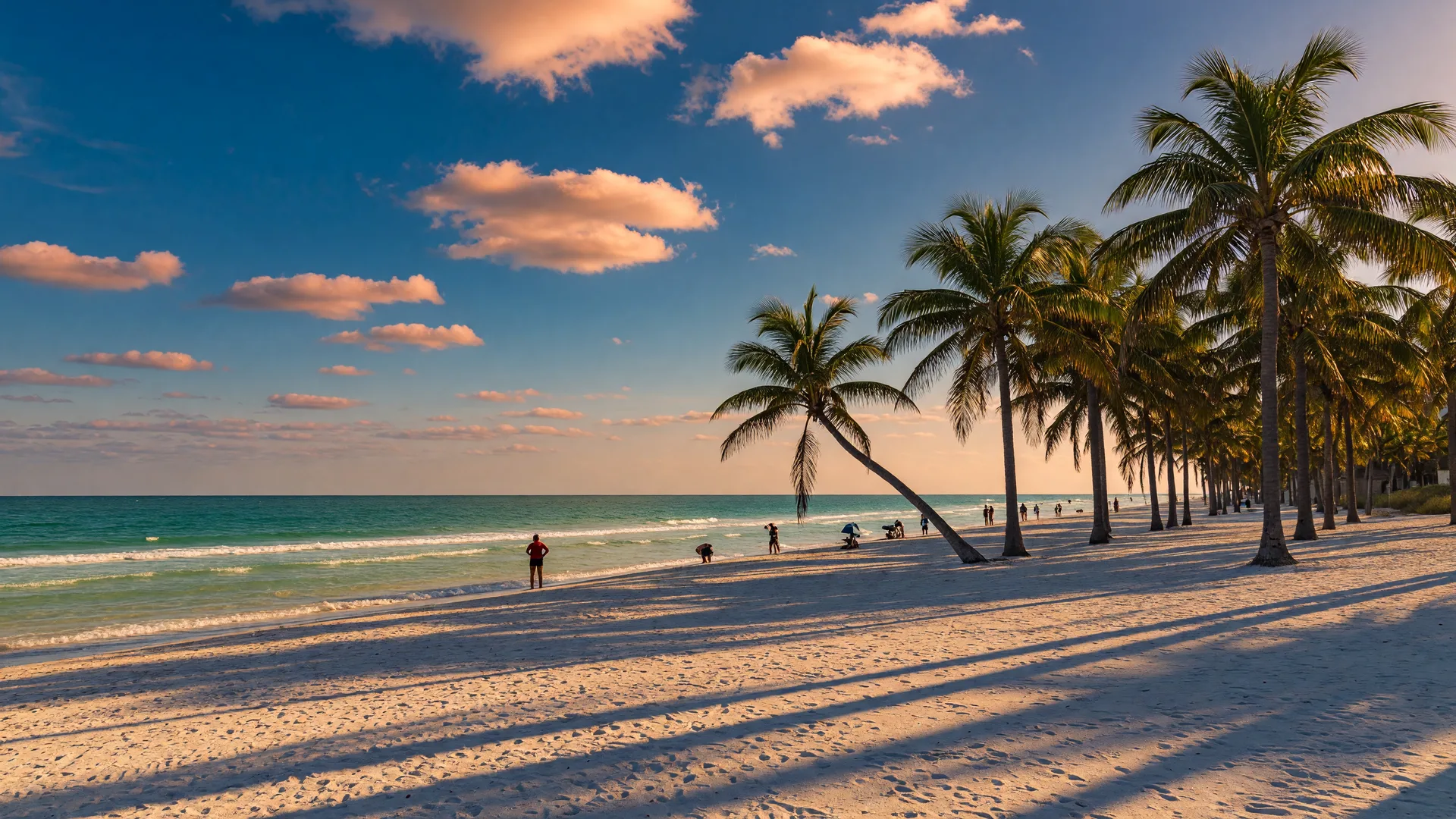
Here is the honest headline: this is the longest move in America, about 4,000 air miles, and it is also the one with the least to do with taxes. Alaska has no state income tax, just like Florida. The real reasons Alaskans go south are winter, retirement, healthcare, family, and a Permanent Fund Dividend question nobody warns you about. The same honest section every state guide carries: insurance, heat, and pace of life are real, they are planable, and nobody should move this far without knowing them first.
Why Alaskans keep landing in Florida
Alaska families bring me a different question than anyone else: not “will we save on taxes?” but “will we survive another dark winter?” The long nights, the cold, the seasonal isolation, these wear on people in ways the Lower 48 rarely understands, and every fall a wave of Alaskans books south.
The numbers are real. About 35,800 Alaskans left for the Lower 48 in 2022-2023, with Florida among the top destinations (Anchorage Daily News, citing U.S. Census ACS data), and the Alaska Department of Labor estimates roughly 7% of Alaska seniors, about 7,000 people, are snowbirds who spend 3 to 6 months out of state every year (Senior Voice Alaska). Retirement, family, healthcare access, and the simple math that a Florida winter costs less to survive than an Alaskan one: these are the honest drivers.
Alaska gave these families a life they loved, and many keep real roots there, which is exactly why the Permanent Fund Dividend question in this guide matters. But for the second half of life, Florida is built for the chapter Alaska is not: year-round outdoor living, the densest senior services in the country, and a housing market designed for the move in. This guide answers the practical question: if you are moving, what does the move really look like, financially and day to day?
Climate and lifestyle: the honest contrast
There is no climate comparison in this series starker than Alaska versus Florida. Alaska gives you a short intense summer and a long, dark, cold winter, with interior temperatures that touch 40 below. Florida gives you a mild dry season and a hot, humid one, with winter highs on the coast in the mid-70s and the beach, the boat, and the outdoor dinner available all year. The honest adjustment runs the other way: Alaskans are experts at cold, and the Florida summer humidity is a different animal, with afternoon thunderstorms a daily rhythm from about June through September.
Lifestyle-wise, Alaskans already know how to live hard outdoors, and that translates beautifully here: boating, fishing, kayaking, hiking, all of it in a state that never closes the season. What surprises Alaskans is the pace. Florida is slower, warmer, more neighborly, and the social calendar runs on early dinners and sunscreen rather than bunny boots and ice fishing. Families from the Treasure Coast to South Florida tell me that is exactly why they stayed; a few feel the quiet. Know yourself before you move, and pick the community with the pulse you want.
The distance, and the logistics of getting here
This is the longest move in the country, about 4,004 miles from Anchorage to Miami as the crow flies, and there are no nonstop flights on the route. Typical scheduled travel runs about 12 hours with a connection, usually through Seattle or Denver, and airfares commonly run $442 to $1,602 (Rome2Rio). By road, plan on roughly 4,950 miles through Canada and the Lower 48, 79 to 95 hours of driving, with passports and border paperwork for every household member. This is a move you plan like an expedition, not a long weekend.
~12 hrs
Travel time, Anchorage to Miami
Every route connects; typical scheduled travel about 12 hours (Rome2Rio)
~4,004 miles
Straight-line, Anchorage to Miami
The longest state-to-state move in the country
~4,950 miles
Road, Anchorage to Miami
About 79 to 95 hours through Canada and the Lower 48; carry passport and border paperwork
~45-55 min
PBI to Treasure Coast
Palm Beach International to Stuart and Port St. Lucie
The paperwork side is the same list for every state, with one Alaska twist: Florida driver’s license and vehicle registration, insurance rewrites, utility start dates, school enrollment, mail forwarding, and the address changes you always forget (passport, payroll, banks, investments). The Moving to Florida Checklist walks through all of it step by step, and families tell me printing it is the single most useful thing they did. Start there, and use the Relocation Hub as your map for the whole process.
Alaska-specific, twice over: first, if you hold Alaska residency benefits or rely on the Permanent Fund Dividend, get an Alaska tax professional’s read before you change your mailing address, because residency rules are strict. Second, buy your wind and flood quotes in the same week you shop houses. Alaskans have never shopped hurricane insurance, and it belongs in the same budget meeting as the mortgage.
The money: taxes and cost of living, side by side
This section is the most honest one I will write in this series, because Alaska is the one state where Florida does not win on tax. Every figure below carries a named source and an as-of date, and the real gains of this move are winter, retirement, and lifestyle, not the tax code. Your real numbers come from your income, your home sale, and your county, and that is exactly what a strategy call is for.
~7,000
Alaska seniors estimated to be snowbirds each year
Roughly 7% of Alaska seniors leave the state for 3 to 6 months every winter, the Alaska Department of Labor estimates.
Alaska DOL via Senior Voice Alaska · 2024 estimate
No state income tax
Alaska, like Florida, has no state income tax
Both states skip the income tax entirely, so the Alaska-to-Florida move is about winter, retirement, and lifestyle, not tax relief.
Alaska Department of Revenue / IRS · Current law
$459,089
Alaska average single-family sales price
For 2024, against a Redfin median near $420,506 by May 2026. Florida county medians run about $367,000 to $682,000.
Alaska Dept. of Labor / Redfin · 2024 sales / May 2026
~4,004 miles
Straight-line distance, Anchorage to Miami
The longest state-to-state move in the country, in every sense: distance, travel time, and moving cost.
Airmiles calculator · Current routes
~12 hrs
Typical Anchorage to Miami travel time
Every route connects, usually through Seattle or Denver, and airfares commonly run $442 to $1,602.
Rome2Rio · Current fares and schedules
$1,200
2026 Alaska Permanent Fund Dividend
Including $200 energy relief. A real line in the stay-or-go math for Alaskan families, with residency strings attached.
Alaska Department of Revenue · 2026
| Category | Alaska | Florida | The difference |
|---|---|---|---|
| State income tax | None in Alaska either | 0% (no state income tax) | A wash, no income tax in either state |
| Permanent Fund Dividend | PFD paid most years (2024: $1,702; 2026: $1,200 incl. energy relief), with Alaska residency requirements | No equivalent payment | Trade-off to weigh if you leave for good |
| Property tax | No statewide property tax; borough and city levies vary, and there is no homestead cap like Florida’s | ~0.71%-0.96% effective; Homestead Exemption up to $50,000 of assessed value; Save Our Homes caps growth near 3% | Comparable, with Florida’s homestead protections |
| Median home price | $459,089 average single-family sale (2024, AK DOL) | ~$367K-$682K by county | Comparable money, very different homes |
| Sales tax | No state sales tax (local sales taxes in some boroughs) | 6% state; about 6.5%-7% typical with county surcharges | Expect to pay more sales tax in Florida |
Sources: Alaska snowbird estimates, Alaska Department of Labor via Senior Voice Alaska, 2024; out-migration, U.S. Census ACS via Anchorage Daily News, 2022-23; Alaska home prices, Alaska Department of Labor, 2024 and Redfin, May 2026; Permanent Fund Dividend, Alaska Department of Revenue, 2024-2026; distance and fares, Airmiles calculator and Rome2Rio. Florida figures reflect state law and county medians for the 2026 market as reported in the Relocation Hub’s county data.
What the tax math actually looks like
Start with the honest part: Alaska has no state income tax, and neither does Florida, so that famous Florida headline is meaningless on this move. The financial comparison that matters is the rest of the sheet. The Alaska Permanent Fund Dividend, $1,702 in 2024 and $1,200 in 2026 including energy relief (Alaska Department of Revenue), requires full prior-year Alaska residency and intent to remain an Alaska resident, so a full move to Florida ends it, a real annual line item that disappears. Florida’s property taxes, about 0.71% to 0.96% effective, compare reasonably with Alaska’s borough and city levies, and Florida adds the Homestead Exemption, up to $50,000 of assessed value, and the Save Our Homes cap near 3%. Sales tax is the quiet one: Alaska largely has none, while Florida runs about 6.5% to 7%, so ordinary spending costs a little more here.
Line those up and the honest picture is roughly even on tax, with the PFD as the trade-off to weigh. What the move actually buys is not found in a tax table: a winter without darkness, a state built around the second half of life, and a home whose outdoor space works all twelve months. I will not dress this move up as something it is not. For the full breakdown, including estates, Social Security, and pensions, read the Florida Tax Guide for New Residents.
What your home-buying dollar buys here
Alaska’s average single-family sales price of $459,089 in 2024 (Alaska Department of Labor), with a Redfin median near $420,506 by May 2026, sits almost exactly inside Florida’s county range of about $367,000 to $682,000. The surprise for Alaskans is how far that money travels when the calendar stops mattering.
In practice: at $400,000 to $500,000, Port St. Lucie and Fort Pierce offer 3 and 4 bedroom single-family homes, many with pools, and Vero Beach’s mainland side offers roomy family homes a fraction of the island’s beachfront prices. At $550,000 to $700,000, options widen to newer construction in St. Lucie and Martin Counties, waterfront townhomes along the Intracoastal, and the newer communities of Palm City and Tradition. At $700,000 and up, the Gold Coast opens up: gated communities in Wellington, canal homes with deep-water access from Jupiter down through Fort Lauderdale, and ocean-adjacent condos with the kind of water views that sell for multiples in Anchorage.
The buying process for an out-of-state buyer is well-worn now: pre-approval from a lender who writes Florida loans, video tours and live walkthroughs, a local inspection, and even remote closings. The Buying from Out of State guide under the Relocation Hub walks through each step, and the calculators below let you build the true monthly number before you ever book a flight.
Affordability Calculator
Find the top of your price range from your income, debts, down payment, rate, taxes, and insurance.
Open the calculatorMortgage Payment Calculator
Estimate the full monthly payment: principal, interest, taxes, insurance, and HOA for a South Florida home.
Open the calculatorRent vs Buy Calculator
Compare renting versus owning over time and find your break-even year, not your gut.
Open the calculatorDown Payment Calculator
See how much you need to save and how long it takes to hit your goal without emptying your reserves.
Open the calculatorThe honest Florida surprises
Alaskans come south with genuine outdoor toughness, which is an advantage, and with a few blind spots that I would rather put in writing than have you discover at closing.
- Wind and flood insurance are concepts Alaska never required, and they are the biggest number nobody budgets. Florida’s average annual homeowners premium runs about $3,800 to $3,900 including wind (Florida OIR / Insurance Information Institute, 2025-2026 data), and some national estimates run considerably higher, near $8,000 a year. Flood insurance is separate when the map says so. We get real quotes for the exact home before any offer, and we check the flood map on the first call, not the last.
- The heat is humid, and the AC becomes a lifestyle. Alaskans know how to dress for cold; the Florida humidity from about May through October is a different skill. Budget for higher summer electric bills, buy a home with a heat pump or efficient AC, and plan your outdoor life for mornings and evenings. Afternoon thunderstorms are a daily rhythm in summer, and hurricane season, June 1 to November 30, is a planning habit, not a scare tactic.
- The pace is slower, and the seasonal urgency is gone. Alaska’s rhythm is driven by the seasons: get it done before the snow flies. Florida runs on a gentler clock, and some Alaskans find that relief and others find it strange for a year. The good news is the outdoor life here never closes, so the transition is a change of pace, not a change of character.
- The extras add up: HOA fees, CDD assessments, and a sales tax that Alaska mostly does not have. Many Florida communities carry HOA dues and Community Development District assessments on top of the mortgage, and nearly everything you buy carries sales tax of about 6.5% to 7%. None of these are deal-breakers, but they belong in the monthly number, and they always make it into ours.
The goal is not to talk you out of anything. It is so that the Florida you arrive in is the Florida you expected, and the first year is a celebration instead of a series of surprises.
“The families who do best in this move run the real numbers on taxes, insurance, and the true monthly cost before they ever book movers. The ones who struggle were sold a postcard instead of a plan.”
Michael “Wiz” Wisniewski
The questions Alaskans ask me most
Honest, specific answers to the questions I hear on every strategy call with Alaska families. Same facts, same plain talk, no sales script.
01 Alaska has no income tax either. What do we actually gain by moving to Florida?
The honest answer is that this move is not about income tax, and it would be wrong of me to pretend it is. What you gain is the winter: Alaska's long, dark, subzero season becomes a Florida winter with highs in the mid-70s, and the outdoor life runs twelve months a year instead of six. For retirees, Florida also has the country's densest senior infrastructure, healthcare, 55+ communities, and social networks built around this exact chapter of life, and homeownership here carries the Homestead Exemption and the Save Our Homes cap, protections that hold your tax bill steady as values rise. The honest trades: you likely give up Permanent Fund Dividend eligibility if you leave for good, you pay more in sales tax, and you buy wind and flood insurance for the first time. Every one of those belongs in the decision, and none of them is a reason not to move.
02 Does moving to Florida affect my Alaska Permanent Fund Dividend?
Potentially, yes, and I want to be exact because this catches families every year. The Alaska Permanent Fund Dividend requires full prior-year Alaska residency and intent to remain an Alaska resident, per pfd.alaska.gov, and becoming a full-time Florida resident ends that eligibility. If you plan to split time, keep careful records of days in each state, and talk to an Alaska tax professional before you file anything or change your mailing address. The dividend is federally taxable, and the residency rules are enforced, so get a professional read on your exact situation before you commit.
03 How do we actually move our household from Alaska?
This is the logistical reality of the longest move in America, and I give it its own honest paragraph. Your options: an overland moving company that runs through Canada, which means passports and border paperwork for the crew, a partial shipment of your best belongings while you sell or donate the rest, or air and sea freight for a lighter load. Full-service long-distance rates are quoted by weight and distance, and at 4,000-plus miles you are at the top of every rate table, so get three quotes early and fill the moving truck at the same time you line up the Florida side. Many Alaska families also time the move for spring or summer to avoid the worst winter logistics. None of it is impossible; it just deserves a real plan and a real budget.
04 What does my budget buy in Florida vs Alaska?
Alaska's average single-family sale price of $459,089 (2024, Alaska Department of Labor) sits right inside Florida's county range of about $367,000 to $682,000, so your money travels almost dollar for dollar. An Anchorage or Mat-Su home sale typically carries over to a 3 or 4 bedroom single-family home with a pool in Port St. Lucie or Fort Pierce at $400,000 to $500,000, a newer Treasure Coast home in the $550,000 to $700,000 range, or a Gold Coast townhome or condo from Boca Raton to Fort Lauderdale at the top of the range. The biggest difference is the calendar: every one of those homes has a usable outdoor season twelve months long.