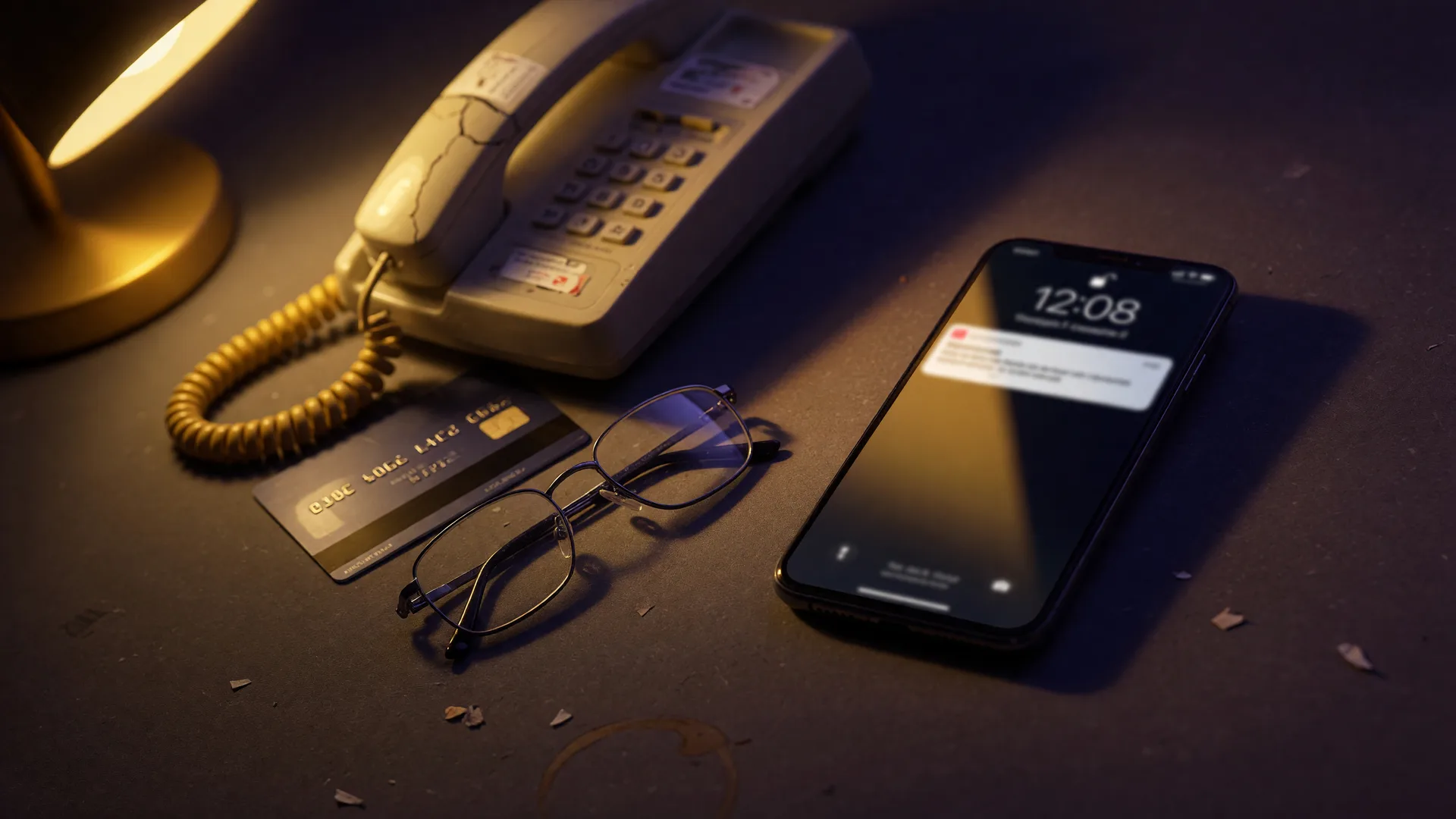
I recently spoke with a senior in Palm Beach, Florida, who called me regarding a fraudulent bank scam caller. They had information about this scam, so they didn’t fall for it, I shared with them my other senior scam posts so they could be informed, as well as share it with their friends, family, and the community.
Every week I sit across from seniors who are doing everything right. They pay their bills on time, they watch their accounts, they trust the people who are supposed to help them. And that trust is exactly what the scammers are aiming at. When I talk to the seniors I work with, I always discuss what to look for. Scammers often impersonate bank officials or fraud departments to scare you into thinking your money is in immediate danger. They pressure you to act quickly, asking you to share your PINs, your passwords, or to transfer your funds to a “safe account” for protection. I tell my clients the same thing every time: a real bank will never ask for your passwords, and it will never demand that you move your money to keep it secure. It’s important to me, while I’m out in the community, to always educate and empower my clients, as well as their family and friends. That’s why I keep writing these guides, and why this one matters so much.
The problem
The scam is called a bank impersonation, and it is exploding. The FTC found that bank impersonation was the most reported scam sent by text message in 2022, up nearly twentyfold since 2019. The FBI’s IC3 received more than 5,100 complaints of account takeover fraud since January 2025, with losses over $262 million. And the FTC’s latest report shows consumers 60 and older lost $3 billion to fraud in 2025. These are not small numbers. These are retirement accounts, savings, and life insurance policies, drained in minutes.
Here is how it works. You get a text that looks like it’s from your bank: a fraud alert, a suspicious charge, a “reply YES or NO” message. When you reply, or when you call the number in the text, a “fraud specialist” takes over. The caller ID even shows your bank’s real name and number, because scammers spoof it. They tell you your money is at risk right now and you need to act immediately. Then they say they’re sending a verification code to your phone, and they ask you to read it back. That code is real. The scammer triggered it themselves by typing your stolen login into the bank’s real website at that exact moment. The moment you read it back, they’re in your account.
The answers
- 1
A real bank will never ask you for your password, your PIN, or a verification code. Never. Not by text, not by call, not by email.
- 2
A real bank will never tell you to move your money to a "safe account" or a "protection account." That phrase is a scammer's tell, every single time.
- 3
Do not reply to unexpected texts. Do not click links in them. Do not call numbers they give you.
- 4
If you get a fraud alert, hang up and call your bank yourself, using the number on the back of your card. That is the only number you can trust.
- 5
If you already shared a code or moved money, call your bank immediately on the number on your card. Fast action gives you the best chance, and reporting to the FTC at ReportFraud.ftc.gov helps stop the next victim.
Frequently asked questions about bank fraud alert impostors
Quick, honest answers to the questions Florida seniors and their families ask me most. Tap a question to open the answer.
01 My bank really does send fraud alerts by text. How do I tell the real ones from the fake ones?
Real alerts never ask you to reply with account details, PINs, passwords, or verification codes, and they never include a link that asks you to log in. When in doubt, ignore the message and call the number on the back of your card.
02 The caller ID showed my bank's actual name and number. How is that fake?
Scammers spoof caller ID. The name and number on your screen can be copied from anywhere. That is exactly why you call back on the number on your card instead of trusting the incoming call.
03 They said my money was in danger and I had to act in the next few minutes. Was that real?
No. Manufactured urgency is the scammer's favorite tool. A real bank will never pressure you to act in minutes, and it will never threaten your account to force a decision.
04 I already read them a code. What do I do now?
Call your bank immediately on the number on your card, tell them your account may have been taken over, and change your password on the real website. Then report it to the FTC at ReportFraud.ftc.gov. Acting fast is the single best thing you can do.
05 Does this only happen to seniors?
No, anyone can be targeted. It happens to seniors more because they are more likely to answer, to be polite, and to trust someone claiming to be a bank official. That is exactly why I write these guides, so you know the script before they run it on you.
The full breakdown
Let’s walk through the whole scam so you can spot it in the wild.
The hook is always a fake emergency
A text about a $1,250 purchase you never made. A call about “suspicious activity” on your account. A message saying your debit card was locked. The point of the hook is not the story, it’s the panic. Once you’re panicking, you stop thinking and start complying.
The trap is the verification code
The scammer already has your username and password, bought on the dark web or stolen in a data breach. They type it into your bank’s real login page. The bank, doing its job, sends a real one-time code to your phone. Then the “fraud specialist” calls and says, “I just sent you a code to verify your identity. Read it back to me.” You read it, and now the scammer finishes logging in, changes your password, and moves your money. The code was real. The bank was real. The only fake part was the person on the phone.
The money moves fast
Often to a “safe account” the scammer controls, sometimes into cryptocurrency or gift cards, sometimes to a courier who shows up at the door. Once it moves that way, it is nearly impossible to recover. That is why the defense has to happen before you read the code, not after.
The rule that saves you
Trust the number on the card, not the caller on the screen. If anyone ever asks you for a code, a PIN, a password, or a transfer “to keep your money safe,” hang up. Call the real number. And if you’re ever unsure, call me. That’s what I’m here for.

Keep learning
Read the full scam library
Every guide in this library walks through one scam script, the red flags, and the single move that beats it, written for Florida seniors and the families who help them. Bookmark the library, share it, and check back as new scripts are added.
Browse the full scam libraryTalk Soon
Michael “Wiz” Wisniewski
The Wizard of Real Estate and The Life Transition Specialist
If any call, text, or code ever feels off, call or text (561) 441-8420 before you do anything else, or book a free 15-minute strategy call. That’s what I’m here for.