Here is the honest headline: the #1 fear sellers bring me is pricing. What is my home really worth, and am I going to leave money on the table? It is a rational fear, and the way most sellers try to solve it, listing high and waiting, is exactly the move that costs them money. This article walks through what actually happened with one Martin County family, the real sourced numbers from our six-county market, and what pricing a home right really protects.
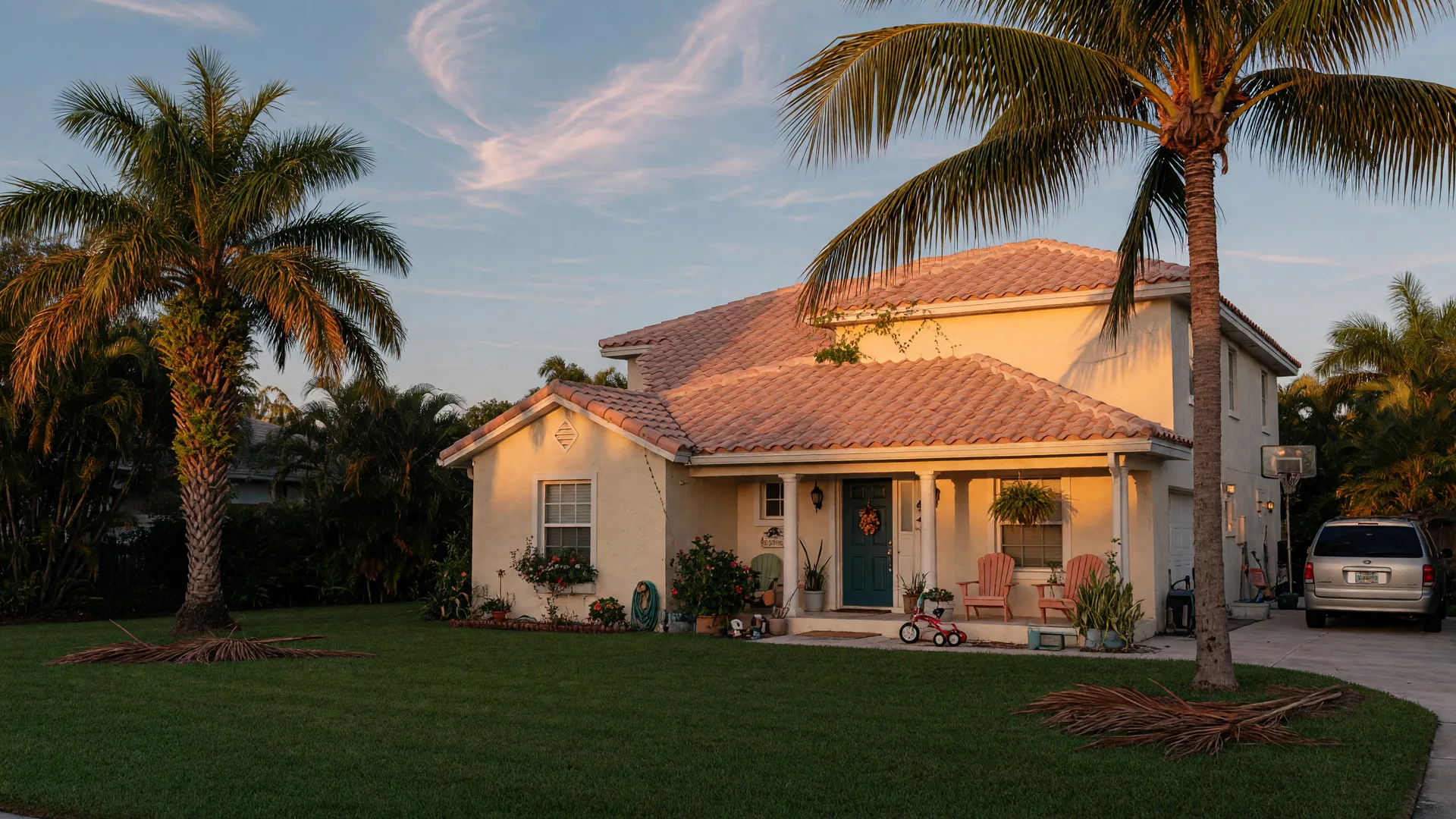
They called me on a Tuesday in late summer. A couple in Martin County, married for thirty years, who had lived in the same house for twenty of them. Raised their kids there, paid it off, stayed through hurricanes and good seasons and everything in between. The plan was simple and long overdue: right-size. A smaller home, less lawn, a lock-and-leave life closer to the water. They had done every step right for two decades, and then one conversation almost undid it.
They met an agent at a neighbor's open house. Prices were up, the agent said, and their neighbor's sale proved it. The pitch was smooth: let's test the market. List above what the data says and see who bites. So they listed well above the honest number, in the name of not leaving money on the table. The names and details are changed; the conversation is not. I have heard it from Indian River to Miami-Dade, and it ends the same way every time.
The first week brought a dozen showings. The second week, a handful. By week three, the showings dried up, and the phone went quiet. The agent said it needed exposure. So they dropped the price. The reduction posted itself on every site the moment it happened, a public announcement that the test had failed. More weeks passed. The home that should have sold in a month and a half carried a fifty-day-plus clock, then sixty, then more, and every day it sat told buyers the same story: something is wrong with this house, or this seller.
When the husband finally said the words to me, he summed up the whole industry's most expensive habit: “We were so afraid of leaving money on the table that we left it on the table.” Everything they dreaded, the markdowns, the stigma, the sale that limped across the finish line, arrived precisely because of the strategy they had chosen to avoid it. That is the trap. Let me show you what we did about it.
The fear is rational. The fix is data, not hope.
The #1 concern sellers bring me is not repairs, and it is not timing. It is the fear of leaving money on the table: what if I price it too low, and the buyer who would have paid more walks away? That fear is rational, it is common, and it deserves respect, not a sales pitch. A six-figure asset with a number on it is scary, and an agent who feeds the fear by inflating the number has an easy sale of their own: the listing.
But here is what the data says, plainly. Most sellers in this market close below their original list price. In Palm Beach County, the average single-family home received 95% of its original list price (MIAMI Association of Realtors, June 2026). In Martin County, houses received 97% of list (MLS data, August 2026). Nationally, the typical home closed at 99% of asking, and only 17% of buyers paid above asking, while 8% paid less than 90% of it (NAR Profile of Home Buyers and Sellers, 2025 report). The overwhelming majority of sellers are not leaving the last dollar on the table because they priced low. They leave money on the table because they priced high and the market made them pay for the mistake with months of its own patience, and their own.
So the honest answer to “what is my home really worth?” is not a sticker price and a shrug. It is a number built from real closed sales, current competition, and your home's actual condition, and it is priced to do one job: get you the highest realistic net on a timeline that works for your life. Not the highest possible list price. The highest realistic net. Those are different numbers, and the difference is usually paid in months.
What the real market data said
Here is what I actually did with the Martin County family, and with every seller who sits across from me. Not a pitch. A working session over real numbers. Every figure below is cited to a named source with an as-of date, so you can check it yourself.
95%
Of the original list price, the average Palm Beach County single-family home received
Sellers who priced on data, not hope, still closed at around 95 cents on their original dollar. The market answered the pricing question before showings even started.
MIAMI Association of Realtors / Southeast Florida MLS · June 2026
42 days
Palm Beach County median time to contract, single-family
Fast, but not a blank check. Buyers here move quickly on homes priced right, and they ignore homes priced wrong.
MIAMI Association of Realtors / Southeast Florida MLS · June 2026
45 days
Treasure Coast single-family median days on market
The combined Indian River, St. Lucie, and Martin County picture: about a month and a half to contract for a home priced where the data says it belongs.
Royal Palm Coast Realtor Association · June 2026
97%
Of list price received for Martin County houses
When the asking price matches the market, sellers in Martin County kept nearly every dollar. Note the word list, not original list.
Martin County housing market report, MLS data · August 2026
99%
Of asking price, the median U.S. home closed at
Only 17% of buyers paid above asking in the latest NAR profile, while 8% paid less than 90% of asking. Mispricing cuts both ways, and the deep discounts belong to the overpriced.
NAR Profile of Home Buyers and Sellers · 2025 report, released November 2025
~5%
Below list, the typical discount for a home that lingered about two months
Homes that sold fast sold about 1% below list. Homes that sat sold about 5% below. Time on market is a discount engine, and it only turns one way.
Zillow Research, The Price of Overpricing · Zillow national listing analysis
The true cost of overpricing, in plain numbers
Zillow Research studied years of national listing data for what they called The Price of Overpricing, and the pattern is stark. Homes that sold essentially as soon as they hit the market sold for about 1% below list. Homes that lingered around two months sold for about 5% below list. Homes that lingered longest sold for substantially larger discounts, and overpriced listings typically ended in price cuts. The discount does not sit still while you wait; it compounds with every week on market.
Do the honest math on that with me, as an illustration, not your address. The honest value of a home is $600,000 in a market where the Treasure Coast single-family median was about $369,000 and Martin County's houses moved at 97% of list (RPCRA, June 2026; Martin County MLS, August 2026). List it at exactly the data-backed number and it behaves: about 40 to 45 days to contract in this region, showings from real buyers, an offer near list, and a closing you can plan around. List it $40,000 high to test the market, and you are not protecting $40,000. You are committing to the 5% math: a home that sits months and eventually sells below the reduced price, with the reduction printed in public, and with your taxes, insurance, and your postponed next chapter carrying the cost of every extra week. The higher number did not protect anything. It paid for the lesson.
And here is the part no listing agent will tell you: the first weeks matter most. The freshest inventory gets the showings, the competition behaves, and buyers who have been waiting for a home like yours come out early. Price right on day one and you capture that window. Price high and you watch the window close from the living room, then pay to reopen it. The market tests nothing. The market prices your patience, and patience is expensive.
“The most expensive number in real estate is not the price you list too high. It is the price you settle for after months of watching buyers walk past.”
Michael “Wiz” Wisniewski
The decision, and the payoff
We pulled the listing and started over. I ran the comparative market analysis the way it should have been run the first time: every comparable closed sale within a sensible radius and time window, adjusted line by line for the family's square footage, updates, lot, and condition. We priced the property at the top of what the data supported, which is not the same as above it, and we prepared the home: the honest repairs that pay for themselves, the decluttering, the staging that makes the square footage read true in photos.
The first week, the calls were different buyers, ones who had been waiting for exactly this home at exactly this price. Within the region's normal selling window, about 40 to 53 days across our counties in June and August 2026 data, they had competing offers. Not one offer to test them. Real ones, from real buyers, near list. And because the negotiation started from a defensible number instead of a stranded one, Wiz protected every line item that mattered: the inspection, the credits, the closing date, the net.
The net beat what the first route would have produced, and that is the part worth underlining. The original plan, list high, drop, discount, close after five months of erosion, would have delivered less money and far more stress. The honest plan delivered more money in a fraction of the time. The husband's words stuck: they were so afraid of losing the top dollar they handed the market the whole negotiation. Pricing fear is solved with data, not hope, and the data was available all along.

When waiting is the right answer
Honesty cuts both ways. Pricing right matters, and so does timing, and I do not pretend selling now is right for every seller, because it is not. Some of the best advice I give is to wait, and I give it more than you might think. Selling now makes sense when your life is ready, your home is ready enough, and the market data in your segment supports it. Waiting can be the smarter move when:
- The season is against you. South Florida buying demand has real seasonal rhythm. Listed during the strongest buying window, a well-priced home sells faster, and speed protects your price. If your timeline is flexible and the season is thin, the data may say wait a few months rather than launch into a slower patch.
- The home is not ready to carry its value. If the roof, AC, or kitchen would cost you at the negotiating table, finishing the work first usually wins. A listing is a product launch, and launching before the product is ready costs more than waiting.
- Your segment is heavy with inventory. When many similar homes are active in your price range, buyers have options, and patience on their side is leverage against you. A plan that waits for the competition to thin can beat a listing that fights it.
- Your life is not ready. A move mid-school-year, a transition still settling, a next home not secured. The market can wait for your plan; your plan should not bend to the market. As The Life Transition Specialist, I tell clients the truth even when it means waiting six months.
My job is the truth, not a listing. If the honest answer is wait, I will say wait, and I will help you build the plan that puts you in the market at the right time, on your terms, with your net protected. That is what a planning advisor does differently.
What selling with Wiz looks like
No mystery, no drama, no “trust me.” Here is the honest walkthrough, step by step, from the first call to the closing table.
-
1. The honest valuation
We start with the number, built from real sold data, not an algorithm. You can begin right now on the free home valuation page , and we go line by line together. You get the number and the reasoning, including when I think waiting beats listing.
-
2. Pre-listing prep that actually moves the needle
I walk the home with you and give you the honest list: what pays for itself, what does not, and what a buyer will negotiate over if you skip it. Decluttering, deep cleaning, the repairs that earn their cost, and staging that makes your square footage read true in photos. No $50,000 renovation list, just the moves that show up in the offers.
-
3. Marketing that reaches real buyers
Professional photography, a listing written around the actual market, syndication across the portals and MLS, and targeted placement for your specific buyer. The marketing's one job is to fill the first weeks with showings, because that window is where well-priced homes win.
-
4. Showings and feedback
Every showing, every piece of buyer feedback, reported back to you straight. If the market is telling us something, you hear it in week one, not week eight, and we adjust the plan, not the hope.
-
5. Offers, and the negotiation that protects your number
Compare terms, not just price: closing date, contingencies, inspection findings, financing strength. As a Certified Real Estate Negotiator, I protect the net through every counter, and I tell you when to hold and when to move. If a fast, as-is, no showings path fits your situation better, we talk about the CASH+ Offer honestly too. You get the option that serves your plan, not the one that serves a commission.
The questions sellers ask me most
Honest, specific answers to the questions I hear on every strategy call with a seller. Same facts, same plain talk, no sales script.
01 How do I know what my home is really worth?
Start with recent comparable sales: homes like yours that actually closed in your neighborhood in the last few months, adjusted for size, updates, lot, and condition. Then weigh what is competing with you right now: how many similar homes are active, how fast they are selling, and at what price. County medians show the direction of the market, but your address is its own market. Wiz runs this as a full comparative market analysis on the free home valuation page, then explains the reasoning in plain language, not a number with no story behind it.
02 Should I list high to test the market?
No, and it is the single most expensive myth in selling. The market does not test your price, it ignores it. In Palm Beach County, the average single-family home still received 95% of its original list price (MIAMI Association of Realtors, June 2026), but that figure hides the damage: an overpriced home gets fewer showings in the critical first weeks, its days on market become public history, and buyers start negotiating against the clock you created. You do not get a second first impression, and the listing feeds on itself. Price the home where the data says it belongs and let the market prove you right.
03 What does overpricing actually cost me?
Real money, in three layers. First, showings: the homes that sell fast typically sell about 1% below list, while homes lingering around two months sell about 5% below (Zillow Research). Second, the discount compounds: the longer a home sits, the more buyers assume something is wrong, and the harder they negotiate. Third, carrying costs: taxes, insurance, utilities, and the life you are delaying all keep running while you wait. A price that is right on day one costs nothing and protects your net. A price that is wrong costs you every week it sits.
04 Should I wait to sell?
Sometimes, honestly, yes. If your life timing is flexible, the season matters: South Florida buyer demand has real seasonal rhythm, and a home listed during the strongest buying window often sells faster, which protects your price. If your home needs repairs that would change the value, finishing them before listing usually pays for itself. If the data in your specific segment says inventory is heavy and demand is thin, a six-month plan can beat a panicked listing. Wiz tells clients the truth even when it means waiting, because a plan with a date beats a listing with a hope.
05 What should I fix before listing?
Only what moves the number. The items buyers can see and price: a tired kitchen, dated baths, flooring, and curb appeal, plus anything an inspection will flag and turn into a credit demand, like an aging roof or AC. Small wins matter more than a renovation: fresh paint, decluttering, deep cleaning, and landscaping routinely move the needle for cents on the dollar. Wiz walks the home with you and gives you the honest list of what pays and what does not, before a single dollar is spent.
06 How do offers and negotiations work?
You receive an offer, and then the real work begins: comparing terms, not just price. Closing date, contingencies, inspection findings, financing strength, and the buyer's ability to actually close all change what an offer is worth. The negotiation is where a Certified Real Estate Planning Advisor protects your number, pushing back on inspection credits, fighting for your timeline, and knowing when to hold and when to move. Your net matters more than the headline number, and Wiz keeps both in view through every counter.